

No Spark? How to Handle Rejection with Grace

By Sandra Β· Updated on 29 September 2026 Β· βœ“ Reviewed by the editorial team

No Spark? How to Handle Rejection with Grace

True grace is shown in how you handle rejection. Keeping your cool after being turned down shows emotional maturity and strength of character.

The message usually arrives the evening after the date. You were excited, the meeting went well, or so you thought.

Then it appears on your screen: "Hey, you're really lovely, but I'm afraid there wasn't a spark for me."

Now's the moment you either keep your dignity or make yourself small. The next three minutes are crucial.

In a nutshell

You handle a rejection with grace by replying briefly, politely, and without demanding an explanation. See it not as a criticism, but as an efficient filter on your way to the right partner.

  • The 3-minute rule prevents knee-jerk emotional reactions that you'll later regret and which can damage your dating prospects
  • A short, polite reply like "Thanks for being honest. All the best!" shows strength of character, whereas demanding reasons seems needy
  • "There wasn't a spark" is usually code for a lack of attraction, not a flaw in your character – it says nothing about your worth
  • No reply is sometimes the best reply if you want to save your energy for more promising connections
  • Rejection is an efficient filter that gets you to a truly compatible partner faster
The message that changes everything: Luke and the moment of truth

Luke, 52, is sitting on his sofa, scrolling through his smartphone. The date last night was pleasant. They laughed, talked about shared interests, the atmosphere was relaxed. After years of marriage, he had plucked up the courage to get active on dating sites again.

Then his phone buzzes. A message from her.

"Hey Luke, thanks for a lovely evening yesterday! You're a really great person, but I have to be honest: there wasn't a spark for me. I wish you all the best in your search!"

His first impulse: reply immediately. His fingers hover over the keyboard.

What should he write? "Why not?" – "What should I have done differently?" – "Pity, I didn't think you were that great either"?

Then Luke remembers something he read. The 3-minute rule.

The 3-minute rule: Why Luke takes a deep breath first

The first three minutes after a rejection are emotionally charged. The brain interprets rejection as a threat to your self-worth. The amygdala, our emotional alarm centre, fires off stress signals. It's almost impossible to give a smart reply in this state.

Luke puts his smartphone aside. Not out of spite, but out of wisdom.

Anyone who replies now often writes things they later regret:

  • Passive-aggressive comments ("I deserve better anyway")
  • Begging for an explanation ("What was wrong with me?")
  • Making excuses ("I was just nervous, I'm usually much funnier")

Instead, Luke goes for a short walk.

When he gets back, the sting to his ego has faded. He sees things more clearly: this one person doesn't define his worth. She's one of many on dating apps, and compatibility works both ways.

The 3-minute rule protects you from knee-jerk reactions. It gives the prefrontal cortex – the rational part of your brain – time to regain control. Most people who reply immediately regret their message within 24 hours.

A direct comparison: While emotional justifications lower your dating stock, a short, polite reply earns you respect.

What "There wasn't a spark" really means

"There wasn't a spark" usually means one thing: a lack of romantic or physical attraction. Not a lack of character, not a lack of intelligence, not a lack of humour. Simply no chemistry.

This standard phrase is a polite platitude that can hide various realities:

  • The physical attraction wasn't strong enough
  • The conversation dynamic didn't feel natural
  • Their ideas about relationships or life plans don't align
  • There's already someone else in the picture

Luke didn't do anything wrong. You can't force attraction, no matter how good the profile on Match.com or eharmony looked, or how charming the messages were.

The rejection is a filter. It saves both of you time. Pushing things further would mean investing in a relationship that was on shaky ground from the start.

Stories from the dating scene show that people who keep pushing after a "no spark" message rarely end up in a fulfilling relationship. The lack of attraction remains a fundamental problem.

Luke realises this message isn't a verdict on him, but a piece of information about compatibility. And that's not negotiable.

Luke chooses grace: Three perfect ways to reply

A graceful reply to a rejection is short, polite and emotionally neutral. It shows that you respect their decision without making yourself seem small.

Now Luke is ready to reply. He has three options, depending on how he feels and how the date actually went.

The three graceful reply strategies

Strategy When to use it Example reply
Short & sweet Mediocre date, you want a quick wrap-up "Okay, thanks for letting me know. Take care!"
Appreciative Pleasant meeting, mutual respect "Thanks for being honest! I had a really nice evening too. If it's not a match, it's not a match – all the best!"
No reply Very superficial contact, save your energy Silence as a conscious choice

Option 1: The short and sweet reply

If Luke wants to save his energy and wrap things up quickly:

"Okay, thanks for letting me know. Take care!"

Short, polite, no emotion. It shows he's fine with it and doesn't need an explanation. This option is perfect if the date was only so-so anyway.

Option 2: The appreciative response

If the meeting was genuinely pleasant and Luke wants to acknowledge that:

"Thanks for being honest! I had a really nice evening too. If it's not a match, it's not a match – all the best!"

This reply shows maturity and appreciation without seeming needy. It leaves the door slightly ajar for a casual acquaintance without applying any pressure.

Option 3: No reply at all

Sometimes, no reply is the most graceful response. If Luke feels the rejection came after just one message or a very superficial date, he doesn't need to invest his time.

Silence isn't ghosting out of revenge; it's a conscious decision to save your energy for people who are genuinely interested.

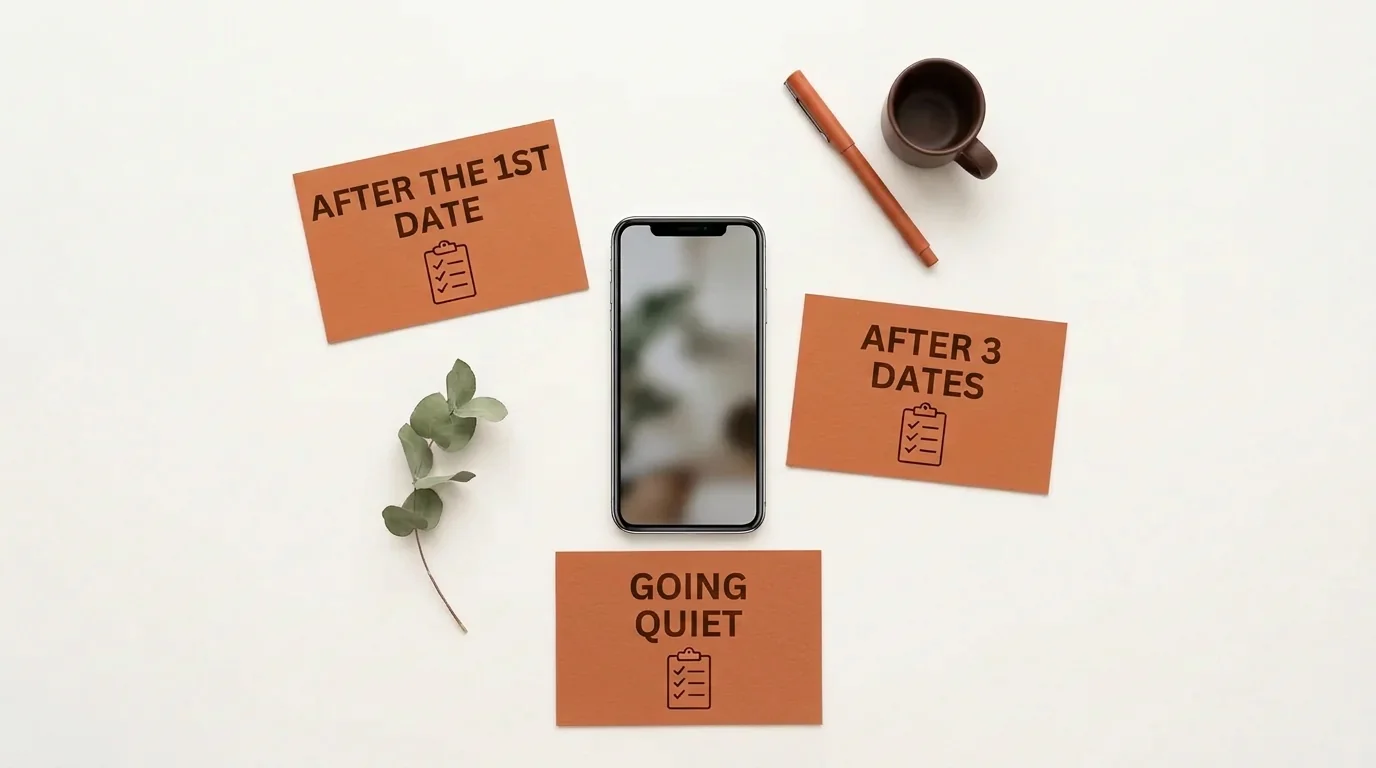
Flat lay of a smartphone with cards showing different reply scenarios like 'After the 1st Date' and 'Radio Silence'. The right reply for every scenario: Having structured templates helps you strike the right tone, even in emotional moments.

Luke decides on Option 2. He writes the message, reads it one more time, and sends it. No justifications, no begging, no drama.

Then he deletes the chat and moves on.

The high-road strategy: Why style makes you more attractive

Reacting to a rejection with dignity shows emotional maturity. This quality is extremely attractive on dating sites like eharmony or SilverSingles, where people are looking for serious relationships.

What Luke doesn't know is that his reply leaves an impression. The person on the other end was expecting an emotional reaction – maybe accusations or excuses. Instead, she got grace.

This is the high-road strategy: the path of dignity instead of defensiveness.

Luke has nothing to lose. On the contrary: if their paths ever cross again – in mutual friend circles, at events, in the dating community – she'll remember him as someone with class.

Other singles react differently. They write long messages defending themselves. They ask for reasons. They become passive-aggressive or insulting.

Experience shows that reacting emotionally to a rejection subconsciously confirms to the other person that they made the right decision. Neediness lowers your perceived value.

Luke chooses the other path. He stays true to himself, maintains his dignity, and comes out of the situation stronger.

The high road has another benefit: it protects your own self-worth. If you don't get tangled up in justifications, you won't have to feel embarrassed about your reaction later.

The no-go list: What Luke avoids at all costs

Certain reactions to a rejection do more harm than good. They lower your dating stock and retroactively confirm the other person's decision.

Luke has learned from observation what is an absolute taboo after a rejection:

Four critical mistakes after a date rejection

No-Go Why it's a bad idea
Asking 'why' questions Comes across as needy and makes you look small. The other person doesn't owe you an explanation.
Ghosting out of revenge Shows immaturity. A short reply costs nothing and demonstrates character.
Sarcastic comments Transparent attempts to soothe your ego that just show the rejection hit home.
Arguing about the rejection Attraction isn't up for negotiation. If you have to beg for a chance, you've already lost.

Don't ask 'why' questions

"Why wasn't there a spark?" or "What should I have done differently?" might sound like self-reflection, but they come across as needy. The other person doesn't owe you an explanation. Asking for one makes you seem small.

'Why' questions rarely lead to honest answers. Most people will either become even more vague or invent polite excuses to avoid hurting your feelings.

Don't ghost out of revenge

Simply disappearing to make the other person feel bad is immature. Luke is better than that. A short reply costs him nothing and shows character.

No sarcastic comments

"Not my type anyway" or "I've met better" are transparent attempts to soothe your ego. They just show that the rejection hit home. Luke avoids this.

Sarcasm after a rejection is like an admission: "You've hurt me, and now I'm trying to save face."

Don't argue about the rejection

Anyone who tries to change the other person's mind ("Just give me one more chance!") has already lost. Attraction isn't up for negotiation.

In dating psychology, it's a given: pushing for more after a clear rejection only makes you less attractive. The other person feels pressured and even more certain of their decision.

Luke sticks to these rules. They protect his self-worth and his dignity.

A new focus: How Luke uses rejection as an opportunity

Three days later, Luke is back on his sofa. He's processed the rejection. He doesn't feel worse, but clearer.

A rejection isn't a failure; it's an efficient filter. It saves you time and energy that you can invest in more suitable connections.

He opens his profile on the dating site and thinks about what he can learn from the experience. Was his profile honest? Did his photos show his personality? Was the communication before the date authentic?

Luke uses the Alva Profile Check to optimise his impact. The AI analyses his photos and bio and gives him specific tips on how to present himself better – not by pretending to be someone else, but by making his genuine strengths more visible.

He learns that the rejection wasn't a failure, but a step on the path to the right match. Every "no" brings him closer to a "yes" from someone who's truly right for him.

A mindset shift: Don't see a rejection as a failure, but as an efficient filter that gets you to a compatible partner faster.

This change in perspective makes all the difference. Instead of seeing the rejection as a personal defeat, Luke sees it as gaining information. He now knows that this person wasn't the right one – and that's valuable.

Luke continues scrolling through profiles. This time, with more composure. He now knows that not every connection has to work out. And if it's not a match, an honest rejection is better than being strung along for months.

He's ready for the next conversation, the next date, the next chance.

And if another rejection comes? He now knows how to handle it.

Frequently asked questions

What's a good reply to a rejection after a date?

A short, polite reply like "Thanks for being honest. All the best to you!" shows grace. Avoid long explanations or asking 'why'. Sometimes, no reply at all is the best option, especially after very superficial contact.

How can I reply to a rejection and still be cool about it?

Wait at least three minutes before you reply. Keep your message short and emotionally neutral. Show that you respect their decision without seeming needy. For example: "Okay, thanks for letting me know. Take care!"

Why do people say "there wasn't a spark"?

This phrase is usually a polite code for a lack of romantic or physical attraction. It doesn't mean you did anything wrong, but that the chemistry wasn't there. The rejection says nothing about your value as a person.

Should I ask for reasons after being rejected?

No. Asking 'why' seems needy and won't change their decision. The other person doesn't owe you a detailed explanation. Such questions rarely lead to honest answers, but usually to even vaguer excuses.

Can you still be friends after a rejection?

It depends on the situation. If both people are genuinely interested in a friendship and there are no lingering romantic expectations, it's possible. However, a clean break is usually healthier for creating emotional clarity.

How long should I wait before replying to a rejection?

At least three minutes, or better yet, an hour. This time helps you avoid knee-jerk emotional reactions and formulate a graceful response. The 3-minute rule protects you from sending messages you'll later regret.

Is it rude not to reply to a rejection message at all?

No, not always. If the rejection comes after very little contact or a superficial exchange, silence is a legitimate option. It's not revenge; it's a conscious decision to save your energy for more promising connections.

How do I deal with several rejections in a row?

See each rejection as a filter that brings you closer to the right match. Use tools like the Alva Profile Check to improve your presentation on dating apps. Multiple rejections don't mean something is wrong with you – they just show you haven't met the right person yet.

πŸ“ Chat coach by Alva

Unsure what to write before or after the date? Upload a screenshot β€” Alva suggests the right words.

Try it free β†’

Screenshots are never stored.

More from β€œFirst date & after”