FAQs about dating over 50
What are people over 50 like when you first start dating?
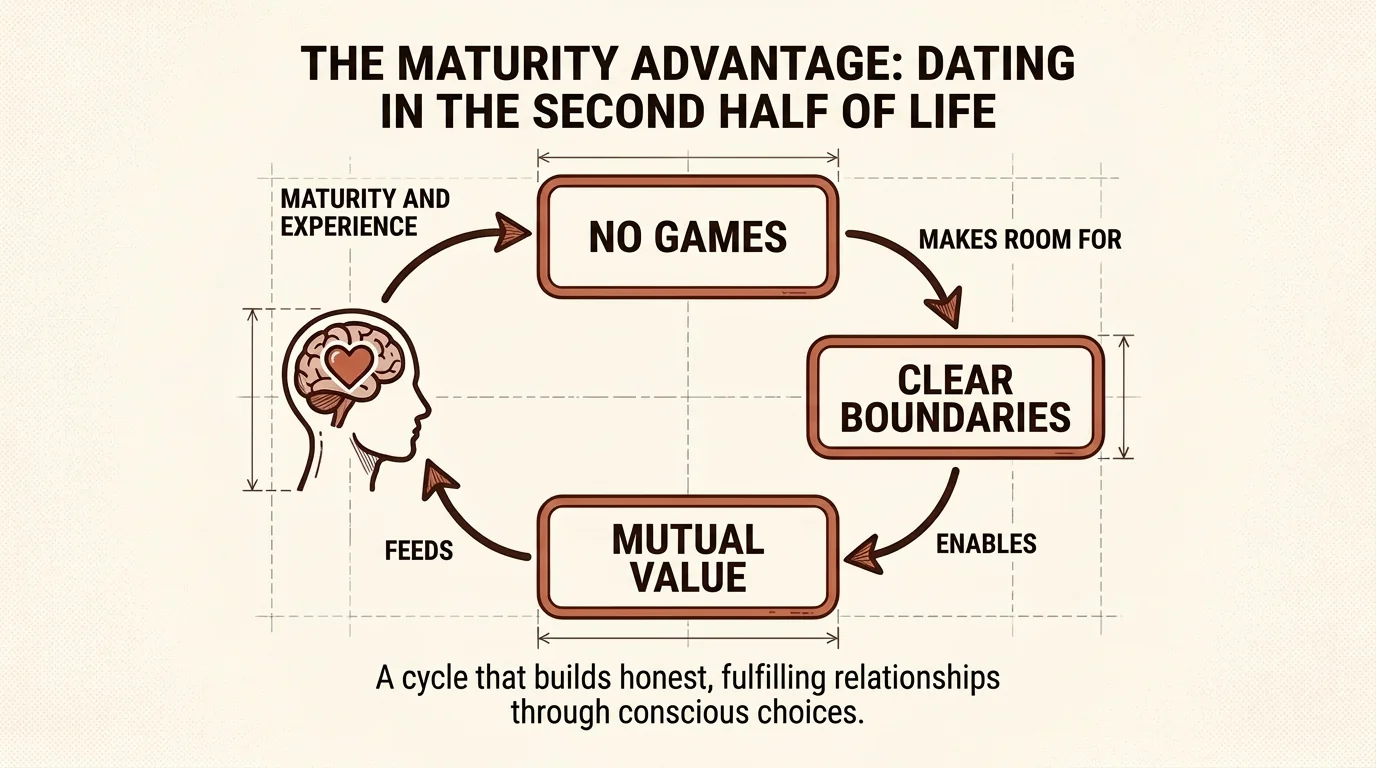
People over 50 are often more direct and less playful in the getting-to-know-you phase than when they were younger. Many are looking for a genuine connection rather than a fling. At the same time, they bring their own insecurities, perhaps after a long marriage or a difficult breakup. They often communicate more clearly about what they want, but may sometimes take longer to allow emotional intimacy. Give them time to open up, but expect clear communication after the first few dates.
Is it true that singles over 50 don't want a partner anymore?
The idea that singles over 50 no longer want a partner is a cliché. Many singles at this age do want a relationship – but on their own terms. They're looking for a companion, not a dependant, and are more selective because they know exactly what they don't want anymore. This isn't a lack of interest, but clarity. Their expectations have changed, not their fundamental interest in a partnership.
Where can you meet serious partners over 50?
You can meet serious partners over 50 both online on specialised dating sites and offline through shared activities. Good places to start online are sites like Ourtime, SilverSingles, or EliteSingles. Offline, activities like hiking groups, evening classes, or volunteer projects can connect you with people who have similar interests. Singles holidays or dance classes are also popular options. The advantage of specialised platforms is that the users tend to have similar intentions and life situations.
What makes someone in their 50s attractive?
What makes someone in their 50s attractive is above all their combination of self-confidence, authenticity, and life experience. Singles over 50 often radiate a calm and clarity that younger people don't have. When you know what you want and communicate it without apology, you come across as appealing – regardless of wrinkles or your figure. Humour, emotional stability, and the ability to laugh at yourself are often rated as more attractive than a perfect body. Authenticity beats perfection.
How long should you chat before the first date?
You shouldn't chat for too long before the first date; a period of one to two weeks is usually enough. Chatting for too long can build up unrealistic expectations. It's better to suggest a casual meet-up after a few good conversations – a coffee, a walk, something low-pressure. That way, you'll quickly find out if the chemistry is there. If you only chat for a long time, you risk being disappointed by reality or seeing the interest fizzle out.
How do I protect myself from romance scams?
You can protect yourself from romance scams by watching out for typical warning signs and never sharing financial details. Warning signs include quick declarations of love, requests for money, and constant excuses for not being able to video call. Never share financial information and only meet in public places. Typical scammer patterns include claiming to work abroad, stories about deceased partners, and sudden emergencies. Genuine people will be happy to video call and won't have excuses for not meeting in person.
Should I write about my past in my profile?
You should write briefly and factually about your past in your profile to provide clarity. Mention that you're divorced or widowed, but without drama or long explanations. Your history is part of you, but it shouldn't be the first thing people learn about you. Focus on the present and the future. A good way to phrase it is something like: "Open to a new relationship after a long marriage" or "Widowed and ready for a new chapter." This signals honesty without overwhelming the other person.
How should I deal with ghosting?
The best way to deal with ghosting is not to take it personally, as it says more about the other person than it does about you. Singles over 50 often ghost out of insecurity or feeling overwhelmed, not out of malice. Many get cold feet after a promising chat – out of fear of getting hurt or because they haven't processed a past relationship. Chalk it up to experience, learn from it, and move on. The right person will stick around.