Dating with Baggage: How Much of Your Past Should You Share?

By Sandra · Updated on 6 November 2026 · ✓ Reviewed by the editorial team

Dating with Baggage: How Much of Your Past Should You Share?

When you get back into dating after a long relationship, you inevitably bring some baggage with you: past experiences, a divorce, children, financial commitments, or simply the scars of old relationships. The question isn’t whether you have a past – everyone over 40 or 50 does. It’s how you handle it, without selling yourself short or overwhelming someone new.

Baggage isn’t a flaw. It’s proof that you’ve lived, loved and learned. What matters is that you've processed it and know when and how to talk about it.

In a nutshell

Your past is part of finding someone new, but timing is everything when it comes to talking about it openly and calmly.

  • Baggage isn't a barrier; it's valuable life experience.
  • Choosing the right moment to open up is key to dating success.
  • Handling things with your ex in a matter-of-fact way shows emotional maturity.
  • Focus on the here and now, not on old hurts.
  • Be honest with yourself about whether you're emotionally ready for a new relationship.

Step 1: Unpack your baggage and take stock

Before you dive into dating, you need clarity about what you're bringing to the table. Baggage can be roughly divided into two categories: practical and emotional.

Practical baggage covers the concrete, visible parts of your life:

  • You're divorced or going through a separation
  • You have children from a previous relationship
  • You have financial commitments, such as maintenance payments
  • You still live in the home you shared with your ex

These are facts you can't ignore. They're part of your life and will come up sooner or later.

Emotional baggage is more subtle, but just as significant:

  • A loss of trust after being betrayed or let down
  • Finding yourself comparing new people to your ex
  • A fear of being hurt again
  • Lingering anger or sadness

The crucial difference: having a past is normal. Living in the past is a problem.

If you find yourself subconsciously comparing someone new to your ex, or mentally running through justifications for your divorce, you haven't truly moved on.

Take honest stock: what's still weighing on your mind? Which wounds have healed and which are still raw? This isn't about beating yourself up. It’s about helping you meet new people with your eyes wide open.

A good way to check in with yourself is to ask: Can you talk about your separation without your heart racing? Do you sleep soundly without mulling over old arguments? When you think about your ex, do you feel mostly indifferent, or still angry? These gut reactions are a more reliable guide than what you simply tell yourself.

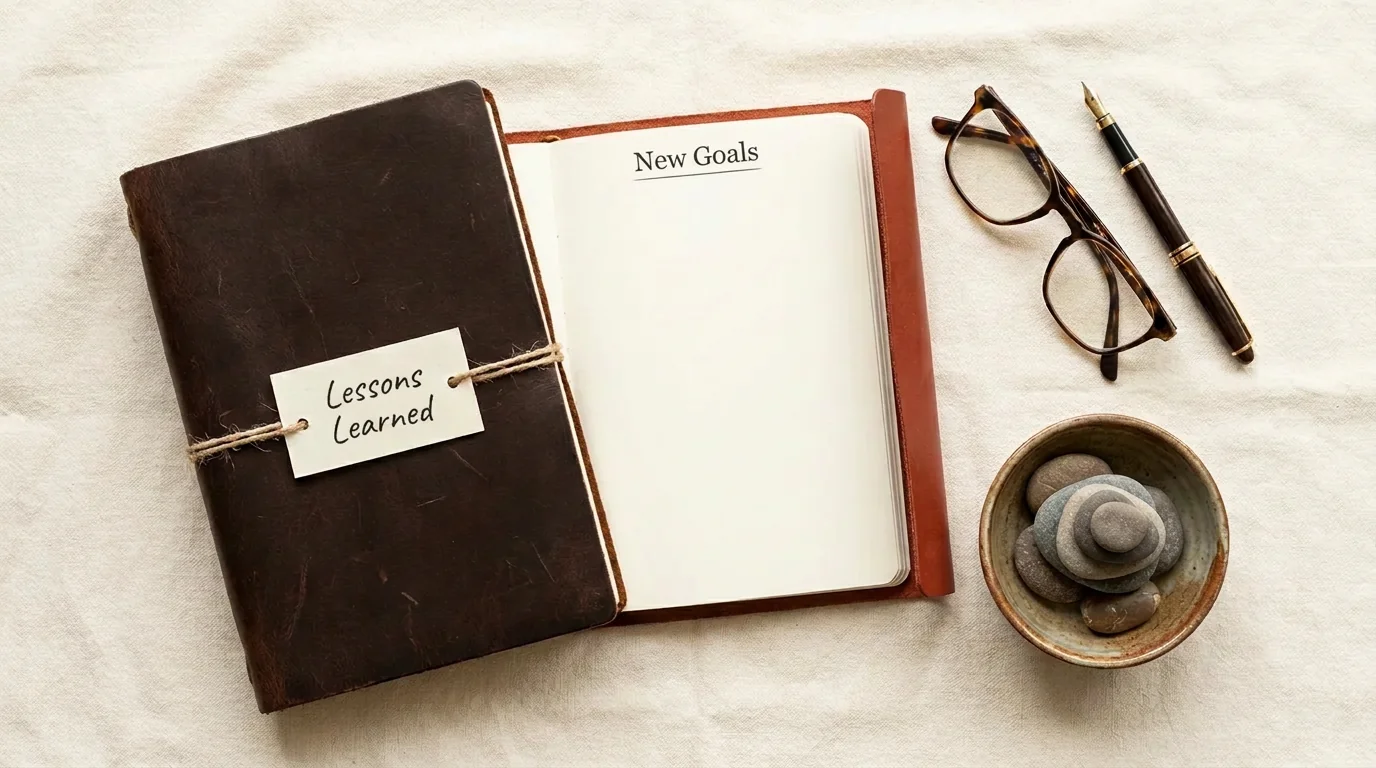
Flatlay arrangement with notebooks and symbols for reflection and a new beginning after a breakup, in rust red and dark brown colours. Reflection, not regret: When you see your past as a collection of valuable lessons, you can meet a new partner with real confidence.

Step 2: Find the right dating scene for your fresh start

Not all dating sites are a good fit, especially for singles who've lived a little. If you're after a serious relationship rather than a casual fling, the platform you choose makes all the difference.

Dating sites like eHarmony, Match.com, or EliteSingles are geared towards people looking for a long-term relationship. There, you'll meet other singles who are at a similar stage in life and understand that you come with a past.

For singles over 50, you'll find dedicated sites like Ourtime and others designed for a mature crowd. These platforms provide a welcoming space where your past isn't seen as baggage, but simply as part of the story that made you who you are.

If you're looking for something meaningful, swipe-based dating apps are often not the best fit. Tinder and Bumble rely heavily on photos and quick decisions, so longer life stories tend to get lost there, and starting your profile with details about kids and divorce can feel a little out of place.

The right setting also means you don't have to hide any part of yourself. On a site where most people have some life experience under their belts, you can relax and be your true self.

The platform you choose also sets the tone: on dedicated sites for mature singles, it's completely normal for profiles to mention children or previous marriages. The people on there are specifically looking for partners who are in a similar boat. This saves a lot of explaining and gets things off to a more realistic start from day one.

Step 3: Communication – when is the right time?

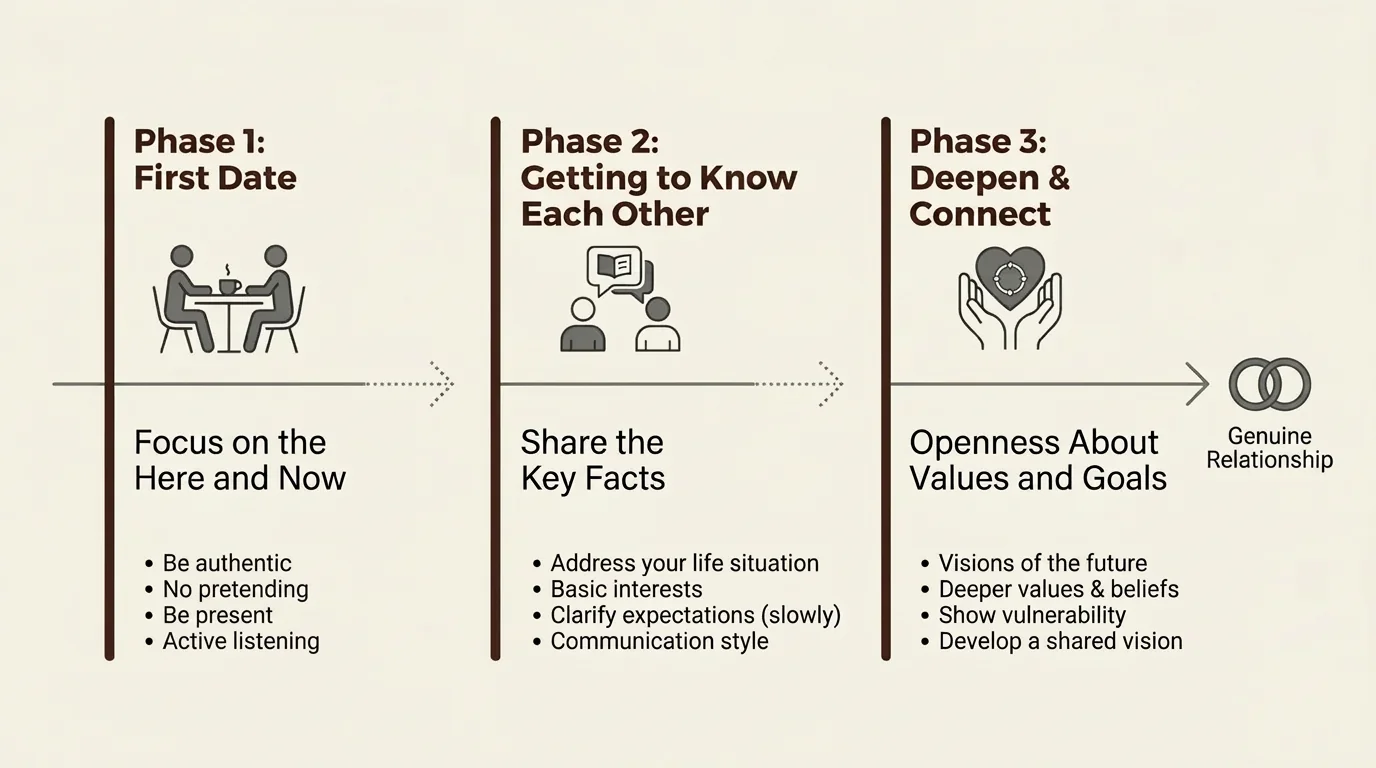
The most common question when dating with baggage is: when do I talk about what? The answer is simple: as late as possible, but as early as necessary.

The first date: Focus on getting to know them

A first date is all about seeing if there's a spark and whether you get on. Your ex really shouldn't come into the picture yet. Nobody wants to hear a post-mortem of your marriage over their first coffee with you.

If the topic does come up, keep it brief. A simple, “I’m divorced, but that was a while ago,” is all that’s needed. Avoid going into detail, assigning blame or getting emotional.

Getting closer: Time to be honest

By the third or fourth date, when it’s clear you both want to get to know each other better, it’s time to be open. You’ll need to be upfront about:

  • Where you are with your divorce (is it legally final, or are you still separated?)
  • Children and your contact arrangements
  • Your living situation
  • Any financial obligations that have a big impact on your life

This isn't a confession, just a few practical facts. It helps the other person understand what your life is like and see if your lifestyles are compatible.

You only need to share enough for them to understand your current situation. Nobody needs a blow-by-blow account of your marriage. What really matters is your perspective on it today.

A graphic guide on when to talk about your past in a new relationship, showing the stages from the first date to a genuine relationship. Getting the timing right: Follow this guide to share details about your past gradually and respectfully as you get to know someone new.

Why talking too much about your ex is a real turn-off

Talking too much about an ex is one of the biggest dating deal-breakers. If you spend more than a few sentences on your past relationship on the first or second date, you risk them losing interest.

The reason is simple: constantly talking about an ex signals that you're not emotionally available. It's a huge red flag.

Pay attention to how often you bring up your past in conversation. If you catch yourself making comparisons or telling old stories, make a conscious effort to stop. Your date wants to get to know you, not your ex.

In practice, this means: whenever you feel the conversation drifting back to your ex, ask your date a specific question about their life to pull the focus back to the present.

Step 4: Navigating exes and divorce

How you talk about your ex speaks volumes about your emotional maturity. There's one golden rule here: never bad-mouth your ex.

Even if the breakup was tough and you were badly hurt, launching into a bitter rant will only make you look bad. Your date only knows your side of the story, and they'll inevitably wonder: will they talk about me like that one day?

Instead, show that you've moved on:

  • "We grew apart, but I value the time we had together."
  • "It wasn't easy, but I learned a lot from it."
  • "We keep things civil now, especially for the kids' sake."

If you have children, your ex will always be part of your life. That's just the reality of it. Show that you can handle the situation like a grown-up.

Spotting the red flags

Pay attention to how your date talks about their ex, too. If someone is constantly bringing up their ex, telling dramatic stories or calling them "crazy" or "toxic", that should set alarm bells ringing. It could be a sign that they aren't ready for someone new.

Other warning signs include: your date openly comparing you to their ex ("My ex would never have done that"), oversharing details from their old relationship, or showing strong emotional reactions when the breakup comes up. These are all signs that they haven't fully moved on.

If you're ever unsure whether a profile or a chat is genuine, the Scam Check from AskAlva can help. It analyses profiles and messages for typical scam patterns and gives you a clear risk assessment.

Step 5: Handy phrases for tricky questions

Theory is all well and good, but what do you actually say when your date asks: “Why are you still single?” or “Why did your marriage end?” Here are a few ways to answer with grace and honesty, without giving too much away:

“Why are you still single?”

Good: “After my divorce, I deliberately took some time for myself to get back on my feet. Now I feel ready for something new.”

Bad: “I just haven't found anyone who's right for me.” (sounds like you have impossibly high standards)

“Why did your last relationship end?”

Good: “We just grew apart over the years. I see it as part of life's journey now.”

Bad: “My ex was just impossible.” (blaming)

When someone digs a little too deep

Good: “I'd be happy to tell you more when we know each other a little better. For now, I'd rather focus on getting to know you.”

Bad: Going quiet or dodging the question (comes across as secretive)

These phrases show that you're reflective, but not dwelling on your past. You can talk about it without letting it define you.

If you're unsure how to respond to certain messages, the Chat Coach from AskAlva can help. Just upload a screenshot, and Alva will suggest great replies – in your style, without any cheesy chat-up lines.

Checklist: Are you ready for something new?

Before you dive back into dating, this quick self-check can help. Answer the following questions honestly:

  • Can you enjoy a date without comparing it to your ex? If you still catch yourself making comparisons, you might not be emotionally ready just yet.
  • Can you talk about your separation calmly, without getting angry or sad? Being able to do so is a sign that you've processed what happened.
  • Do you have a clear idea of what you want in a new relationship – not just what you don't want anymore? Focusing on positive goals is more powerful than simply trying to avoid past mistakes.
  • Can you accept that a new partner will have their own past? Empathy is a two-way street.
  • Have you sorted out practical matters (your living situation, finances, childcare) so you have the emotional energy and time for someone new? It's hard to build a relationship when your daily life is in chaos.

If you answered 'yes' to most of these, you're probably ready. If not, just give yourself a bit more time. There's no shame in not being there yet. Waiting is fairer – to yourself and to anyone you meet.

The Takeaway: Your past is your foundation

Baggage isn’t a flaw – it’s proof you’ve lived, loved and learned. People with a past often make better partners because they know what truly counts in a relationship and what doesn’t.

Embrace your past as part of your whole story. Be yourself, but it’s wise to keep some things private at first. You can share your experiences gradually as trust begins to grow.

If you’re unsure how your profile is coming across, try the Profile Check from AskAlva. You’ll get honest feedback on your photos and bio – it’s not a judgement of you as a person, simply a look at the impression you’re making.

Dating when you have a past isn’t a disadvantage. It’s an opportunity to find someone who appreciates you for everything you are and all you’ve been through. And that’s the only kind of relationship really worth having.

Dating with baggage: Your questions answered

Should I say on my profile that I'm divorced?

Whether you should say you're divorced on your profile really depends on the dating site. On sites aimed at singles of a certain age, divorce is so normal that you can state it plainly. On more general dating apps, a simple phrase like ‘looking for a serious relationship’ is often enough to begin with – you can share the details later.

How long should I wait to date after a break-up?

There's no hard and fast rule for how long you should wait to date after a break-up. The most important thing is that you feel emotionally ready and aren't dating out of loneliness or spite. A good sign is being able to talk about the break-up without anger or sadness taking over.

What really counts as 'baggage' in a new relationship?

What counts as 'baggage' in a new relationship is anything from your past that still has an impact on your life today. This could be practical things like a divorce, children, financial commitments or your living arrangements. Emotional baggage, such as trust issues or unresolved heartache, also falls into this category. In the end, it's not about whether you have baggage, but how you deal with it.

What should I do if my date seems hung up on their ex?

If your date seems very hung up on their ex, it's best to raise the subject openly. You could say something like, "I've noticed you mention your ex quite often. Are you sure you're ready for something new?" If they get defensive or their behaviour doesn't change, it's probably wise to step back. You deserve someone who's emotionally available for you.

When is the right time to introduce my kids to a new partner?

You should only introduce your children to a new partner once your relationship is stable and exclusive, which usually means waiting at least a few months. Kids need a sense of security and shouldn't be introduced to a string of different partners. Make sure you talk to your new partner beforehand about how you both want to approach that first meeting.

Do I have to reveal all the details about my divorce?

No, you absolutely don't have to share every last detail of your divorce. Your new partner needs to know the facts that might affect your life together, but the emotional ins and outs or intimate stories from your past relationship are private. Only share what you feel comfortable sharing, and only when you feel the trust is there.

How can I tell if they're into me, or just curious about my past?

You can tell if someone is genuinely interested in you, not just your backstory, by paying attention to their questions. Are they asking about your dreams, hobbies and plans for the future, or are they just digging for details about your past? Real interest means they want to get to know you as a whole person, not just a chapter from your history.

Can AskAlva help me with dating with baggage?

Yes, AskAlva can definitely help you with dating with baggage. The Chat Coach supports you in handling tricky questions with confidence. AskAlva's Profile Check helps you see if your profile is warm and inviting, while the Scam Check helps you spot fraudsters early, as they often target singles during vulnerable times.


🧭 Dating coach by AskAlva

Not sure how to go about it? Upload a screenshot. AskAlva gives you a clear read in under a minute.

Try it free →

Screenshots are never stored.

More from “Strategy & mindset”