How to handle a first date: from prep to the follow-up message

By Sandra · Updated on 3 September 2026 · ✓ Reviewed by the editorial team

How to handle a first date: from prep to the follow-up message

A first date is on the cards – and with it often comes a mix of excitement and nerves. That's completely normal. The good news is, with the right preparation and a few proven strategies, you can turn that anxiety into genuine anticipation.

This guide will walk you through every stage of a first meeting, step by step: from getting ready and what to talk about to the message you send afterwards.

In a nutshell

You'll ace your first date with good preparation that gives you confidence, and by making a great impression through being your authentic self and communicating honestly.

  • Preparation gives you confidence and reduces pre-date nerves
  • Authenticity is more important than a perfect outfit or playing a role
  • Good conversation is based on genuine interest and the right balance of listening and sharing
  • Honesty in your follow-up message prevents misunderstandings and ghosting

Prepping for a first date: Confidence starts in your head

Getting ready for a first date reduces nerves and lays the groundwork for a relaxed meeting. The hours before the date often determine your mindset.

Getting into the right mindset

See the date as an opportunity to meet someone interesting, not as a test you have to pass. The question isn't 'Do they like me?', but 'Are they a good fit for me?'.

This shift in perspective takes the pressure off. It helps you be more authentic. In fact, singles who go into dates with this attitude report having much more relaxed conversations.

Choosing your outfit: Comfort over perfection

Choose clothes that you feel comfortable in and that suit your personal style. A new outfit you feel unsure about will only distract you.

A tried-and-tested tip: wear something you already know and love, maybe just a little smarter than your everyday look. Your clothes should reflect your personality, not a role you're trying to play.

Checking the location and logistics

Choose a neutral, public place for the first meeting. A café or a bar with a nice atmosphere is ideal – the setting should allow for conversation without being too loud or too intimate.

Check how to get there beforehand and plan a little extra time. Being on time shows you're considerate and stops you from arriving in a rush.

Profile refresh

Quickly read through your chat history on the dating site. This will help you pick up on topics you've already discussed and shows you've been paying attention to what they've said.

Make a mental note of two or three conversation starters that have come up in your messages – this will give you a confident start to the chat.

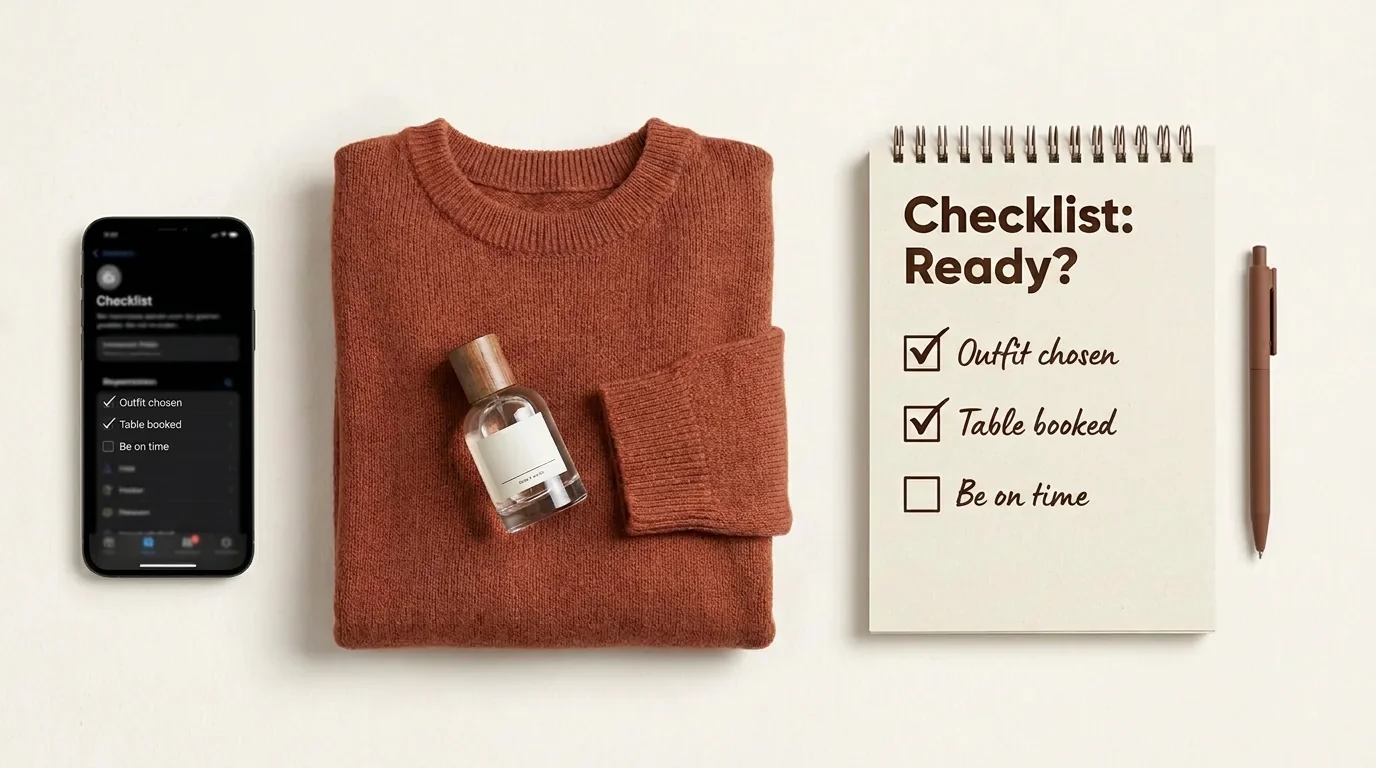
An organised flat-lay of clothes and accessories for a first date, including a checklist.

The right preparation takes the edge off your nerves: a simple checklist for your outfit and mindset will help you start your first date feeling confident and relaxed.

The perfect start: Greetings and first impressions

The first 30 seconds set the tone for the entire date. A warm, genuine greeting opens doors and signals openness.

Punctuality as a sign of respect

Arrive on time, or let them know in advance if you're running late. It shows respect for their time and stops your date from waiting around nervously.

It's worth noting that most singles interpret lateness without a heads-up as a lack of interest – even if it was just a mishap.

The greeting: Natural, not formal

A brief, friendly hug often feels warmer than a formal handshake – but pay attention to your date's signals.

If they seem a bit reserved, a smile and a simple 'It's lovely to meet you' is perfectly fine. Let the greeting fit the situation rather than following a rigid script.

Using body language consciously

Your non-verbal communication is constantly sending signals:

  • Maintain eye contact without staring – three to five seconds is comfortable
  • Use open body language (no crossed arms)
  • Lean in slightly when your date is talking – it signals interest
  • Smile genuinely, not in a forced way

In practice, people with open body language are seen as more approachable and likeable.

First date conversation topics: How to avoid awkward silences

A good conversation doesn't come from perfect preparation, but from genuine interest and the right balance between listening and sharing.

Apply the 70/30 rule

Spend 70% of the time actively listening and 30% talking about yourself. Ask follow-up questions about what your date is telling you.

'How was that for you?' or 'What drew you to that?' show genuine interest. This rule prevents one person from dominating the conversation while the other barely gets a word in.

In fact, singles who maintain this balance report much deeper connections, even on the first date.

Using small talk to get started

Start with light topics that can create common ground:

  • Travel and favourite places – 'Where was the last place you went on holiday?'
  • Hobbies and free time – 'What do you like to do at the weekend?'
  • Recent experiences or funny anecdotes
  • Favourite restaurants or films

Small talk isn't just a filler; it's a bridge to deeper topics. It creates a relaxed atmosphere where you both feel comfortable.

Daring to go deeper

Once the conversation is flowing, don't be afraid to go deeper. Personal questions create a real connection:

  • 'What's driving you at the moment?'
  • 'What are you particularly looking forward to in the near future?'
  • 'What was a moment that changed you?'

Questions like these create a genuine connection without seeming intrusive. They show you want to get to know the person behind the profile.

No-go topics for a first date

On the first date, avoid topics that are too personal or controversial:

  • Ex-partners and past relationships – it can make it seem like you're not over your past
  • Heated political or religious debates – disagreements can quickly kill the mood
  • Financial details or salary figures
  • Detailed health problems

There's a time and a place for these topics later on. The first date is all about building a positive foundation.

Master the art of conversation: the 70/30 rule shows that active listening is often more important than constant talking when it comes to building a real connection with someone.

Safety and etiquette: What to look out for

A good date is based on mutual respect and a safe environment. Being safety-conscious isn't paranoid, it's sensible.

Safety always comes first

Basic safety rules for a first meeting:

  • Meet in a busy, public place – never at someone's home
  • Share your location with someone you trust
  • Arrange your own transport to and from the date – that way, you stay independent
  • Trust your gut – if something feels off, you're allowed to end the date at any time

If you're not sure whether your date's profile is genuine, the Scam Check from AskAlva can help you spot potential warning signs before you meet.

Phone etiquette

Leave your phone in your bag, or at least face down on the table. 'Phubbing' – constantly checking your phone – signals a lack of interest and disrupts the connection.

It's now common practice for both people to put their phones visibly aside at the start of a date. It creates an unspoken agreement to focus on each other.

Spotting red flags

Look out for warning signs during the date that might point to problematic behaviour:

  • Being rude to service staff – it shows a person's true character
  • Constantly interrupting or dominating the conversation
  • Over-the-top compliments or love bombing – often a manipulation tactic
  • Pressuring you to go somewhere else, especially a private location

You should take these signs seriously. They're not minor quirks; they're clues to fundamental character traits.

The bill and the goodbye

The end of the date is just as important as the beginning. This is often where it's decided whether there'll be a second one.

Who pays on the first date?

Splitting the bill is completely acceptable these days and shows equality. If one person offers to pay, a friendly 'Thanks, that's very kind' is enough.

Open communication prevents misunderstandings: 'Shall we split it?' is a perfectly normal question to ask. Experience shows that most singles prefer to split the bill on a first date to avoid creating a sense of obligation.

The goodbye: Honest and respectful

If the date went well, make it clear:

  • 'That was really lovely, I'd love to see you again'
  • A hug or a kiss on the cheek, if the chemistry is right

If there was no spark, be polite but honest:

  • 'Thanks for a nice evening'
  • Avoid giving false hope by saying things like 'Let's be in touch'

Clarity is fairer than polite lies that lead to disappointment later on.

The follow-up message: When and how to get in touch

The communication after the date determines whether you'll see each other again or go your separate, respectful ways. This is where you find out if there's genuine interest.

Forget the 3-day rule

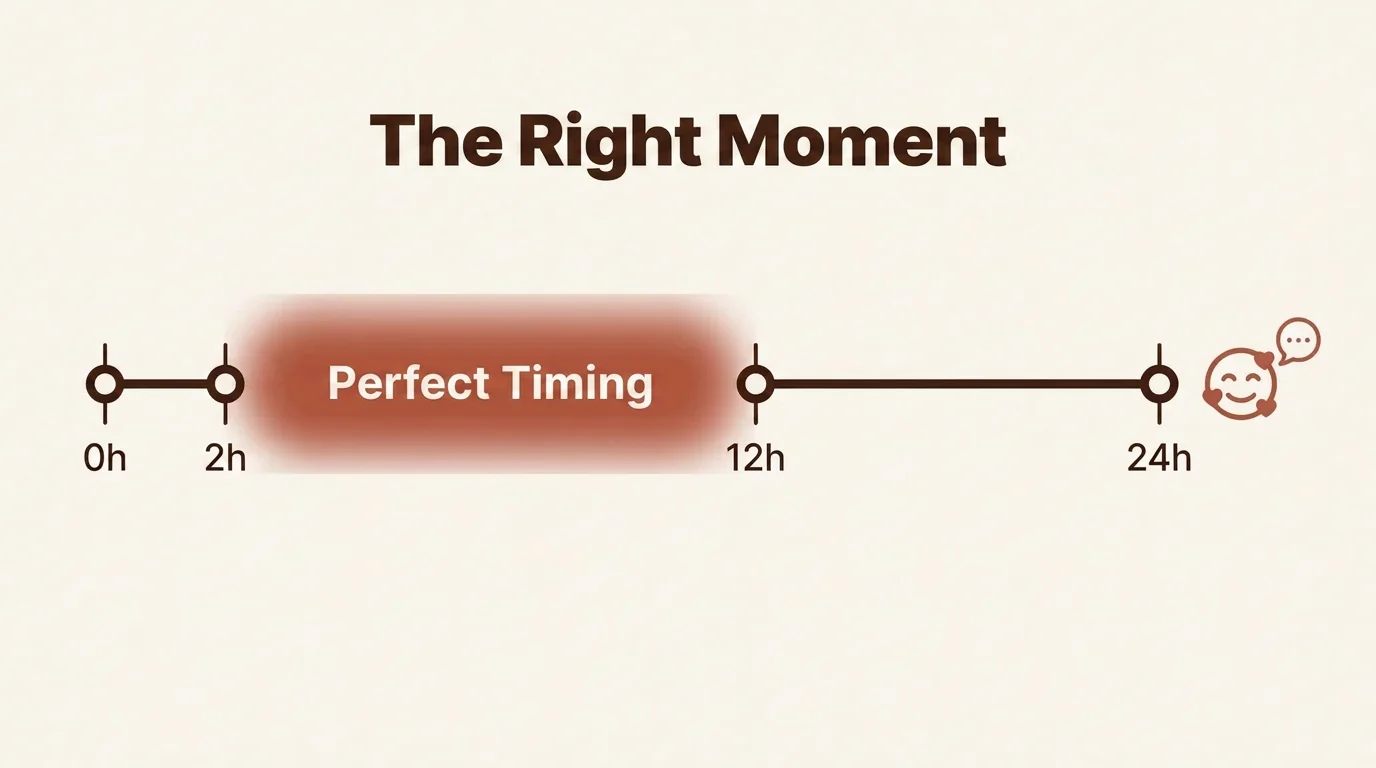
The old rule of waiting three days is outdated and now just comes across as disinterested. Get in touch within 2 to 24 hours if you enjoyed the date.

It shows genuine interest without playing games. In practice, people appreciate direct communication far more than strategic waiting.

Message template if you're interested

Refer to a specific moment from your conversation – it shows you were paying attention:

'Hey, I can't stop thinking about that story of your road trip – I'd love to hear more about it. Are you free for a second date next week?'

Specific references make your message personal and show genuine interest.

The polite rejection

If there was no spark, be honest and respectful. Ghosting is unfair and leaves the other person feeling insecure:

'Thanks for a lovely evening yesterday. I just didn't feel we had that spark. I wish you all the best in your search!'

This is fairer than ghosting and shows maturity. Most people appreciate a clear rejection more than days of uncertainty.

Next steps if you liked them

Suggest a specific second date instead of just saying 'We should do this again sometime'. It shows initiative and interest.

Suggest a specific timeframe or activity: 'Fancy going to the museum together next weekend?' is better than vague hints.

A timeline diagram marking the optimal time to message after a first date as being between 2 and 12 hours.

Forget outdated rules: the ideal time for that first message is usually between two and twelve hours after the date for maximum authenticity.

Conclusion: Authenticity is the key to success

A first date is an opportunity, not an obstacle. The most important factors for success are authenticity, active listening and mutual respect.

Stay relaxed, be yourself, and listen more than you talk. The right preparation gives you confidence, but a real connection is built on authenticity and mutual respect.

If you're looking for singles who are serious about finding a partner, reputable dating sites like Match.com, eharmony or Hinge are a great choice. They are specifically aimed at people looking for a real relationship.

If you're ever unsure how to reply to a message or whether your profile is making a good impression, AskAlva can help with specific suggestions and honest feedback – it's discreet and your screenshots are never saved.

First date FAQs

How long should a first date last?

Ideally, a first date should last one to two hours. This is long enough to get to know each other, but short enough that you don't feel pressured for time. If it's going well, you can always extend it spontaneously.

What should I do if the date is going badly?

If the date is going badly, stay polite and end the meeting graciously after one drink or about an hour. An honest statement like, 'I don't think we've quite got the right chemistry' is more respectful than making up an excuse.

Should I talk about my intentions on a first date?

You should touch on your intentions on a first date if the conversation naturally goes there. Be honest about whether you're looking for a relationship or just want to get to know someone for now, but avoid making it the main topic of conversation.

Is a kiss on the first date appropriate?

A kiss on the first date is appropriate if the situation and the signals from both of you are right. If you both seem keen and the mood is right, a kiss is perfectly fine, but you shouldn't force anything – a hug is just as nice.

What if my date is constantly on their phone?

If your date is constantly on their phone, you should mention it politely, for example by asking, 'Is everything okay? You seem to be checking your phone a lot.' If the behaviour continues, it's a clear sign of a lack of interest and a good reason to end the date.

How can I tell if the person I'm meeting is being honest?

You can tell if the person you're meeting is being honest by listening for consistency in their stories and noticing whether they answer questions without being evasive. For people you've met through online dating, the Profile and Scam Check from AskAlva can help you check for suspicious profiles before you even meet.

What if I don't hear from them after the date?

If you don't hear from them after the date, wait a day or two and then send a short, friendly message yourself. If you still don't get a response, you should take that as a no and invest your energy in new connections instead.

How do I deal with pre-date nerves?

You can deal with pre-date nerves by accepting them as normal and focusing on curiosity instead of expectations. Take a few deep breaths and remind yourself that it's just a chance to get to know someone. A short meditation or a walk beforehand can also help.


📍 Chat coach by Alva

Unsure what to write before or after the date? Upload a screenshot — Alva suggests the right words.

Try it free →

Screenshots are never stored.

More from “First date & after