The 'What Are We?' Talk: How to Define the Relationship Without Pressure

By Sandra · Updated on 2 September 2026 · ✓ Reviewed by the editorial team

The 'What Are We?' Talk: How to Define the Relationship Without Pressure

You've been dating someone for a few weeks, the dates are going well, you text every day – but you don't know where you stand. The question 'So, what are we?' is on the tip of your tongue, but you don't want to seem needy or scare the other person off. This limbo between 'just dating' and 'a proper relationship' can be exhausting, especially if you're getting back into dating after a long partnership or a breakup.

Seeking clarity isn't a sign of weakness or pressure – it shows self-respect and emotional maturity. The challenge is to have the conversation in a way that doesn't make anyone feel cornered. In fact, many promising connections fail not because of a lack of interest, but because of how the topic is brought up.

In a nutshell

You can define the relationship without pressure by focusing the conversation on exclusivity first, rather than demanding the 'relationship' label straight away. This way, you build clarity and trust without catching the other person off guard.

  • Clarity about your relationship status creates an honest foundation for real trust
  • The focus should initially be on exclusivity before dropping the 'relationship' label – this takes the pressure out of the conversation
  • 'I' statements and open-ended questions are key to a relaxed chat, not an interrogation
  • Look out for non-verbal cues and future-focused language before you initiate the chat
  • After just a few dates, it's often too soon for the big label, but it's the perfect time for the exclusivity talk
  • Tools like the Alva Chat-Check can help you correctly interpret signals in your messages

When is the right time to define the relationship?

After 4 to 8 weeks of regular dates, it's common to talk about exclusivity, and after 2 to 3 months of exclusive dating, the relationship label usually follows. There's no fixed D-day, but there are patterns that emerge in many successful relationships.

The timeframes vary depending on how intense the contact has been. If you're seeing each other three times a week and texting daily, you'll build emotional closeness faster than if you only meet up weekly. It's not the calendar that counts, but the quality and frequency of your interactions.

Typical timeframes:

  • After 4 to 8 weeks of regular dates, the exclusivity talk is common
  • After 2 to 3 months of exclusive dating, the relationship label often follows
  • After a few dates (3 to 5 meet-ups), it's usually too soon for the label, but a good time for the exclusivity question

The 3-stage model

Stage 1 – The Discovery Phase (Dates 1 to 3)

You're getting to know each other, having fun, and checking the chemistry. No commitment talk is needed. This phase is all about finding out if there's a baseline of chemistry and attraction. Talking about your status here feels premature and can be off-putting.

Stage 2 – The Deepening Phase (Weeks 4 to 8)

You're seeing each other regularly, texting daily, and planning things together. This is the right time for the exclusivity talk. It's noticeable that during this phase, many people start wondering about other potential dates – a clear sign that clarification is needed.

Stage 3 – The Relationship Commitment (From month 2 or 3)

You've met friends, you're planning further ahead, and you're becoming part of each other's lives. Now, the 'relationship' label feels natural. Being integrated into someone's social circle is a strong indicator of serious intentions.

Gaining security: Why the exclusivity phase is a crucial intermediate step before officially defining the relationship.

A note for singles over 40 or 50: At this stage in life, many people value directness over playing games. After a long marriage or partnership, you're not interested in mind games – and that's perfectly valid. If the uncertainty is affecting your daily life, it's time to talk. Experience shows that people with relationship history often seek clarity sooner, and this is usually respected.

What are we? Why this conversation often creates so much pressure

The question of relationship status triggers a psychological defence mechanism in many people called reactance – they instinctively push back when they feel their autonomy is threatened or they're being pushed into something.

When you ask, 'What are we?', the other person often hears an unspoken ultimatum: 'Decide now – or I'm gone.' This creates stress, even if there's genuine interest. The phrasing itself carries an implicit demand that can trigger a defensive response.

The three most common fears behind the pressure

  1. Fear of rejection: What if the answer is 'I don't want a relationship'?
  2. Fear of losing control: The question feels like a demand for a commitment you might not be ready for.
  3. Fear of seeming needy: The person asking might come across as desperate or insecure.

The key is to frame the conversation not as a demand, but as an invitation. You share where you stand and create space for an honest answer – without an ultimatum. This approach changes the entire dynamic of the conversation.

In practice, people respond positively to clarity when it's not used as a pressure tactic. The art is in balancing honesty about your own needs with respect for the other person's pace.

If you're unsure how your messages are coming across, the Alva Chat-Check can help: just upload a screenshot of your conversation and get an assessment of whether the signals point to genuine interest or just politeness.

Talking exclusivity vs. defining the relationship – what's the difference?

Exclusivity means: We're not dating anyone else and are focusing on each other. It's a 'soft commitment' – you're seeing where things go without immediately settling on an official label.

Defining the relationship means: We are a couple, with everything that entails – planning a future together, integration into social circles, and a long-term perspective. This step also often includes the expectation of commitment during conflicts and a willingness to face challenges together.

Many people confuse these two terms, but the distinction is crucial for a pressure-free conversation. The exclusivity phase acts as a trial run: you focus on each other without having to figure out all the future questions just yet.

The difference between pressure and openness: How the right choice of words can dramatically affect the stress level of the conversation.

Why the exclusivity stage is so important

It takes the pressure out of the conversation. Instead of asking, 'Do you want to be in a serious relationship with me?', you're asking, 'Are you seeing other people right now?' It feels much lighter – but it's still a clear step forward.

The exclusivity phase allows both of you to focus on the connection without immediately having to meet all the expectations of a full-blown relationship. This intermediate step has proven particularly helpful for people who are dating again after long relationships – it offers security without being overwhelming.

Particularly on dating sites like eHarmony, Match.com or Ourtime, which are aimed at people looking for something serious, the exclusivity phase is often shorter. Many singles over 40 or 50 appreciate getting clarity early on rather than being stuck in a 'situationship' for weeks.

How to ask about your status after a few dates without seeming needy

It's not what you say, it's how you say it – and the right choice of words makes the difference between a relaxed chat and a tense interrogation. Neediness doesn't come from the question itself, but from the way you ask it.

The three golden rules

'I' statements, not an interrogation: Instead of 'Are you still seeing other people?', say: 'I'm not seeing anyone else at the moment, and I'm really enjoying the time we spend together.' This phrasing shares your position without putting the other person on the defensive.

Open-ended questions, not ultimatums: Instead of 'Do you want a relationship?', ask: 'How are you seeing things between us?' Open-ended questions invite dialogue; closed questions create yes-or-no pressure.

An easy out: Give the other person space to answer honestly – without fear of drama. 'I just wanted to know where you're at. No pressure.' This addition signals psychological safety.

The right moment: Choose a relaxed setting – during a walk, after a nice date, in a quiet moment. Avoid the 'we need to talk' moment at the kitchen table, which immediately sets off alarm bells. The body language of being side-by-side (like when walking) feels less confrontational than sitting face-to-face.

What to say exactly: Your wording toolkit

Here are some tried-and-tested phrases that create clarity without adding pressure:
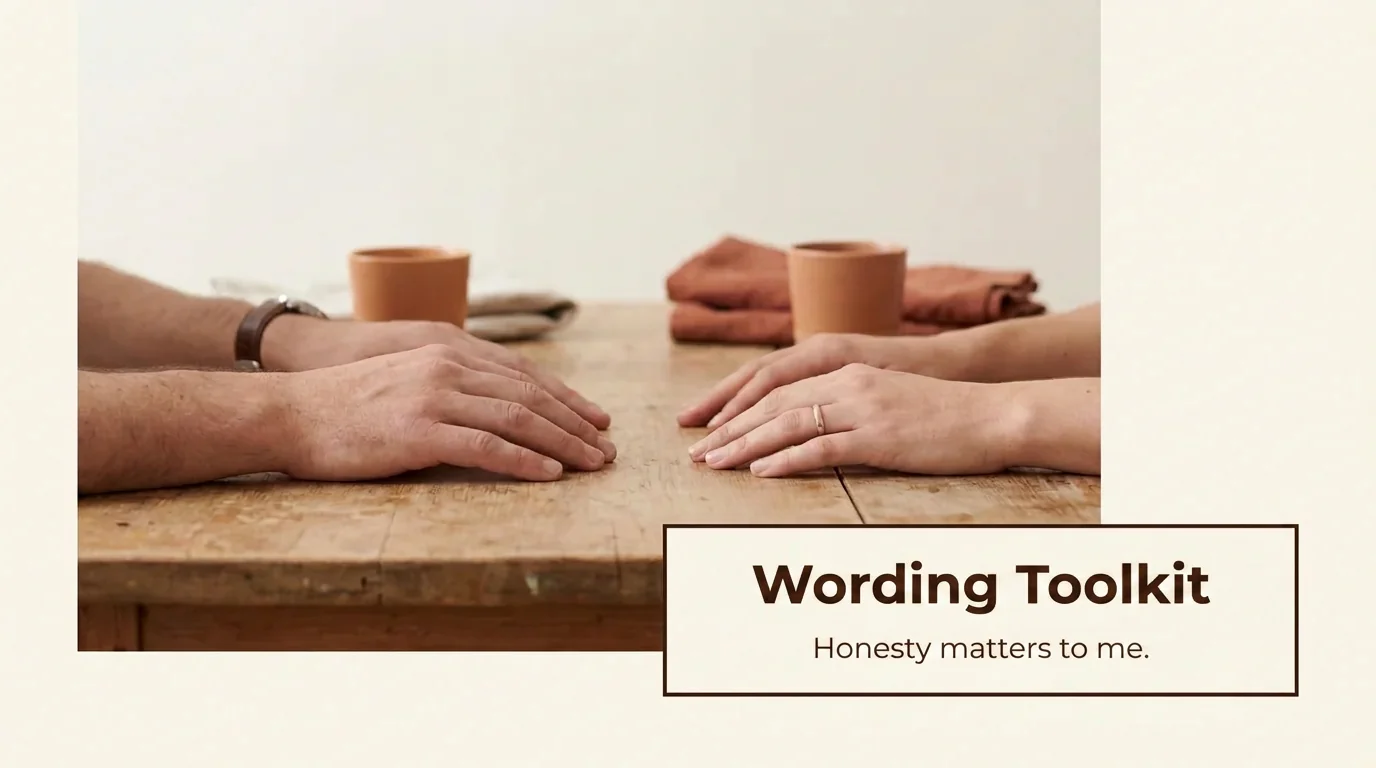
A close-up of hands during a conversation about feelings and relationship status in a calm atmosphere. The power of 'I' statements: How to communicate your needs clearly while giving your partner the space they need.

For the cautious approach

'I'm really enjoying what we have. I just wanted to let you know that I'm not seeing anyone else – and I was wondering where you're at with it.'

This phrasing is gentle but clear. It states your position without demanding an immediate response in kind.

For the direct approach

'I'm a big fan of clarity. How are you seeing things between us? I feel like things are going really well.'

Directness is appreciated by many people, especially those with more relationship experience. The positive framing ('things are going really well') takes the edge off the question.

For those re-entering dating after a long relationship

'I always find this transition a bit awkward, but I'd love to know if we're on the same page. Are you seeing other people?'

The self-disclosure ('find this transition awkward') creates vulnerability and invites the other person to be honest as well.

The future-vision technique

'I was thinking it might be fun to go away for a weekend in the summer. What do you think – is that something you'd be up for?'

This is a gentle way to float the idea of future plans and test their reaction. If they're enthusiastic, you know they're thinking along the same lines. Hesitation or avoidance, on the other hand, signals uncertainty about the future.

The casual question

Sometimes the best conversation is one that doesn't feel like a conversation. During a walk, in the car, while cooking – moments when you're side-by-side, not face-to-face. 'By the way, I've been meaning to ask: how are you feeling about all this?'

The casualness reduces the drama. At the same time, the activity (walking, driving, cooking) allows both of you to break eye contact if needed, which can encourage more honest answers.


4. What signs show me we're on the same page beforehand?

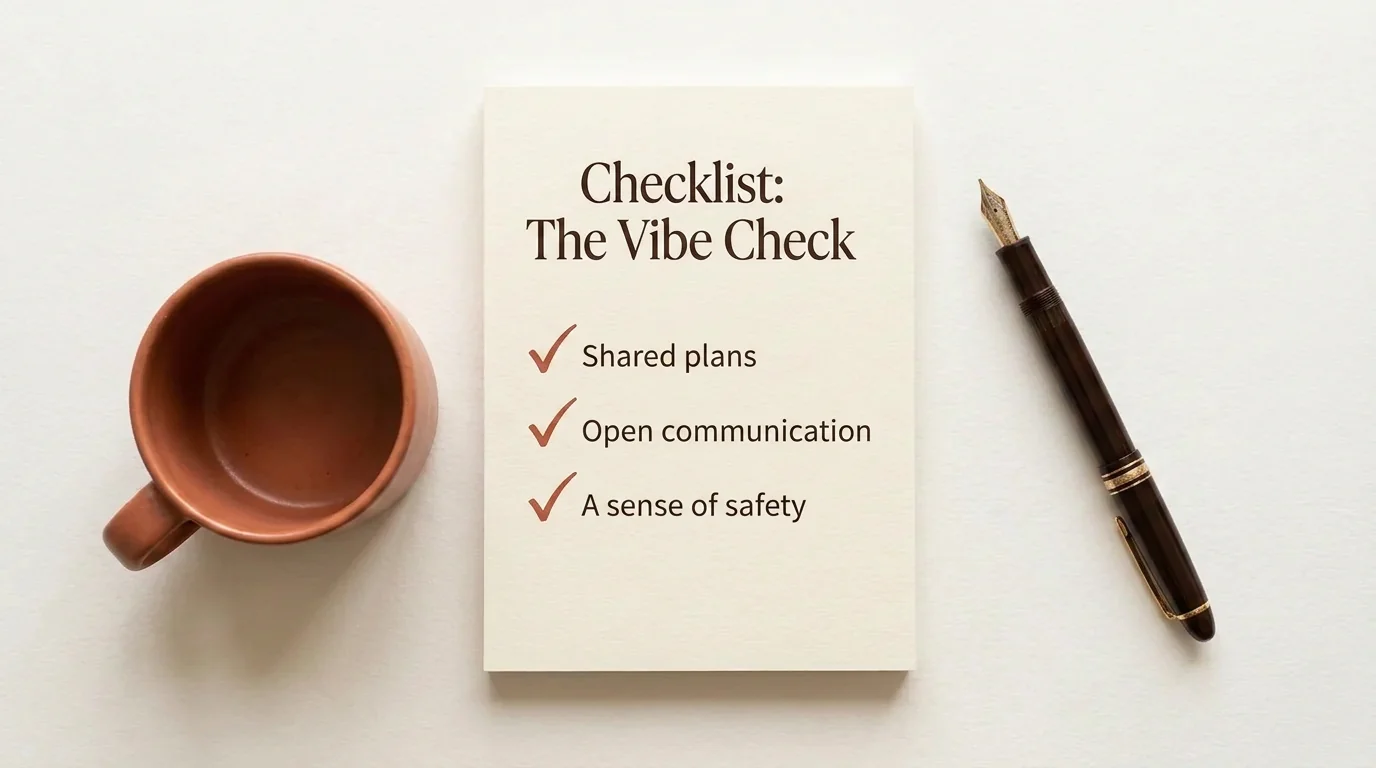
Before you start the conversation, it's worth doing a vibe check: are there enough green flags to suggest the other person feels similarly? This preliminary analysis helps you choose the right moment and realistically gauge what kind of answer to expect.

A checklist on a notepad for the vibe check before the defining-the-relationship talk. Preparation is key: Use these three indicators to find the perfect moment for a pressure-free conversation.

The 5 most important indicators

Investment and initiative: Does the other person proactively plan dates? Do they suggest specific times, or do you always have to make the first move? One-sided initiative is a warning sign – genuine interest shows in mutual effort.

Future-focused language: Does the word 'we' pop up in conversations about next month? Phrases like 'We should go to...' or 'Next time you're here...' are strong signals. People who see a future together automatically speak in future scenarios.

Integration into their life: Have you already met friends or been to important places? Have you been invited to birthdays or events? Being integrated into their social circle is one of the most reliable indicators of serious intentions. Someone who keeps you hidden isn't planning a future with you.

Dating app activity: Is their profile still active, or have they stopped looking for new matches? Be careful: you often can't see this directly – but if someone talks openly about the app or has deleted their profile, that's a clue. Some people might casually mention, 'I've deleted the app' – a clear signal.

Emotional openness: Does the person share personal stories, worries, or joys with you? This shows trust and a desire for real intimacy. If conversations remain superficial for weeks, it suggests emotional distance.

If you're unsure about the signals in your chats, the Alva Chat-Check can help: upload a screenshot and get an assessment of whether the person is showing genuine interest or just being polite.

What to do if the answer is 'I need more time'

This answer is frustrating – but it's not an automatic 'no'. In fact, 'I need more time' can mean different things: genuine uncertainty, fear of commitment, keeping options open, or simply a slower pace. Here's how to handle it:

Stay calm: 'Needing time' often means the person is still unsure, but not uninterested. Take a breath and ask a follow-up question. Your reaction in this moment says a lot about your emotional maturity.

Ask for specifics: 'I understand. What is it you feel you need to be sure?' This shows that you respect where they are – and helps you understand if there's a real obstacle or just a fear of intimacy. Sometimes the reasons are understandable (a recent breakup, stress at work), and sometimes they're vague excuses.

Set a mental deadline: You don't have to wait forever. Tell yourself internally: 'I'll give this another four weeks. If nothing has changed by then, I'm moving on.' This protects your self-worth and prevents you from getting stuck in limbo. You don't have to communicate this deadline – it's for you.

Watch their actions, not their words: Do they show more commitment in the following weeks, or does everything stay the same? Genuine uncertainty resolves over time; disinterest remains constant.

Protect your self-worth: If there's still no clarity after a few months, making a clean break is often healthier than holding out hope. You deserve someone who is sure about you – not someone who keeps you hanging. A common rule of thumb among relationship coaches is that if there's no progress after three months, the likelihood of it working out is low.

If you get a clear 'no': As painful as it is, clarity (even negative clarity) is a win. You're no longer wasting your time and can focus on someone who is truly available. An honest 'no' is more respectful than a string of 'maybes'.

If conversations like this make you want to improve your profile to attract the right kind of singles, the Alva Profile-Check can help: upload your photos and bio and get specific feedback on what you can improve – without any judgment of you as a person, just your presentation.

Frequently Asked Questions (FAQ)

When should you bring up exclusivity?

You should bring up exclusivity when you feel close after about 4 to 8 weeks of regular dates and are in contact several times a week. A good indicator is when you start to wonder if the other person is still seeing other people. That internal nudge signals that you're emotionally invested – and need clarity to move forward.

What is the 3-3-3 rule in dating?

The 3-3-3 rule in dating is a guideline suggesting you should reflect on whether the relationship feels right after three dates, three weeks, and three months. After three dates, you know if the chemistry is there. After three weeks, you can tell if there's genuine interest. After three months, you can gauge if it has long-term potential. This rule isn't set in stone, but rather a prompt for conscious reflection instead of just going with the flow.

How do you casually ask if you're a couple?

You can casually ask if you're a couple by using the future-vision technique instead of a direct question: 'I was thinking we could check out that festival in the autumn – would you be up for that?' Or try the casual question during a walk: 'By the way, how are you seeing things between us?' It feels lighter than a serious kitchen-table talk. The reaction to future plans often reveals more than a direct question about your status.

How can I tell if the other person wants a relationship too?

You can tell if the other person also wants a relationship by looking for signs like future-focused language ('we should...'), integration into their life (you've met friends), initiative (they proactively plan dates), and emotional openness. When someone invites you into their life and talks about future plans together, it's a strong signal. If you're unsure about the signals, the Alva Chat-Check can help. Spontaneous invitations to everyday activities (not just planned dates) are particularly telling, as they show they want you to be part of their life.

What are the 3 pillars of a good relationship?

The three pillars of a good relationship are trust, communication, and shared values. Trust means you feel safe and aren't afraid of being hurt. Communication means you can talk openly about needs, fears, and desires – even the difficult topics. Shared values mean you're on the same page about the big things in life (family, future, lifestyle). Without these three foundations, a relationship will remain unstable.

Is it too soon to ask about relationship status after 5 dates?

After 5 dates, it's usually too soon for the 'relationship' label, but it's the perfect time for the exclusivity talk. You could say: 'I'm really enjoying my time with you and I'm not seeing anyone else. How are you feeling about it?' This creates clarity without being pushy. The exclusivity question is the logical first step – it shows interest without demanding an immediate long-term commitment.

How do I deal with the fear of seeming needy?

You deal with the fear of seeming needy by understanding that neediness comes from your tone, not the question itself. If you ask out of genuine curiosity and give the other person space to answer honestly, you'll come across as self-assured, not needy. Avoid phrases like 'I hope you like me too' or 'Tell me you'll stay'. Stick to 'I' statements: 'I'd like to know where you stand.' The difference is in your attitude: are you asking from a place of insecurity or self-respect?

What if I'm not sure what I want myself?

If you're not sure what you want yourself, you should communicate that openly and honestly. You could say: 'I'm not entirely sure where this is going yet – but I like the direction. How are you feeling about it?' Honesty about your own uncertainty is more attractive than a fake commitment. This openness invites the other person to be honest too, rather than playing a role. To sum up: Defining your relationship status isn't a sign of weakness, but of courage and self-respect. When you ask, you regain control – either by building a future together or by gaining the freedom to move on. Use the exclusivity stage as a gentle in-between step: it takes the pressure out of the conversation and still gives you the clarity you need.

💬 Chat coach by Alva

In a conversation where you’re stuck? Upload a screenshot — Alva suggests three replies.

Try it free →

Screenshots are never stored.

More from “Chatting & writing