Getting the Last Laugh: A Guide to Witty Messages That Aren't Cringey

By Sandra · Updated on 9 September 2026 · ✓ Reviewed by the editorial team

Getting the Last Laugh: A Guide to Witty Messages That Aren't Cringey

Humour is a superpower in online dating – but only if it doesn't backfire. There's a fine line between 'funny' and 'cringey', and especially if you're getting back into dating after a long break, you might be unsure where that line is. The good news is: a sense of humour in your chats isn't an innate talent, but a skill you can learn. In this guide, you'll learn how to score points with wit and self-deprecation, without the fear of being cringey.

In a nutshell

The best way to write funny texts for dating apps and sites is to use self-deprecation and personal observations. This avoids the cringe of copied jokes or misunderstood sarcasm. It’s how you, as a single, can boost your chances of a match without having to fake it.

  • For singles over 40, a sense of humour is one of the most attractive qualities in online dating.
  • The biggest hurdle is the fear of being cringey – of coming across as awkward or embarrassing.
  • Successful humour is built on observation and self-deprecation, not on memorised jokes.
  • On serious dating sites like eharmony or Match.com, a good mix of sincerity and light-heartedness gets you to a first date faster.
  • Without facial expressions and tone of voice, sarcasm is often misunderstood in chats.
  • Copied-and-pasted lines seem lazy and show a lack of genuine interest in the other person.

Contents

  1. Why humour in your chats is the ultimate match-booster
  2. Myth: A sense of humour is an innate talent you can't learn
  3. The 3 pillars of fail-safe humour in dating
  4. Myth: Sarcasm is the highest form of intelligence and great for flirting
  5. The anti-cringe formula: How to avoid awkward messages
  6. Myth: Copied lines and copy-paste openers save time and actually work
  7. Toolbox: Bio inspiration
  8. Situational training: How to react with wit in tricky moments
  9. Conclusion: Dare to be funny
  10. Frequently asked questions about humour in dating

1. Why humour in your chats is the ultimate match-booster

Laughter breaks down barriers and releases dopamine – that's not New Age fluff, it's neurobiology. When you make someone laugh, you create an instant positive connection. This biochemical reaction explains why funny messages are so effective in dating.

Funny messages signal intelligence, quick wit and emotional security. Someone who can laugh at themselves comes across as confident and approachable. Profiles with a touch of humour get significantly more replies than purely factual ones.

Humour also acts as a filter. If someone doesn't get your jokes, they're probably not a good fit for you in real life. It might sound harsh, but it saves both of you time. Matches who share a similar sense of humour tend to last longer.

On dating sites like eharmony or Ourtime, where people are looking for something real, humour is the key to deeper conversations – it eases the tension of that first contact and shows you don't take life too seriously. A proven approach is to mix mostly sincere content with a few humorous touches.

2. Myth: A sense of humour is an innate talent you can't learn

Debunked: Humour in chats follows clear patterns that anyone can use.

You don't have to be a stand-up comedian; you just need to react playfully to the other person. Most successful funny messages come from observationyou pick up on a detail in their profile and make a charming comment about it. This is a technique you can practise and perfect.

Authenticity beats perfection. Little mishaps often make for the best laughs: a typo that you point out with a bit of self-deprecation seems more human than a perfectly crafted text. Spontaneous reactions to unexpected situations are especially appealing.

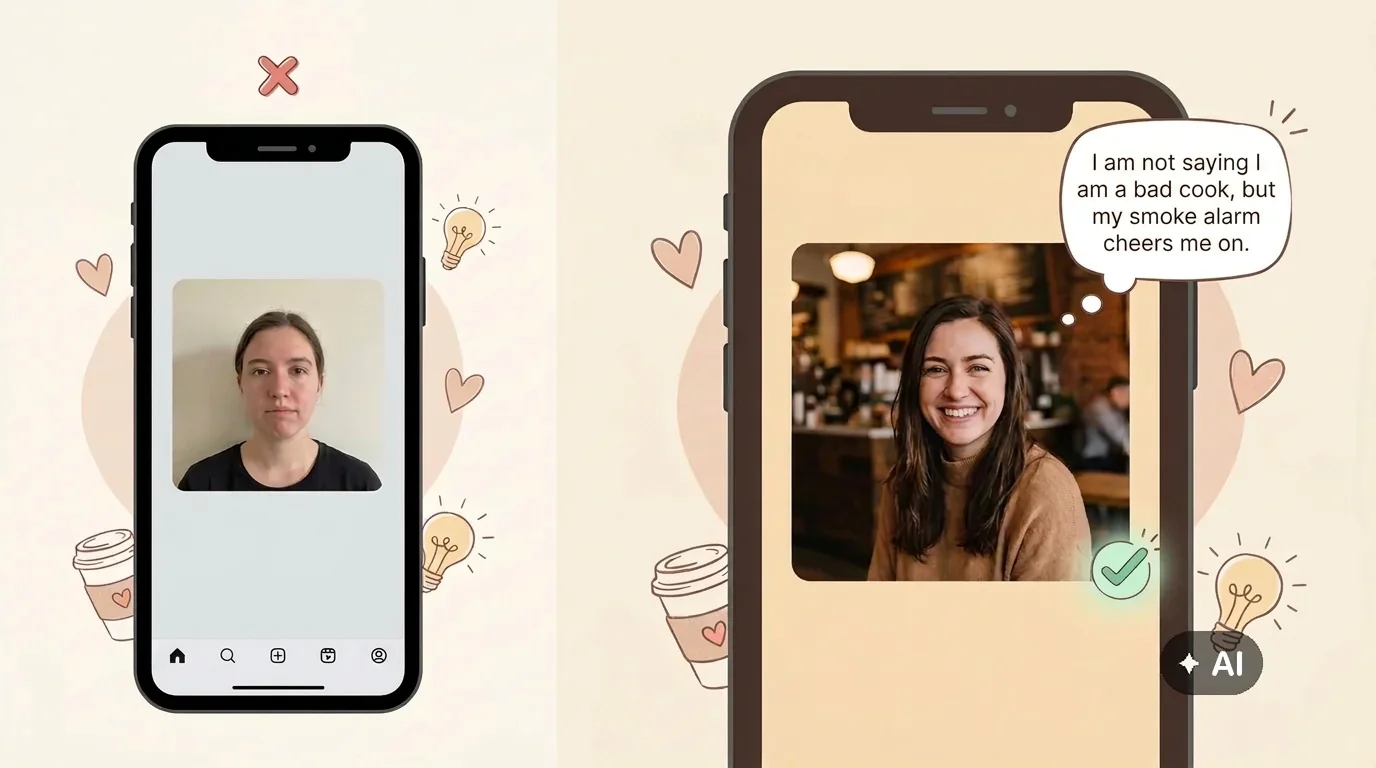
Dating apps like Tinder or Bumble provide ideal templates for humorous openers with their profile prompts. If someone writes, ‘I’m known for my disastrous cooking skills,’ that’s an invitation: ‘In that case, we should probably eat out – I'll pick the restaurant.’

The crucial difference between successful and cringey humour isn't talent, but timing and observation. You can improve both with conscious practice.

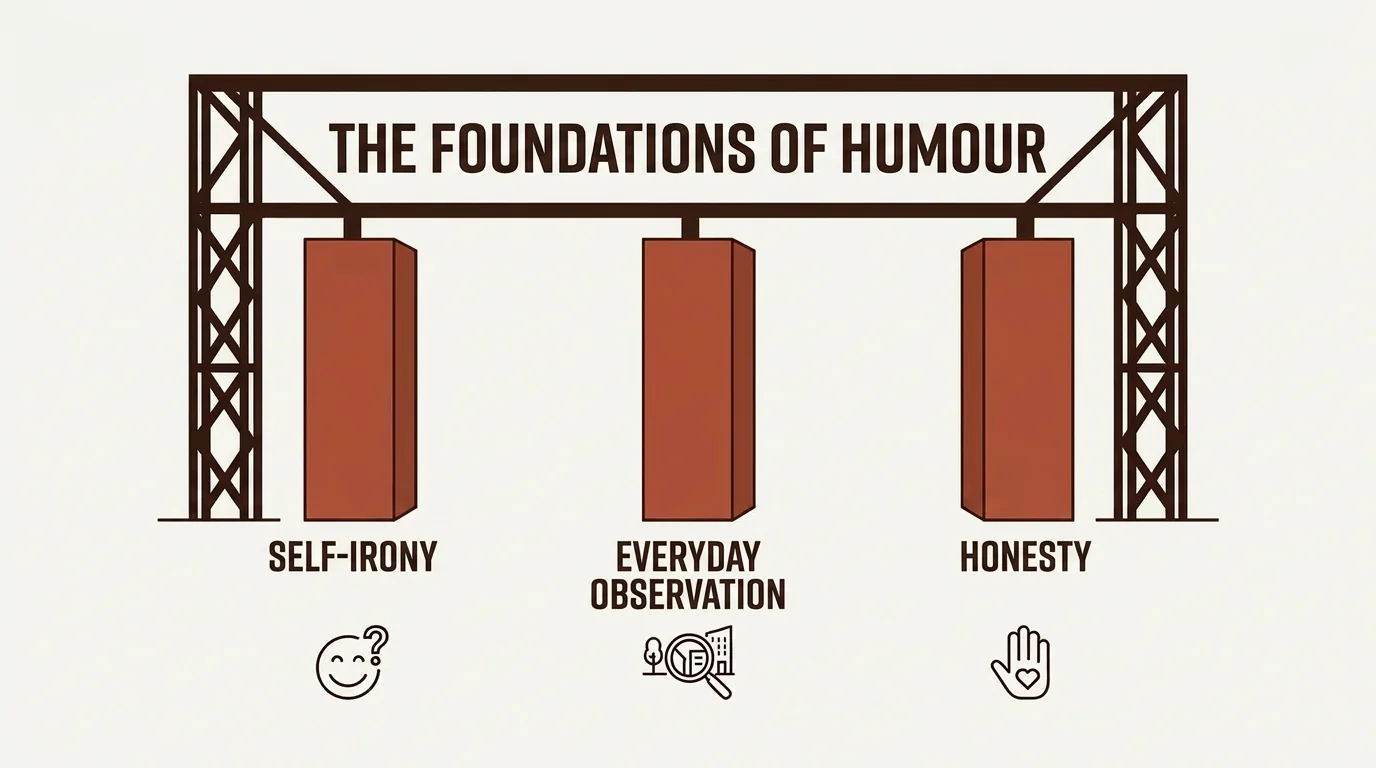
3. The 3 pillars of fail-safe humour in dating

A diagram showing the foundation of humour in dating, with the three pillars of self-deprecation, everyday observation and honesty, in the brand colours.

Pillar 1: Self-deprecation

People who can laugh at themselves come across as confident and approachable. Self-deprecation shows you don't take yourself too seriously – a quality that's especially appreciated by people with a bit of life experience.

Example for singles over 40: "I'm back on dating sites after a 20-year marriage – my last flirting experience was on a Nokia with no camera."

It's honest, funny and instantly disarms the insecurity many people feel when getting back out there. Statements like this create a connection through shared experience, without sounding desperate.

The key is that self-deprecation only works when it comes from a place of strength. The difference between this and self-pity is the tone – you're laughing WITH yourself, not AT yourself.

Pillar 2: Observational humour

Pick up on small details in your match's profile. The dog looking sceptically at the camera. The photo from a hiking trip with windswept hair. The playlist with a surprising amount of 80s pop.

Example: "Your dog looks like he's questioning my intentions. Is there any way I can win him over?"

This shows you've actually looked at their profile. That alone sets you apart from most others. Observational humour demonstrates attentiveness and interest – two crucial qualities in dating.

Personalised messages are three to five times more likely to get a response than generic openers. The reason: they signal genuine interest, not a copy-paste job.

Pillar 3: Charming honesty

Address small insecurities with humour instead of hiding them. It takes the pressure off and makes you seem human. Charming honesty breaks through the facade of perfection that dominates so many dating profiles.

Example: "I always find this transition from chatting to a first meeting a bit awkward, but... would you be up for a coffee?"

Honesty is never cringey when it's wrapped in a bit of light-heartedness. This technique works especially well with people who are also a bit unsure of themselves – it makes them feel understood and helps them relax.

4. Myth: Sarcasm is the highest form of intelligence and great for flirting

Warning: Without facial expressions and tone of voice, sarcasm often leads to misunderstandings in chats.

What you mean to be funny can often come across in writing as arrogant, cynical or insulting. Your match doesn't know you – they can't tell if you're teasing or attacking. With no existing relationship, sarcastic messages are easily misinterpreted.

Use emojis sparingly to signal your tone, but don't rely on them. A winking face can't save every sentence. Even well-intentioned irony can quickly backfire in a text conversation.

A better alternative: Playful teasing (banter) that makes the other person feel good. Instead of "So you listen to Taylor Swift? Brave of you to admit that," try: "Taylor Swift – I respect the commitment. Which album will you defend to the death?"

The second one invites a reply; the first one shuts the conversation down. The difference is in the underlying attitude: banter is inclusive and playful, while sarcasm is often exclusive and dismissive.

Matches that respond positively to playful teasing are more likely to lead to real dates than those where sarcasm dominates the conversation.

5. The anti-cringe formula: How to avoid awkward messages

Avoid jokes at the expense of others or any discriminatory content. What works with your circle of friends can land very differently with a stranger. They don't have the context – so there's no guarantee your humour will be understood correctly.

No sexual innuendos in the early stages – on serious dating sites like Ourtime or eharmony, it just comes across as cheap and disrespectful. A good rule of thumb is to wait until after the first in-person meeting before letting the tone get a bit more relaxed.

Checklist: Would I say this out loud in a coffee shop? If you hesitate, don't send it. This simple question filters out most potentially awkward messages.

The principle of reciprocity: If the other person's replies are very serious, dial back the humour for a bit. Humour only works when you're both on the same wavelength. Pay attention to the length and tone of their responses – they'll tell you how much light-heartedness is appropriate right now.

If you're not sure whether your message is too witty or just falls flat, use the AskAlva Chat Check. Just upload a screenshot, and Alva will give you a concrete assessment and suggest replies – in seconds, and your screenshot is never saved.

Most messages that are perceived as 'cringey' aren't too funny, but too try-hard. Naturalness beats perfection – every time.

6. Myth: Copied lines and copy-paste openers save time and actually work

Debunked: Experienced singles can spot a line from a list a mile off.

A generic joke shows a lack of interest in the actual person. 'Hey gorgeous' or 'Looking for a partner in crime' – your match has read these a hundred times before. The response rate for obviously copied messages is very low.

A simple but personal comment about a photo is a hundred times more effective than the best classic pick-up line. Why? Because it proves you've taken the time – and in the world of dating, time is the most valuable currency.

Example: Instead of "Are you the answer to my prayers?" try: "I see you like hiking too – the Dolomites are on my list as well. What's the best route you've done?"

The second one shows genuine interest. The first is copy-paste and feels hollow. Personalised openers are far more likely to start a conversation than generic ones.

Use AskAlva to check your profile for clichés like these. The Profile Check shows you where your bio seems lazy or generic – and gives you concrete steps to improve it.

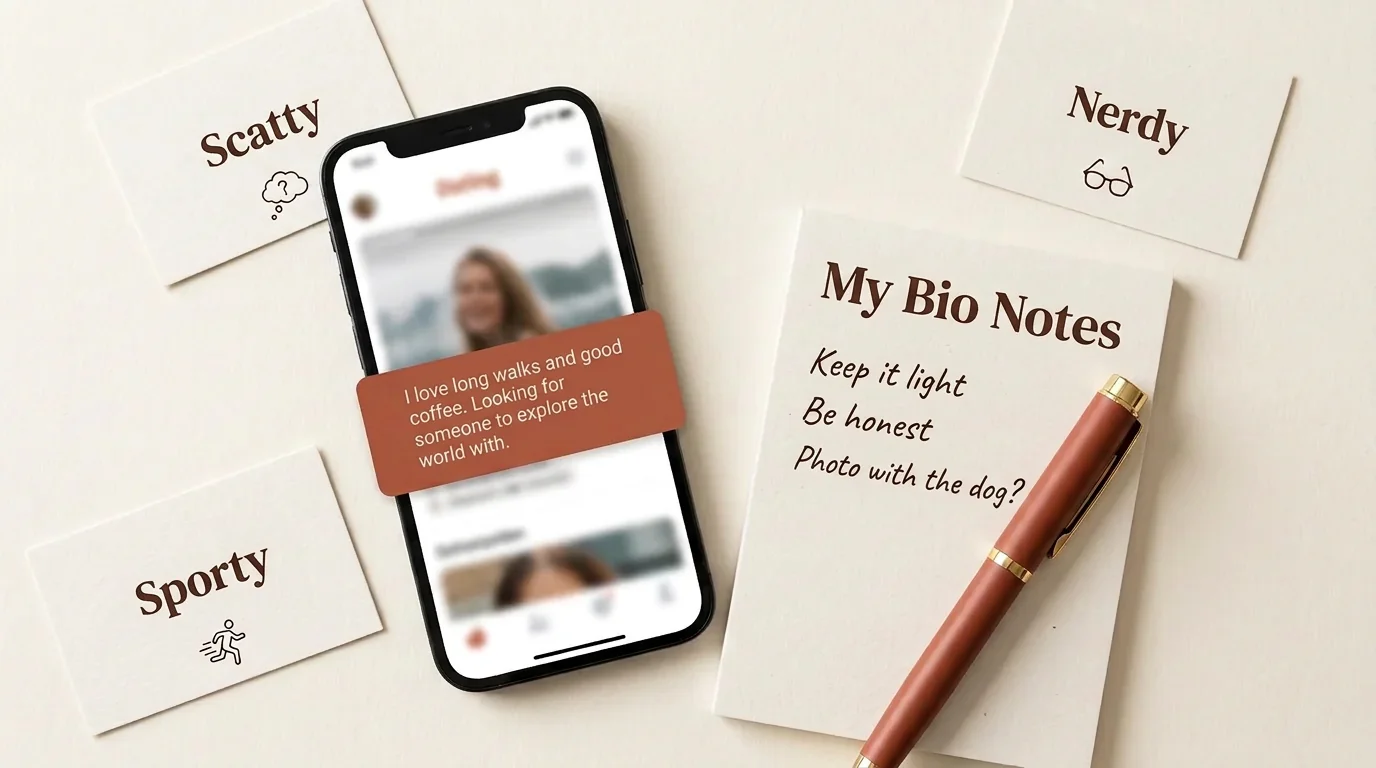
7. Toolbox: Bio inspiration

A flat-lay of a dating toolbox with a smartphone, notepad, and categories like Sporty, Nerdy, and Scatterbrained for the perfect bio.

Your bio is your first chance to show your sense of humour. Avoid clichés like 'love to laugh' or 'looking for my soulmate'. Instead, show your personality through specificity. Concrete details beat abstract descriptions – every time.

The sporty type

"I run marathons, but only if there's pasta waiting at the end. Priorities."

"Yoga in the morning, chaos in the evening – it's all about balance."

These lines show self-deprecation and a down-to-earth attitude. They signal: I take sport seriously, but not *too* seriously.

The nerdy type

"Happy to discuss films no one else has ever seen. Spoilers included."

"I collect cookbooks that I never actually use. Hope springs eternal."

Here, the humour works because of the contrast between aspiration and reality. It comes across as likeable and approachable.

The scatterbrained type

"Regularly lose my glasses – while they're on my head."

"I plan holidays I never end up booking. The research was amazing, though."

Self-deprecation about little quirks makes you seem human. The key is to make sure the quirks are charming, not problematic.

Tip: Use the AskAlva Profile Check to find out if your bio comes across as inviting and authentic – or if it just gets lost in the crowd.

8. Situational training: How to react with wit in tricky moments

What to write after making a typo?

Use self-deprecation: "My autocorrect is feeling particularly creative today. I obviously meant [corrected word]."

This shows you're relaxed and don't get easily flustered. Everyone makes typos – it's how you react that says more about you than the mistake itself.

How to react to a long pause in replies without sounding offended

"I've noticed we've been chatting for two weeks without meeting. Let's change that – are you free on Thursday?"

This is honest and goal-oriented without sounding passive-aggressive. You're addressing the situation directly while also offering a solution.

Alternatively: "I'm enjoying our chats, but I'm more of an in-person kind of person. How about you?"

How to make the transition from chat to call or meeting with humour

"Great chat. Let's continue this over a coffee – how's Saturday for you?"

Or: "Your taste in coffee sounds suspiciously good. Let's find out if it lives up to the hype."

After you've exchanged 8 to 12 messages, it's the ideal time to suggest meeting up. Any earlier can seem rushed; any later and you risk losing momentum.

Suggesting a date

"You've sold me on that ramen place. Saturday afternoon, or is the weekend too soon?"

It's specific, shows initiative, and still leaves room for them to say no. The combination of decisiveness and flexibility comes across as confident.

If you're unsure how to handle a tricky situation in a chat, AskAlva Chat Coaching can help. You upload a screenshot, and Alva will suggest three replies in different tones – warm, confident, or humorous.

9. Conclusion: Dare to be funny

Humour is an invitation to connect, not a stage performance. You don't have to force anyone to laugh – it's enough to show that you don't take life too seriously.

Stay true to yourself and use wit as an icebreaker, not a mask. The best matches happen when you're authentic and the other person appreciates you for exactly who you are.

Next step: Use the AskAlva Profile Check to make sure the humour in your bio is coming across the right way. Just upload a screenshot, and Alva will give you honest feedback – without judging you as a person, only how you present yourself. Screenshots are never saved.

Frequently asked questions about humour in dating

How do I know if my humour is going too far?

You'll know if your humour is going too far by your match's reaction: if their replies get shorter or more serious, dial the humour back. Reciprocity is key – if they're not teasing back, it might not be the right moment. A sudden change in tone is usually a sign that your last message didn't land well.

Are emojis necessary to be funny?

Emojis aren't necessary to be funny, but they can help to signal your tone. Don't rely on them, though; a well-worded sentence works perfectly well without a winking face. As a rule of thumb: one emoji per message at most, and only if it supports your statement rather than replacing it.

What should I do if my match doesn't respond to jokes?

If your match doesn't respond to your jokes, switch to a more serious, interested tone. Some singles need to build trust before they open up to humour. If that doesn't work either, you might just not be a good fit. A different sense of humour is one of the most common reasons matches don't work out.

Isn't self-deprecation a sign of insecurity?

Self-deprecation isn't a sign of insecurity. On the contrary, it shows you don't take yourself too seriously, which comes across as confident and mature. The important thing is not to drift into self-pity. The difference is in the dose: one self-deprecating comment in a conversation is charming; three in a row seems desperate.

How do I find my own style of humour?

You can find your own style of humour by noticing what makes you laugh in real life. Do you like puns? Are you more of a dry wit? Do you enjoy absurd comparisons? Your humour in chats should match your real-life humour. Anything else seems forced and will only work long-term in dating if it reflects your actual personality.

Can I use humour to talk about serious topics?

You can use humour to talk about serious topics, but you should proceed with caution. Charming honesty works well for your own insecurities, but when it comes to your match's sensitive subjects, empathy is more important than any joke. Only follow suit if your match is the one who first strikes a humorous tone about a serious topic.

How should I react if my joke falls flat?

If your joke falls flat, the best way to react is to stay relaxed. A line like, 'Well, that sounded funnier in my head,' is an honest way to recover, or you can simply change the subject – not every joke has to be a winner. The ability to move on smoothly from a failed joke often seems more attractive than landing the perfect one.

Should my first message be funny?

You should only be funny in your first message if it comes up naturally. The priority should always be to make a specific reference to their profile. An honestly interested comment beats a generic joke every time. The most successful first messages combine a personal touch with a hint of light-heartedness, but the personal connection always comes first.

💬 Chat coach by Alva

In a conversation where you’re stuck? Upload a screenshot — Alva suggests three replies.

Try it free →

Screenshots are never stored.

More from “Chatting & writing