Are all the good ones taken? 5 dating myths holding singles over 50 back

By Sandra · Updated on 30 October 2026 · ✓ Reviewed by the editorial team

Are all the good ones taken? 5 dating myths holding singles over 50 back

Getting back into dating after a long relationship, a divorce or a loss often feels like looking out at an empty marketplace. That little voice in your head whispers, “All the good ones are already taken.” But what if that very belief is the real obstacle?

Many singles over 50 carry around invisible barriers – beliefs that act like shields but actually block the path to meeting new people. These dating myths aren't just harmless thoughts. They affect your vibe, how you write your profile and, most importantly, your courage to even get started.

In a nutshell

The belief that all the good singles are taken is a myth that holds you back on dating apps and dating sites. In reality, break-ups and new starts mean that new singles over 50 are always entering the dating scene.

  • Dating myths often act as unconscious defence mechanisms against rejection
  • Due to break-ups and new beginnings, the pool of singles over 50 is more dynamic than you might think
  • Being proactive and having a positive mindset matter more than your biological age
  • Specialist dating sites are aimed specifically at singles with serious intentions
  • Reframing negative beliefs opens your eyes to realistic opportunities
  • You only need one person who's right for you – unanswered messages before that say nothing about your worth

Why your brain holds you back with dating myths

After a painful break-up, the end of a decades-long marriage or the loss of a partner, your brain develops strategies to avoid further hurt. Dating myths are exactly those kinds of strategies – disguised as “realistic assessments”.

You could call it wearing negative glasses. They filter what you see to confirm your own fears. If you're convinced that "all the good ones are taken," you'll subconsciously look for proof: the profile that doesn't reply, the person who ghosts you after three dates, the friend who talks about their happy relationship.

What's striking is that these glasses don't just affect how you see things, but also the vibe you give off.

If you've already given up inside, you'll send out defensive signals when you meet someone. Your body language becomes more reserved. Your profile photos look insecure. Your messages sound apologetic. Other people pick up on these signals – often subconsciously – and react with similar caution.

The first step towards change is to recognise these myths for what they are: excuses to avoid leaving your comfort zone. They're not malicious, they're meant to protect you – but they're also paralysing.

Once you spot these mental blocks and actively challenge them, your whole aura changes. Your body language becomes more open, your profile more confident, your communication more direct. This change doesn't happen overnight, but you'll feel it – in the quality of your conversations and in how open others are to meeting up.

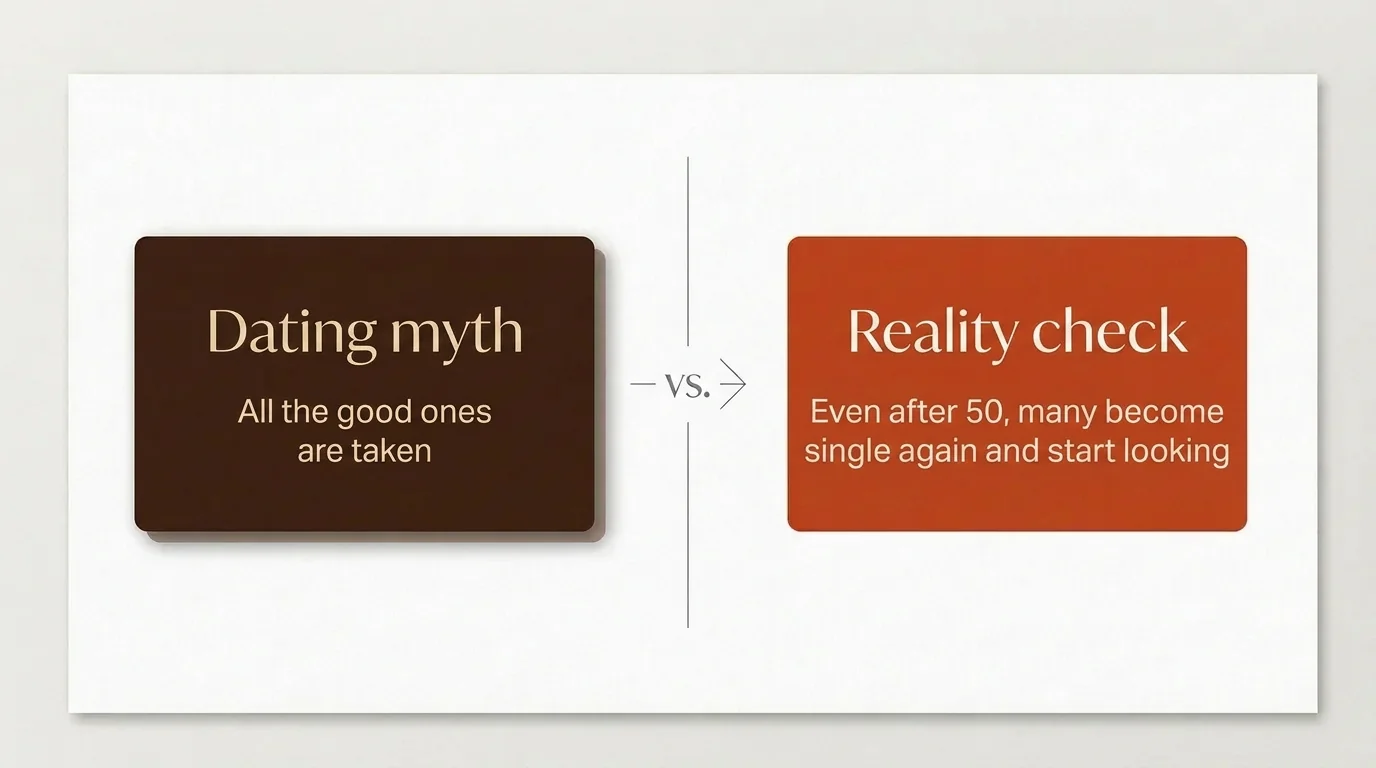
A comparison of the dating myth 'All the good ones are taken' and a reality check.

Myth vs reality: The idea that 'all the good ones are taken' isn't true, because many people over 50 are starting over.

Myth 1: All the good ones are already taken

The dating pool for over-40s and over-50s is constantly changing. In mid-life, many people go through major life events: divorces after long marriages, break-ups after the kids have flown the nest, or becoming widowed.

Many of them are people with life experience, emotional maturity and often a clear idea of what they're looking for in a partnership.

Someone who separates after many years of marriage wasn't "worse" than anyone else; they just grew and changed.

The claim: If you're single at 50, you'll find very few suitable people because all the good ones are already in committed relationships.

The reality: This idea ignores the dynamic nature of life. People change. Relationships that worked at 30 might not work at 50.

You only need one person to be the right fit – not the whole world.

This perspective is a huge emotional relief: you don't have to appeal to everyone; you just need to meet the right person once.

The idea of an "empty market" is an illusion. In fact, separations are more socially accepted than they used to be, and many people remain active and open to new things well into later life.

Many users over 50 find more interesting profiles once they loosen unrealistic criteria and look for someone who genuinely fits, not someone perfect.

Myth 2: Over 50, everyone's just looking for someone much younger

In long-term relationships, shared values – meaning similarities in lifestyle, principles, and future plans – are a key factor. Youthfulness alone can't replace emotional maturity and shared life experience.

The claim: People dating over 50 are looking for someone significantly younger. Therefore, singles your own age don't stand a chance.

The reality: This is a persistent myth, but it doesn't apply to many singles. Those looking for a serious relationship often value depth, common topics of conversation, and a similar frame of reference. When people's lives and life stages are too far apart, the common ground is often missing.

Of course, some singles specifically look for much younger partners. But that's just a fraction of singles, not the rule.

On dating platforms, you can filter by age range and consciously look for people whose values and life stage are a good match for yours.

Many matching algorithms on serious dating sites consider not just age but also education level, life goals, and personality traits. These factors are often more important for a stable relationship than an age gap.

The reframe: Life experience isn't a flaw, it's an attractive quality. Someone who knows what they want, can communicate effectively, and brings emotional stability to the table is far more interesting to a mature partner than someone who is still figuring themselves out.

It's also noticeable that singles starting over after a long marriage often deliberately seek people who understand their life stage – who know the challenges of having grown-up children, appreciate financial independence, and aren't expecting to start a family.

Myth 3: Dating apps are just for young people

Plenty of singles over 50 use dating platforms. Sites like SilverSingles or Ourtime are aimed specifically at this age group and focus on finding a serious relationship.

The claim: Dating apps and dating sites are for people under 40. Over 50, you'd be the odd one out.

The reality: Many singles over 50 use online dating to find a serious partner. Some platforms are built for exactly this age group. There's also a difference between swipe-based dating apps and matchmaking services: swipe apps focus on quick decisions, while matchmaking sites focus on compatibility and long-term suitability.

If you understand this distinction, you can use digital dating to your advantage.

If you choose platforms with personality tests and detailed profiles, you're more likely to meet people with similarly serious intentions. Someone who takes the time to create a detailed profile is usually showing they mean it, although a detailed profile alone doesn't prove it's genuine.

The advantages of searching online:

  • Specific filtering by life goals, values, and interests
  • Access to people outside your usual social circle
  • The chance to think before you reply
  • Transparency about intentions (relationship vs. friendship)
  • Flexibility – no need for set dates just to get to know someone

Many singles over 50 appreciate being able to write back and forth extensively before meeting in person. This reduces first-date nerves and creates a more solid basis for conversation.

The reframe: Online dating isn't a sign of desperation, it's a practical way to widen your circle. By searching online, you expand your circle of potential encounters – and you can decide for yourself when and how much you want to engage.

Myth 4: If you're single at 50, there must be something wrong with you

Being single is often the result of having the courage to leave – not of failure. Many people stay in unfulfilling relationships for years because they're afraid of change, for the sake of the children, or due to financial dependency.

Anyone who decides to leave anyway often shows strength and self-respect.

The claim: People who don't have a long-term partner at this age must be incapable of being in a relationship, complicated, or "damaged" in some way.

The reality: This myth leads to massive self-devaluation. If you're inwardly convinced you're "not good enough," you'll radiate that when you meet people: in your posture, your choice of words, the way you brush off compliments.

This defensive attitude is then misinterpreted as confirmation of the myth – a vicious circle.

Many people who are single at 50 have made conscious choices. They ended a toxic relationship. They took time to grieve after their partner died. They prioritised their career or raising their children.

These life stories aren't deficient – they're complex and self-determined.

The reframe: Starting over after a long marriage or partnership requires emotional maturity and a willingness to be vulnerable. That's not a weakness, it's a strength.

If you can internalise that, you'll show up differently when you're dating – more confident, more open, more authentic.

Life experience brings clarity: you know what you need, what you can give, and where your boundaries are. For people who are also looking for depth, that makes you far more attractive than someone who's still in the self-discovery phase.

A helpful mindset is: "I'm not perfect, but I know myself well." This self-knowledge is more valuable for a serious relationship than youthful carelessness.

Myth 5: True love only happens by chance

This romantic belief in fate sounds poetic, but it often leads to passivity and loneliness. If you just wait around, you're leaving your love life up to chance – and chance is not a reliable partner.

The claim: Real love happens spontaneously – at the supermarket, out for a walk, by accident. If you're actively looking, you seem desperate and scare off potential partners.

The reality: Dating is a project. Not a sterile, technical project, but one that requires personal responsibility, strategy, and perseverance.

If you create a good profile, dare to send the first message, actively go to events or sign up for dating sites, you increase your chances of meeting someone.

People who met someone "by chance" were often in places where encounters are likely – dance classes, walking groups, cultural events. So, they subconsciously put themselves in a position where chance could even happen.

The power of the first message: By sending the first message yourself, you give a connection the chance to even happen. Being proactive isn't a sign of desperation, it's a sign of self-efficacy.

Many couples get together because one person had the courage to send the first message – even if the other person's profile didn't seem absolutely "perfect".

The reframe: The idea that "the one" will just walk into your life is a convenient excuse to do nothing. But if you see dating as a conscious process – with setbacks, learning curves, and small successes – you stay in control of your love life.

A helpful approach: If you view dating as a learning process, you'll take rejection less personally. Every message, every date is an opportunity to improve your communication skills and get clearer on what you're really looking for.

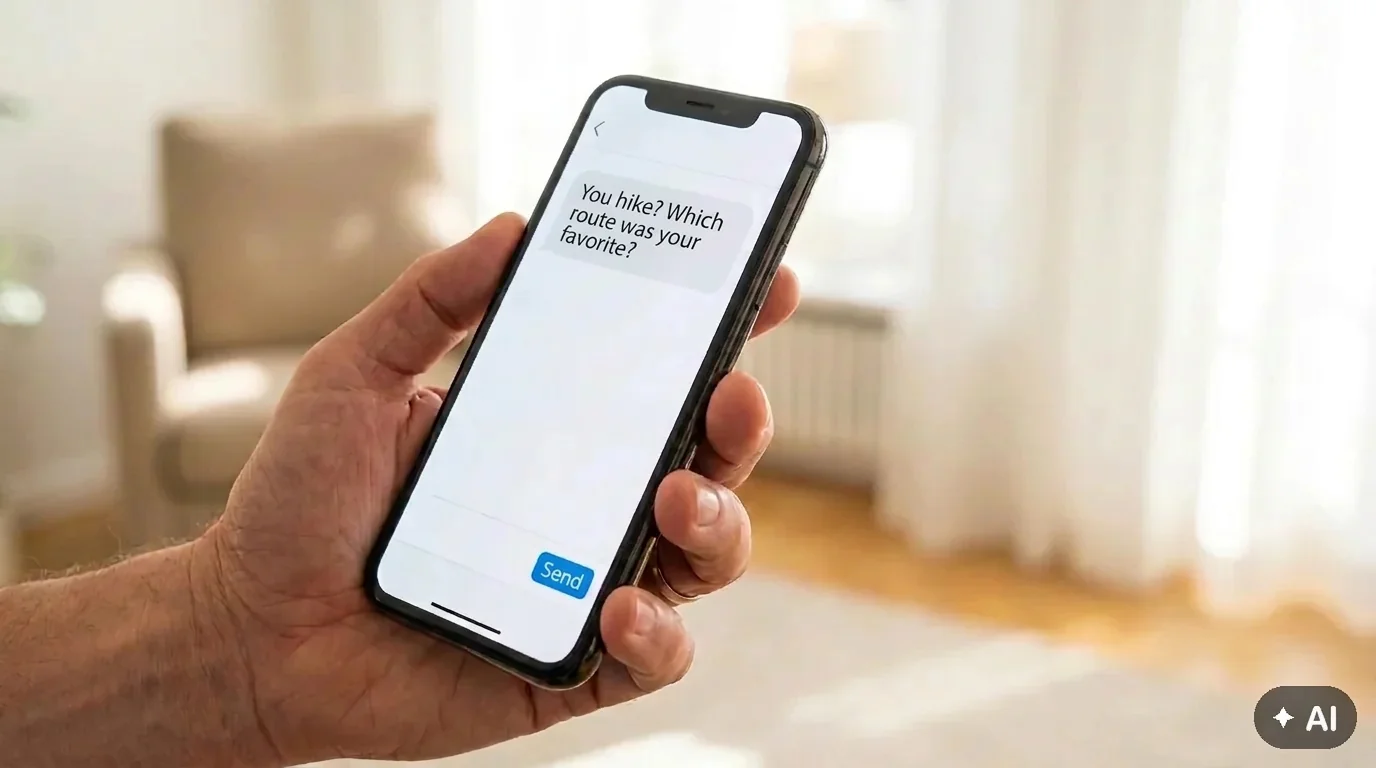
A hand holding a smartphone showing a personal first message that refers to the other person's profile.

First impressions count: A message that refers to their profile feels more personal than a generic one.

Practical tips: How to take off the negative glasses

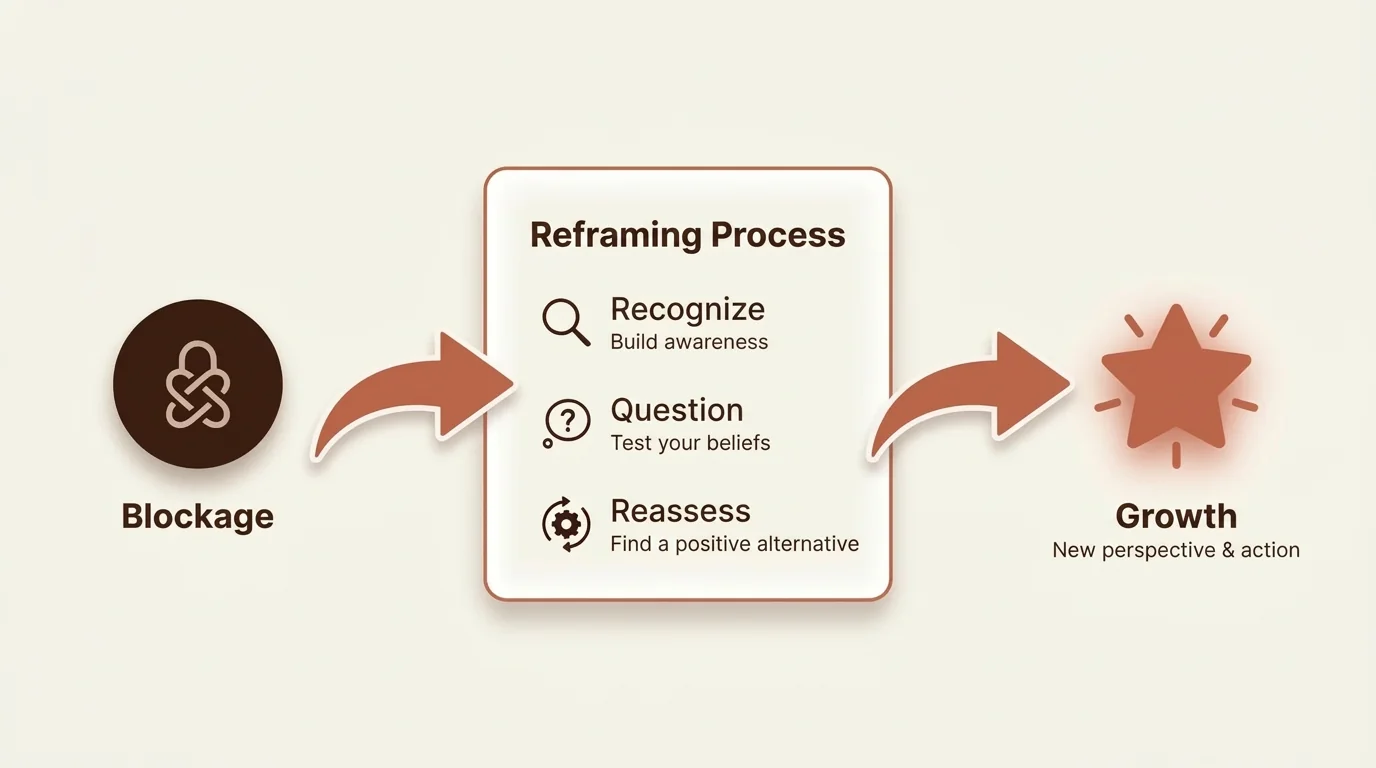
A three-step diagram: from a blockage, through recognition, questioning and re-evaluation, to a new perspective.

Breaking down mental barriers: By consciously reframing, you can turn limiting beliefs into proactive strategies for a fulfilling search for a partner.

Recognising myths is the first step. Actively overcoming them requires concrete exercises. Here are four micro-actions you can implement right away:

Reframing exercise: Write down three negative beliefs that go through your head when you think about dating. Then, for each one, formulate a realistic, positive alternative.

Example: "I'm too old for online dating" becomes "I have life experience that many people find attractive."

Take 10 minutes for this. Write the sentences by hand – it helps to process the thoughts more consciously. Read the positive alternatives out loud every morning for a week. This repetition can help to gradually shift your perspective.

The glass-half-full principle: Pay conscious attention to how you talk about your dating experiences. Instead of "No reply again," tell yourself: "I sent a message today – that's a proactive step."

Every action counts, regardless of the outcome.

Keep a small dating journal. Don't note the rejections, but the actions: "Updated profile," "Sent a first message," "Discovered an interesting profile." This shift in focus changes your perception of the entire process.

Small steps, not giant leaps: Updating your profile, adding a new photo, sending a first message to someone who seems interesting – these are all steps that build courage. You don't have to be perfect right away. You just have to start.

Set yourself weekly mini-goals: "This week I'll send two first messages" or "This week I'll upload a new photo." Small, achievable goals build momentum – and momentum is more important in dating than perfection.

Accepting rejection: Not every message will get a reply. Not every date will lead to a second one. That's normal in dating and says nothing about your worth.

Remember: even attractive, successful people get rejected. The reasons are often trivial – bad timing, different priorities, different expectations. It's rarely about your value as a person.

If you're unsure how your profile comes across or how to reply to a message: The AskAlva Profile Check gives you feedback on how your photos and your bio come across. And the Chat Coaching helps you find authentic replies that suit you.

Conclusion: Your new beginning starts in your head

The five dating myths – the "taken" myth, the age myth, the online myth, the "flaw" myth, and the fate myth – all have one thing in common: they protect you from disappointment by preventing you from acting. But they also rob you of the chance for new encounters, for surprises, for love.

When you debunk these myths, you regain something crucial: a sense of agency. The realisation that your own attitude and actions make the difference – not your age, not your past, not the "market".

Love isn't a matter of age, but of willingness to open up. And that willingness starts in your head – with the decision to take off the negative glasses and see reality: the pool of singles over 50 is dynamic, the opportunities are real, and you only need one person who's the right fit.

The first step can be small: a profile update, a message, a new photo. But it's the most important one. Because if you don't start, you can't arrive.

The biggest hurdle isn't the dating market, not your age, not the competition – it's your own conviction that it's not worth it. If you can overcome that belief, you've already made the most important change.

Frequently asked questions about dating myths for over-50s

Can you still find a new partner at 50?

Yes, finding a new partner at 50 is absolutely possible. Many singles in this age group are specifically looking for depth and emotional maturity – qualities that come with life experience – and they bring clear ideas about what they need in a relationship.

Where's the best place to meet singles over 50?

A good place to start is serious dating sites like SilverSingles, Ourtime, or eHarmony, which are aimed at singles with serious intentions. Offline activities like walking groups, cultural events, or dance classes are also good opportunities to meet singles with similar interests. The key is to go where people with similar values and interests are – not just where "everyone" is.

Why does no one reply on dating sites?

The reason no one replies on dating sites often comes down to unclear profile photos, overly generic messages, or a profile that reveals very little about you. The AskAlva Profile Check can help you optimise your profile. Also, remember that not every non-reply is a rejection – often the person just isn't active or isn't a good match for you. A message that refers to the other person's profile usually feels more personal than a generic one.

Are dating apps safe for over-50s?

Dating apps and dating sites can be used safely over 50, as long as you stick to reputable platforms and stay vigilant. There's never a guarantee. Never send money to someone you only know online, however well the conversation is going, and share personal details only gradually. The AskAlva Security Check screens profiles and chats for common scam patterns and gives you an idea of whether to be cautious, but it doesn't replace your own judgement. Pick platforms that verify members and report suspicious profiles right away.

How can I get over the fear of rejection when dating?

You can get over the fear of rejection in dating by seeing it as a normal part of the process, not a personal failure. It says nothing about your worth. Taking small steps, like sending a first message or updating your profile, helps you turn fear into action. Setting small weekly goals, like sending two first messages, keeps you moving.

What's the biggest mistake people make when dating over 50?

The biggest mistake in dating over 50 is being passive out of fear or resignation. If you wait for "love to just happen," you're leaving your happiness to chance. Being proactive – creating a good profile, sending first messages, and trying new things – helps you start conversations. Someone who sends messages simply has more opportunities to meet people than someone who just waits.

How important is age really when it comes to online dating?

Age is really less important in online dating than shared values, lifestyle, and emotional maturity. Long-term relationships work best when partners have a similar frame of reference and shared plans for the future. Youthfulness alone is no substitute for depth. Many serious matchmaking services consider education level, life goals, and personality traits in addition to age, because these factors are often more important for a stable relationship.

How can I tell if a profile is genuine?

You can often spot a fake profile by checking for overly perfect photos, quick declarations of love and requests for money. A reverse image search and an early video call help too. The AskAlva Security Check analyses profiles and chats for suspicious patterns and gives you an idea of whether to be cautious. Even detailed profiles can be fake, especially if money or a quick switch to WhatsApp comes into play, so a detailed profile shows intent, not authenticity.

🧭 Dating coach by Alva

Not sure how to go about it? Upload a screenshot. Alva gives you a clear read in under a minute.

Try it free →

Screenshots are never stored.

More from “Strategy & mindset”