New Partner, Adult Children: When and How to Make the Introduction

By Sandra · Updated on 5 November 2026 · ✓ Reviewed by the editorial team

New Partner, Adult Children: When and How to Make the Introduction

Finding someone new after a long relationship, a divorce, or the death of a partner is a wonderful thing. But introducing them to your adult children can often be an emotional minefield.

Unlike with young children, this isn't a matter of parenting; it’s about diplomacy between adults, each with their own lives and worries.

In a nutshell

The best time to introduce your new partner to your adult children is once your relationship is stable. There's no fixed timeline, but many people wait a few months. Tell them about the first meeting in a private chat beforehand, and choose a neutral venue for it.

  • Wait until the new relationship feels solid – there’s no set rule, but this often takes a few months
  • Adult children can struggle with divided loyalties and may worry about inheritance or family traditions
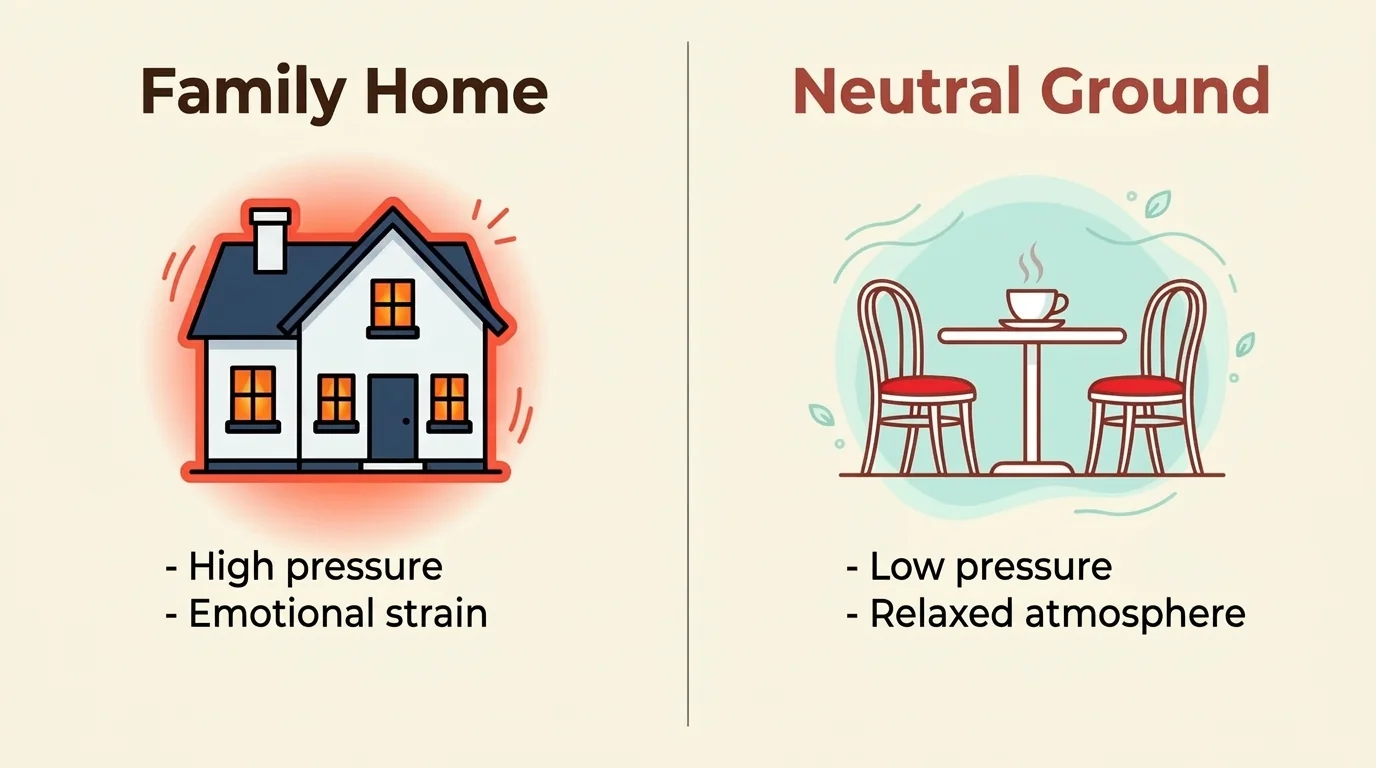
  • The first meeting should happen on neutral ground, not in the family home
  • Tell your children about your new partner in a private, one-on-one chat first
  • Your happiness is non-negotiable – set clear boundaries if they react badly
  • Patience is more important than instant harmony

1. Dating over 50: Why your adult children might see things differently

Your adult children will react to a new partner very differently from how young children would. They have decades of memories tied to your family's history. Your new partner isn't walking into a blank slate; they’re stepping into a complex web of traditions, past heartaches and long-established roles.

A café table set with coffee cups and a slice of cake, representing a relaxed first meeting between a new partner and an adult child on neutral ground. Choosing a quiet, neutral spot for the first meeting can take a lot of the pressure off.

With younger children, the main challenge is fitting into the daily routine of school runs, homework and family meals. With adult children, you're dealing with something far more complex: emotional loyalties, financial expectations and the need to rethink long-standing family traditions.

What makes this different from a typical blended family

Aspect Younger Children Adult Children
Living Situation Live at home Usually have their own place
Relationship Experience Limited Have their own relationships
Finances Child support, day-to-day costs Inheritance, property
Memories Fade more quickly Built up over decades

When blending families over 50, two people come together, each with a complete life story, adult children and often grandchildren. Each brings a whole established family dynamic with them. This requires more tact than simple compromise.

2. Timing it right: When to introduce your new partner

There’s no hard and fast rule, but many people wait a few months. This isn’t because your children get a say in your choice of partner, but because your relationship needs to be on solid ground before it’s put to the family test.

Introducing someone too soon puts everyone under pressure. Your children might get emotionally attached to someone who may not be around for the long haul. Your new partner can feel like they’re on probation. And you’ll be caught in the middle if it doesn’t all go smoothly.

Signs that you’re ready

You’ll know the relationship is solid enough if the following points ring true:

  • You’ve navigated conflicts and know how to handle disagreements
  • You can realistically imagine a future together
  • The relationship feels stable, not just the first heady rush
  • You’re both familiar with the realities of each other’s daily lives (living situation, routines, habits)

Taking stock of the family situation

Have your children come to terms with the separation from or death of their other parent? If they are still grieving or angry with your ex-partner, any new person will just become a lightning rod for those feelings.

Many conflicts aren’t actually caused by the new partner, but by unresolved grief or anger from the past. Give your children time – and give yourself time, too.

3. Emotional hurdles: What’s going on for your children

Their reaction rarely comes from a bad place. It’s usually down to one of three common emotional responses, none of which are actually about your new partner.

A crisis of loyalty

Your adult children may feel they're betraying their other parent (whether deceased or divorced) by accepting your new partner. This conflict can be particularly intense when:

  • The other parent has passed away and your children have an idealised memory of them.
  • The divorce was traumatic and your child felt forced to "take sides".
  • Traditions like Christmas or birthdays are suddenly set to change.

This conflict often surfaces indirectly: through avoidance, strained politeness, or a sudden lack of interest in spending time together.

The elephant in the room: Money and inheritance

It's a topic that often hangs in the air, unsaid: worries about inheritance. Your adult children might be asking themselves:

  • Will the family home be sold or completely changed?
  • Will the new partner inherit assets that "should be ours"?
  • Will family heirlooms now go to a stranger?

These are understandable fears, but they’re rarely brought up directly. Instead, they might come out as vague disapproval or accusations like, "You’re forgetting Mum/Dad."

An open and honest chat about wills and finances can put many of these worries to rest before they turn into lasting conflicts.

A shift in roles: From confidant back to child

After a separation or a death in the family, adult children often become their parent’s closest confidant. They’re your sounding board, your shoulder to cry on, and your practical support.

When a new partner comes along, your child can feel they’re losing this special role – and that hurts. This isn't selfishness; it's a fear of loss.

For some adult children, this change in their role is harder to cope with than the arrival of a new person in your life.

4. Step 1: Telling them in private

Break the news in advance, and do it in person – definitely not over WhatsApp. And no surprise visits, either.

The chat could go something like this:

“I've got something to tell you. I've met someone, and they've become very important to me. I'm really happy, and I'd love for you to meet them – whenever you feel ready.”

A few things to remember

Share your happiness without feeling you have to justify it. You don't owe anyone an explanation for who you've chosen to be with. This also sends a clear message: your decision is made, and it isn't up for discussion.

Be open to questions, but set clear boundaries. For example: ‘I understand you’re worried, but my mind is made up.’

Give your children time to digest the news. Don't push for them to be happy about it straight away. Some might need days or even weeks to get used to the idea.

If you can see the conversation is becoming emotional, stay calm. Saying something like, ‘I know this is a lot to take in at once’ shows you understand, without you having to back down.

One-on-one or all together?

Telling them one at a time is often better, as each of your children will react differently. It lets you address their individual worries without group dynamics coming into play. One child might be receptive from the start, while another needs more time – and you can adapt to that in a private conversation.

5. Step 2: The first meeting on neutral ground

The location sets the tone. And this is where the most common mistake is made: having the first meeting in the family home.

The home-turf trap: Why the family home is a no-go

Your home isn't neutral territory. It’s full of memories of your late or ex-partner.

For your children, having a new partner walk into that space for the first time can feel like an invasion. Every piece of furniture, every photo, every corner is tied to a memory – and suddenly, there's a stranger sitting in the middle of it all.

It's much better to meet on neutral ground, like in a café or restaurant.

Infographic showing why neutral ground is better than the family home for a first meeting with your adult children. The right venue sets the tone: here's why neutral territory lowers the pressure and helps the conversation flow.

The benefits of meeting on neutral ground

Benefit Why it matters
No one feels threatened on their home turf Everyone is on an equal footing
There's a natural time limit No one's trapped for hours if things get tense
Lulls in conversation are less awkward Waiters and the surroundings provide natural distractions
The focus is on getting to know one another Not on the emotionally loaded setting

The perfect length: Keep it short and sweet

Choose a manageable window of time that everyone can leave comfortably. Lunch or an afternoon coffee is ideal. Steer clear of a four-course dinner that will leave everyone feeling trapped.

Having a set end time takes the pressure off everyone involved. If it’s all going well, you can always decide to stay longer. If things are a little tense, it gives everyone a natural escape route.

What to talk about: Focus on getting to know each other

Steer clear of any deep family discussions at this first meeting. Instead:

  • Find common ground (hobbies, travel, books)
  • Share light-hearted stories from your everyday lives
  • Ask questions without being too nosy

If your children ask any pointed questions (“So, how long has this been going on?”), just stay calm and say something simple like: “We’ve been together for a few months, and it feels right.”

6. Tips for your new partner: Putting their best foot forward

Your new partner isn't just a guest; they're also in the spotlight. These tips will help them make a great impression:

Don't come on too strong

  • Don't offer unwanted advice or try to play the parent.
  • Don't try to fit in straight away.
  • Show respect without trying too hard to be liked.

Adult children can be put off by new partners who want too much, too soon. Trying to become part of the family overnight usually backfires.

Respect the family history

If your children bring up their other parent, never be dismissive. A simple, “I can see how much they mean to you,” shows real grace.

Even if your ex-partner was difficult or your marriage was rocky, they are still your children's parent. Respect for that bond is non-negotiable.

Be supportive, but don't interfere

If things get tense between you and your children, your new partner should take a step back. No “I think you should…”, just a simple: “I'm here for you, whatever you decide.”

The relationship between a parent and child has been decades in the making. A new partner needs to respect that dynamic, not try to change it.

7. What to do if your children are resistant

Not every first meeting goes smoothly. Sometimes grown-up children react with rudeness, indifference, or open hostility.

Handling rudeness

Stay calm, but set clear boundaries. A simple phrase like, ‘I understand this is difficult for you, but I do expect us all to be respectful’, gets the message across without escalating the situation.

Setting boundaries doesn't mean ignoring your children's feelings. It means making sure both you and your partner are treated with respect.

Your happiness is non-negotiable

You don't need your children's permission to be happy. Don't put your life on hold waiting for their approval.

This doesn't mean ignoring their feelings, but equally, you can't allow yourself to be emotionally blackmailed. Lines like, "If you love them, you don't love me anymore," are manipulative tactics, not valid arguments.

Stick with it: it might take a few attempts

If the first get-together doesn't go to plan, it's not the end of the world. Give your children some space and suggest trying again in a few weeks.

The bond between a new partner and your grown-up children can often take months to grow. Acceptance is a process, not a one-off decision.

Considering professional help

In cases of serious family conflict, mediation or counselling can be a huge help. A neutral third party is particularly valuable if there are financial issues in the mix, such as inheritance or wills.

A mediator can address subjects that are normally off-limits within the family, helping you find solutions that work for everyone involved.

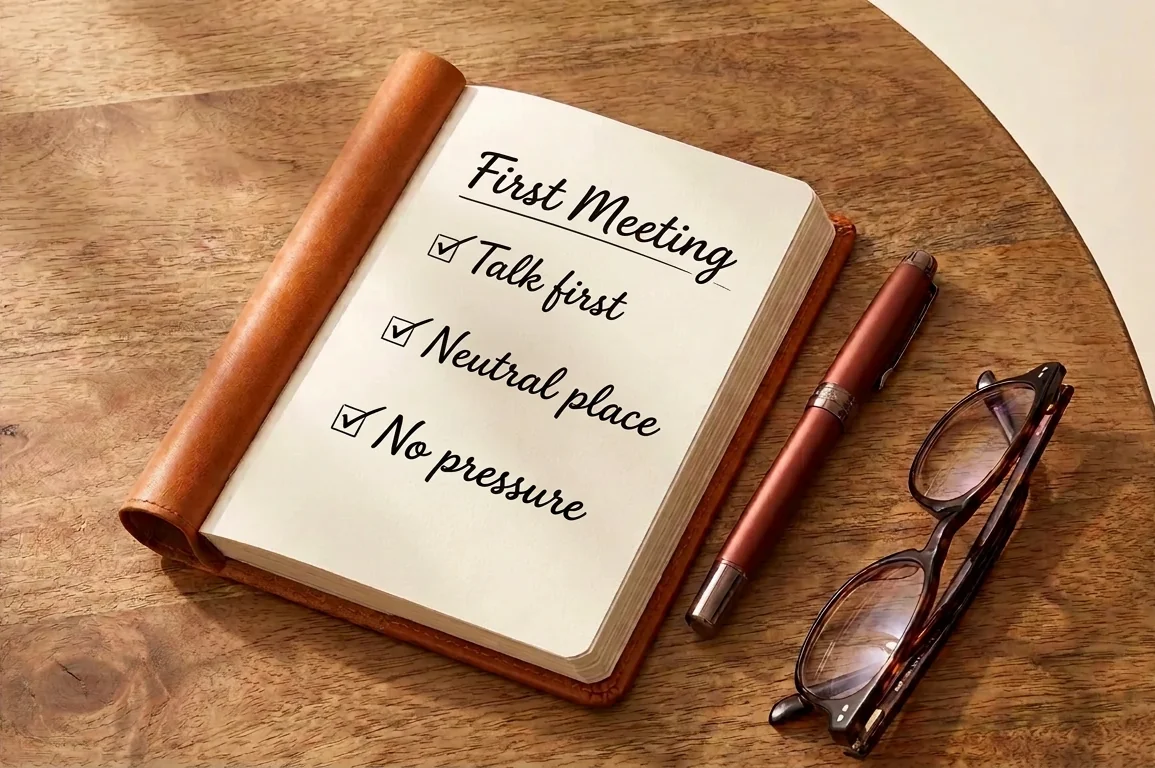
A flat-lay photo of a notebook with a checklist for the first meeting between a partner and adult children. A little preparation can give you confidence. Use these steps as a guide for a stress-free first meeting where everyone feels valued.

The takeaway: Take it one step at a time

Introducing a new partner to your adult children isn't a sprint; it's a marathon. Patience and empathy will be your best friends on this journey.

Acknowledge your children's concerns without sacrificing your own happiness. Set clear boundaries, but always stay open to conversation. And above all, give everyone the time and space they need.

A happy blended family doesn't happen overnight, especially in your 50s and beyond. Some relationships between your new partner and your children will become close; others may remain politely distant. Either is perfectly okay, as long as everything is based on mutual respect.

If you're just getting back on the dating scene and feel unsure how to read potential partners, AskAlva is here to help. Our Scam Check helps you spot red flags early on, the Chat Coach helps you find the right words, and the Profile Check helps you create a profile that's authentically you.

You deserve to start this new chapter of your life with confidence, security, and real support. So take all the time you need – for yourself, your children, and the love you've found.

8. FAQ: Frequently Asked Questions

How do adult children typically react to a new partner?

Adult children typically react to a new partner with a whole range of emotions, from cautious curiosity to outright rejection. This is often down to a sense of divided loyalties, worries about family traditions being disrupted, or financial concerns. Patience and clear communication on your part can help you get past these hurdles.

What should I do if my adult child completely rejects my new partner?

If your adult child completely rejects your new partner, it's important to set clear boundaries and treat your own happiness as non-negotiable. At the same time, you can show you understand their feelings without backing down on your decision. It can sometimes take several months and repeatedly offering to talk before the situation improves. If you reach a stalemate, professional mediation can also help.

Should I bring up the topic of inheritance?

You should bring up the topic of inheritance if you sense your children have anxieties about money. An open conversation about wills, property or valuable family heirlooms can help to dispel a lot of unspoken fears. To make everything clear and provide reassurance, you can also seek legal advice if you need to.

Is it better to tell my children all together, or one by one?

It's often better to tell your children about your new partner one by one, as they will all react differently. In a private chat, you can respond to each person's specific concerns without any difficult group dynamics taking hold. While one child might be open to the idea straight away, another may need more time to process the news.

How long does it take for adult children to accept a new partner?

The time it takes for adult children to accept a new partner varies enormously, from a few weeks to several years. It's important to remember that acceptance is a process, not a one-time decision. Stand by your choice of partner, but give your children space to work through their feelings. Acceptance doesn't have to mean friendship – as long as everyone is respectful, that's often enough.

Should my new partner bring a gift to the first meeting?

Your new partner doesn't need to bring a gift to the first meeting, though a small, thoughtful gesture like a bottle of wine or some flowers is a nice touch. It's far more important for them to be authentic and be themselves. Your partner should avoid bringing anything over-the-top, as it could look like they're trying to buy favour and might have the opposite effect.

How should I handle it if my new partner and my children just don't get on?

If your new partner and your children just don't get on, don't try to force a close friendship. Instead, the goal should simply be for everyone to treat each other with respect. If the chemistry just isn't there, it doesn't mean your relationship is doomed, as long as everyone respects each other's boundaries. Many blended families work perfectly well by maintaining a polite distance.

Can AskAlva help me with dating before I introduce someone to my family?

Yes, AskAlva can help you with your dating life in several ways before you're ready to introduce someone to your family. Our Chat Coach at askalva.ai/en/chat provides specific suggestions for your conversations on dating sites and apps. The Profile Check at askalva.ai/en/profile helps you create a profile that feels truly you, and our Scam Check at askalva.ai/en/safety helps you spot the warning signs of a romance scam before you get too emotionally involved.


📍 Chat coach by AskAlva

Unsure what to write before or after the date? Upload a screenshot. AskAlva suggests the right words.

Try it free →

Screenshots are never stored.

More from “First date & after”