Great Date, Then Radio Silence? Why It Happens and How to Follow Up Gracefully

By Sandra · Updated on 27 October 2026 · ✓ Reviewed by the editorial team

Great Date, Then Radio Silence? Why It Happens and How to Follow Up Gracefully

The first date went perfectly. You laughed, time flew by, and when you said goodbye, you felt there was a real spark.

But then: nothing. Your phone stays silent, no message, no reply. The uncertainty grows, and with it, the question: was the date not as good as I thought?

In a nutshell

Radio silence after a great date doesn't automatically mean they're not interested; it could be for simple reasons like everyday stress. If the silence continues even after a friendly follow-up, that's usually an answer in itself. The best way to follow up is with a short message that brings up something you talked about.

  • A short thank-you message within 24 to 48 hours is a natural first step, regardless of who sends it.
  • The three-day rule is outdated. Authenticity is more important than playing tactical games these days.
  • A graceful follow-up that references something you talked about comes across as confident, not needy.
  • If your thank-you message gets no reply after three to four days, send one follow-up. If that also goes unanswered for a few days, gracefully moving on is the best strategy for your self-esteem.

1. Why does someone suddenly go quiet after a good date?

Sudden silence after a seemingly successful first date can have various causes. Most of them have less to do with you than you might fear.

Closeness can feel overwhelming. Some singles find an intense first meeting hard to process. Especially if the connection was strong, this can trigger anxiety. They pull back to sort out their own feelings. This behaviour isn't a deliberate snub but a defence mechanism.

The choice overload on dating apps can also play a role. Many people chat with several individuals at the same time. Even if your date was lovely, it's competing with other options. This situation sometimes leads to a kind of decision paralysis: instead of committing, they don't respond at all.

Fear of commitment often kicks in after a break-up or a disappointment. The person might want a relationship, but as soon as it gets real, their subconscious hits the retreat button. Old wounds resurface and sabotage new opportunities.

Sometimes the explanation is more mundane: everyday life and stress push dating into the background. Pressure at work, family obligations, or health issues can shift priorities. The silence isn't a conscious decision against you but a sign of being overloaded.

The difference between deliberate ghosting and a temporary retreat lies in the duration and pattern. True ghosting is when someone completely disappears without any response, even to a polite follow-up. A temporary retreat might resolve itself after a few days with an explanation.

2. Was the date really as good as I thought?

If a great date is followed by radio silence, ask yourself honestly: was the meeting really as good as you thought? This question requires a willingness to critically examine your own perception.

Body language can be misleading, especially in the early stages. Laughter and a relaxed atmosphere don't automatically mean romantic interest. Some people are naturally warm and open without any intention of taking things further. A pleasant conversation isn't the same as attraction. What to look out for on the day itself is covered in our first date guide.

Telling politeness apart from enthusiasm is difficult for many people. A friendly goodbye with "It was lovely, let's stay in touch" is sometimes just a courtesy, not a promise. Real enthusiasm shows in concrete plans: "Let's meet again next week" instead of vague phrases.

Your own wishful thinking often distorts reality. After a long search for a partner, we tend to over-interpret positive signs. We want it to work out so badly that we overlook any hesitation. This selective perception is human, but it can lead to false expectations.

An honest self-reflection can help: were there concrete plans for a second date, or just a "Get in touch sometime"? Who ended the date, and how? Did the other person ask questions about your life or only talk about themselves?

The goodbye is also telling: a brief hug is very different from longer, more intense contact. Eye contact when parting ways signals more interest than a quick turn away.

For future contacts, it's also worth taking a look at yourself: how does your own profile come across to others? The Profile Check from AskAlva can give you an assessment.

3. How long should I wait to get in touch after a first date?

The famous three-day rule comes from a time before smartphones and dating apps; today, it feels artificial. The idea was to tactically hold back your first message. This is different from being patient before following up when you don't get a reply to your message.

Modern communication is faster. We're used to replying promptly. Someone who waits three days today is more likely to signal a lack of interest than mysterious coolness. The rule was based on the assumption that being too available is unattractive, an idea that has no place in mature relationships.

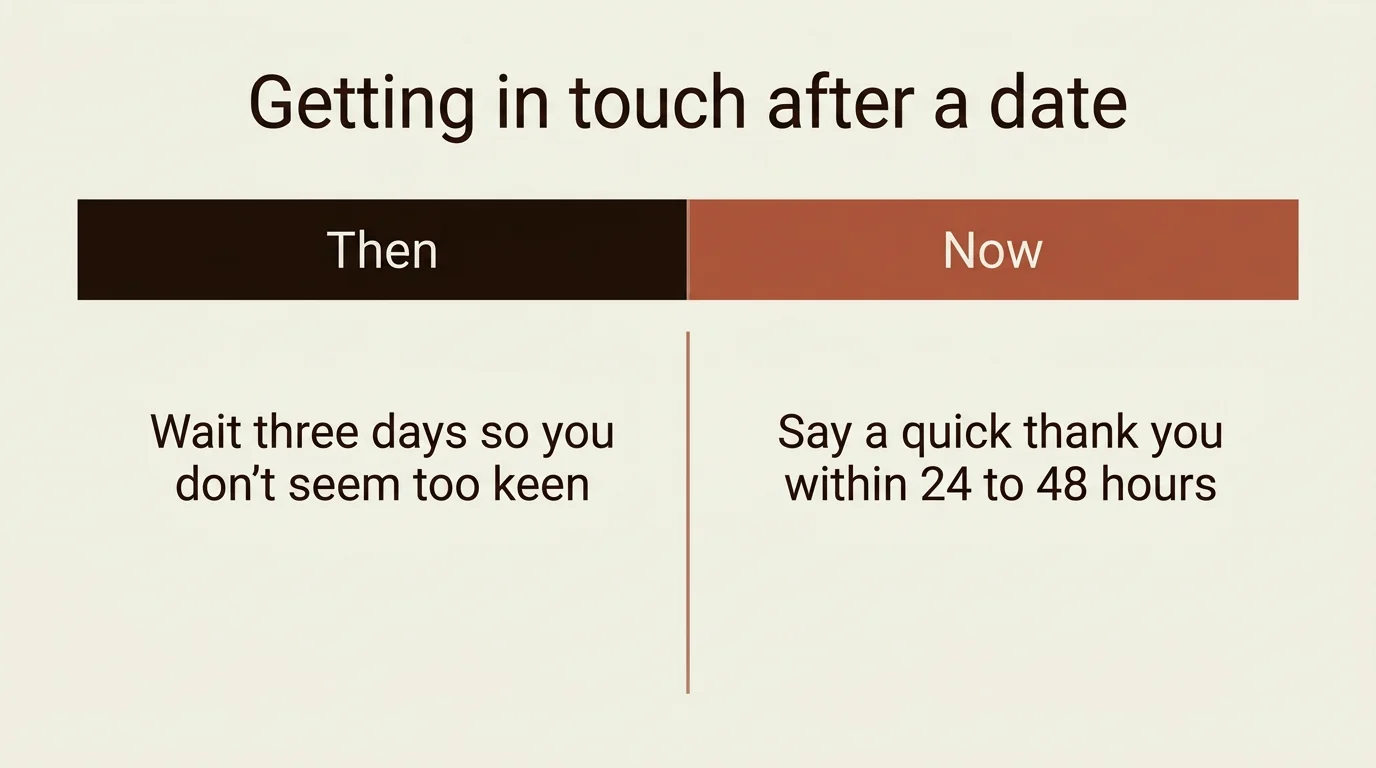
Comparison: in the past, wait three days; today, say a quick thank you within 24 to 48 hours. In the past, waiting was a tactic. Today, a brief thank you within 24 to 48 hours feels more natural.

The ideal timeframe is 24 to 48 hours. A short message within this window shows genuine interest and appreciation. It can be a simple "Thanks for a lovely evening" without putting pressure on a second date. This gesture signals maturity and clarity.

Especially in the second half of life: the more mature we become, the less time we have for games. Authenticity and clear communication are more attractive than supposedly strategic behaviour. Pretending to be someone you're not starts a relationship on a false foundation.

By the way, it doesn't matter who gets in touch first. The idea that one person must always make the first move is outdated. If you're interested, show it. Many people find this openness refreshing.

Getting in touch promptly and honestly makes you seem confident. Strategic waiting, on the other hand, often leads to misunderstandings and missed opportunities.

4. How can I follow up gracefully without seeming needy?

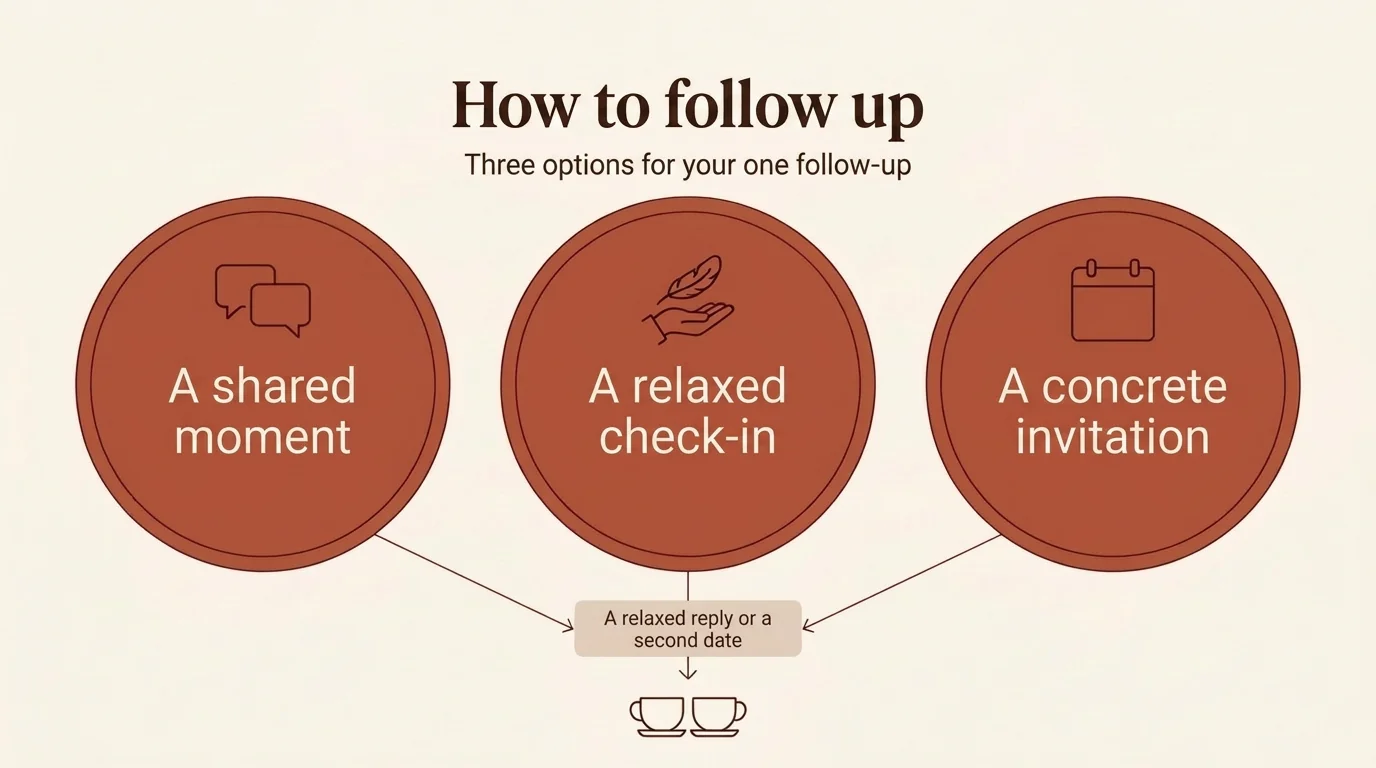
The trick is to make it easy for the other person to reply, without putting them under pressure. A good follow-up message allows both of you to save face. Send it if you haven't heard back from your thank-you message after about three to four days.

Template 1: The shared moment

Refer to a specific topic from your date. This shows you were paying attention without sounding demanding.

"Hey, I was just thinking about our chat about [topic/place/series]. Have you [started the series / tried that restaurant] yet?"

This phrasing feels natural and gives the other person an easy way to respond. They can engage with it without having to justify themselves.

Template 2: The relaxed check-in

Show you're thinking of them without being accusatory.

"Hi, hope your week's going well. If you fancy a relaxed walk sometime, just let me know."

The key here is "If you fancy," which is an invitation, not a demand. The other person won't feel cornered.

Template 3: The specific invitation

Offer a specific but non-committal opportunity.

"I'm going to the [concert/cinema/museum] on Saturday. If you're free at short notice, I'd love for you to join. No worries if you can't make it."

This approach works particularly well because it shows you have your own life and are inviting them to be a part of it, rather than organising your life around them.

Graphic with three options for a follow-up message: shared moment, relaxed check-in, specific invitation. Three options for your one follow-up message: choose the one that best fits your date.

What to avoid: Questions like "Why aren't you replying?" or "Did I do something wrong?" immediately create pressure to justify themselves. Following up multiple times without a reply also seems desperate. Your thank-you message and one follow-up are enough; no more questions or invitations.

Timing also matters: send your message at a time when you'd be happy to receive one yourself, not in the middle of the night.

If you're unsure how your message will be received, the Chat Coach from AskAlva can help you evaluate different phrasings and find the right tone.

5. What does radio silence mean for my self-worth?

The most important thing to remember is this: someone else's silence is not a judgement on your value as a person.

Dating is a filtering process, not a competition. Not every encounter leads to a relationship, and that's a good thing. Every rejection helps clarify what you're looking for. This perspective helps you not to take it personally.

Rejection is part of it: even the most attractive, interesting people experience rejection. You don't have to be right for everyone, just for the one person who is truly right for you. Compatibility isn't a matter of worth, but of fit.

Self-care instead of staring at your phone protects your mental health. Instead of constantly checking for new messages, direct your energy towards things that make you feel good. Meet up with friends, pursue your hobbies, invest in yourself. A fulfilling life makes you more attractive than desperate waiting.

The ability to handle uncertainty grows with every experience. Every date that doesn't lead anywhere teaches you more about your own needs and boundaries. This self-knowledge is valuable for future relationships.

Stable self-worth helps you process such disappointments more quickly. Those who have it interpret radio silence as incompatibility, not personal failure. This mindset can be learned.

6. How do I know when it's time to move on for good?

Clear signals will show you when it's time to let go and invest your energy elsewhere.

No reply to your follow-up is the clearest sign. If you've sent a polite follow-up to your thank-you message and still get no response, that is an answer. Persistent silence is not a fair form of communication, but it is a clear one.

Evasive or one-word answers can signal a lack of interest, especially if they don't suggest meeting up. If the person finally replies, but only with "Sorry, been busy" without suggesting another time to meet, the real investment is missing. Someone who is genuinely interested will find the time or at least propose a later date.

Lack of initiative is another red flag. If you're always the one initiating contact and the other person never messages first, the interest is one-sided. A relationship needs reciprocity, even in the getting-to-know-you phase.

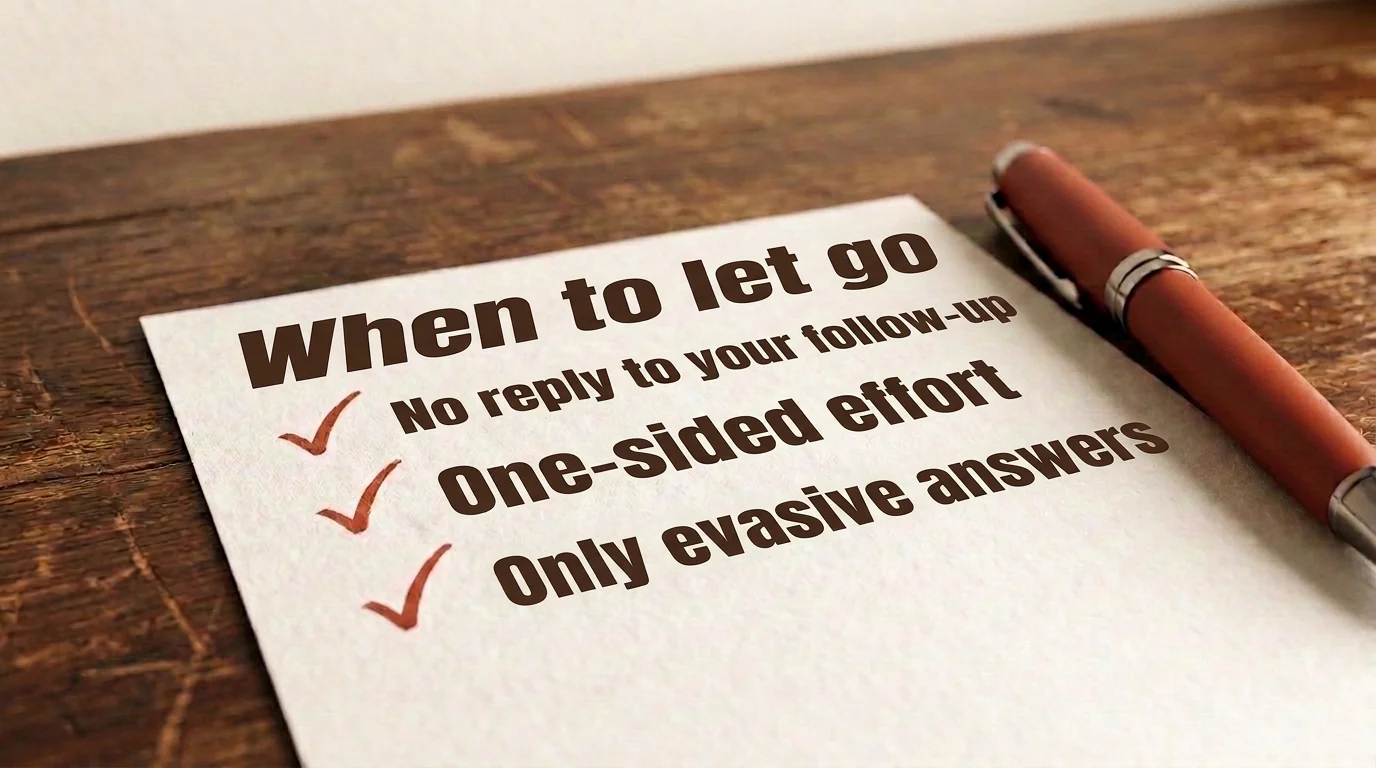
Checklist: When you should let go - no reply to your follow-up, one-sided effort, only evasive answers. If these signs apply, letting go is usually the smartest way to save your energy for new encounters.

The dignified conclusion can sometimes provide peace of mind. A third message with a question or invitation rarely achieves anything. If you need closure for yourself, at most send this short farewell, without a question and without expecting a reply:

"It's a shame it didn't work out. I wish you all the best in your search."

After that, archive the chat, move on, and don't look back. Someone who doesn't communicate well in the getting-to-know-you phase rarely does better in a relationship.

Their silence is their answer. Respect it, for your own sake.

7. Where can I find singles who value honest communication?

The choice of dating platform influences the type of people you meet and how they communicate.

Platforms with detailed profiles or compatibility questionnaires, such as eharmony or Match, tend to attract singles who are looking for something serious. Communication here is often more reliable, and the matching process prioritises compatibility.

The difference from swipe culture is significant. Swipe-based dating apps like Tinder or Bumble are built for quick first impressions, while dating sites with longer profiles encourage you to read before you reply.

Quality over quantity should be your motto. It's better to have fewer matches with people who share similar values than a hundred superficial contacts who disappear after the first date. This focus saves emotional energy and leads to better outcomes.

But the most important factor is you. Be authentic, communicate clearly what you're looking for, and don't be discouraged by individual disappointments. The right person will appreciate your openness. Honesty in your profile filters out unsuitable contacts from the start.

If you state from the beginning, "I'm looking for a committed relationship," you're more likely to deter those seeking something casual and attract like-minded people.

If you're unsure whether a new contact's profile is genuine, the Safety Check from AskAlva can help you spot warning signs of a fake or scam profile or phone number before you invest too much emotional energy.


Frequently Asked Questions (FAQ)

Is it normal not to hear from someone the day after a date?

It's completely normal not to hear from someone the day after a date. A pause like this can have many reasons, like work, other commitments, or just needing time to process the meeting. Send a short thank-you message yourself within 24 to 48 hours. If there's no response to that after about three to four days, a polite follow-up is fine.

Who should get in touch first after the first date?

There are no fixed rules about who should get in touch first after a date, as traditional gender roles are outdated. If you're interested and want to send a message, you should just do it. Authenticity is more attractive than strategic waiting and is valued by mature singles as it shows self-confidence.

How do I casually ask for a second date?

You can casually ask for a second date by referencing a topic you both enjoyed during the first meeting and making a specific but low-pressure suggestion. For example: "The exhibition we talked about is still on. Would you fancy going to see it together?" This phrasing feels natural and gives the other person an easy way to say yes or no.

What does it mean if someone only gives short replies?

If someone only gives short replies, it could indicate a lack of interest. However, some people are just naturally brief texters. It's more telling whether they suggest meeting up and if they also ask you questions in return.

Should I send a final message after being ghosted?

Whether you should send a final message after being ghosted is a personal decision that might help you find closure. If you choose to, send a short, dignified message, but don't expect a reply and don't invest any more energy afterwards. Sometimes, silence is the clearest answer, even if it hurts.

How long should I wait in total before giving up?

About a week in total: send your thank-you message within 24 to 48 hours, and a polite follow-up after three to four days of no reply. If you hear nothing back after a few more days, it's time to move on. Don't send more than these two messages. The only exception is a short farewell that doesn't ask anything. Respect your own time and energy. They are valuable.

Can radio silence ever be a good sign?

Radio silence is rarely a good sign, but it's often not the final word either: stress, work, or insecurity could be behind it. However, someone who is genuinely interested will still send a quick message. A text like "I'm really busy at the moment, but I'll be in touch soon" takes little time but shows respect. You'll know the interest is real if they follow up with a suggestion to meet.

How do I protect my self-esteem when online dating?

You protect your self-esteem when online dating by reminding yourself that it's a process of getting to know people, not a competition. Not every meeting has to lead to true love, so alongside your search for a partner, continue to nurture your social life, hobbies, and self-care routines. A fulfilling life not only makes you more attractive but also helps you handle disappointments more easily.

📍 Chat coach by Alva

Unsure what to write before or after the date? Upload a screenshot — Alva suggests the right words.

Try it free →

Screenshots are never stored.

More from “First date & after”