How honest should your dating profile be? The truth about little white lies

By Sandra · Updated on 2 November 2026 · ✓ Reviewed by the editorial team

How honest should your dating profile be? The truth about little white lies

Every dating profile is a balancing act between showing your best side and staying true to yourself.

You're staring at your dating profile, and the age field is staring right back. 52... or maybe you could get away with 49? The photos from last summer are definitely more flattering than your recent ones. And as for your height – adding an inch or two can't hurt, can it?

Welcome to the grey area of online dating. There's a fine line between showing yourself in the best light and being downright deceptive, and it's a tightrope many singles walk. Especially after a long relationship or a loss, you might be wondering: just how honest do I need to be to even stand a chance?

The bottom line

On dating apps and sites, it pays to be honest in your profile. Being your authentic self builds trust and leads to better dates.

  • Online dating is all about marketing yourself, but the 'product' has to be genuine.
  • Even little white lies are often spotted on the first date, and they can damage trust right from the start.
  • Honesty acts as a great filter: you might get fewer matches, but the dates you do get will be better quality.
  • Your so-called flaws aren't weaknesses; they're what make you uniquely you.

Myth: A few white lies are all part of the dating game

The claim: Everyone polishes their profile. If you don’t, you’ll just get overlooked.

The reality: The pressure on dating sites is immense. You see all these picture-perfect profiles and can’t help but think, “That’s not me – I don’t stand a chance.” So it’s tempting to make a few small adjustments of your own.

The problem isn’t so much the little fib, but what happens when you meet in person. Think of it as the “first-date test”: does the real-life you match up to your profile?

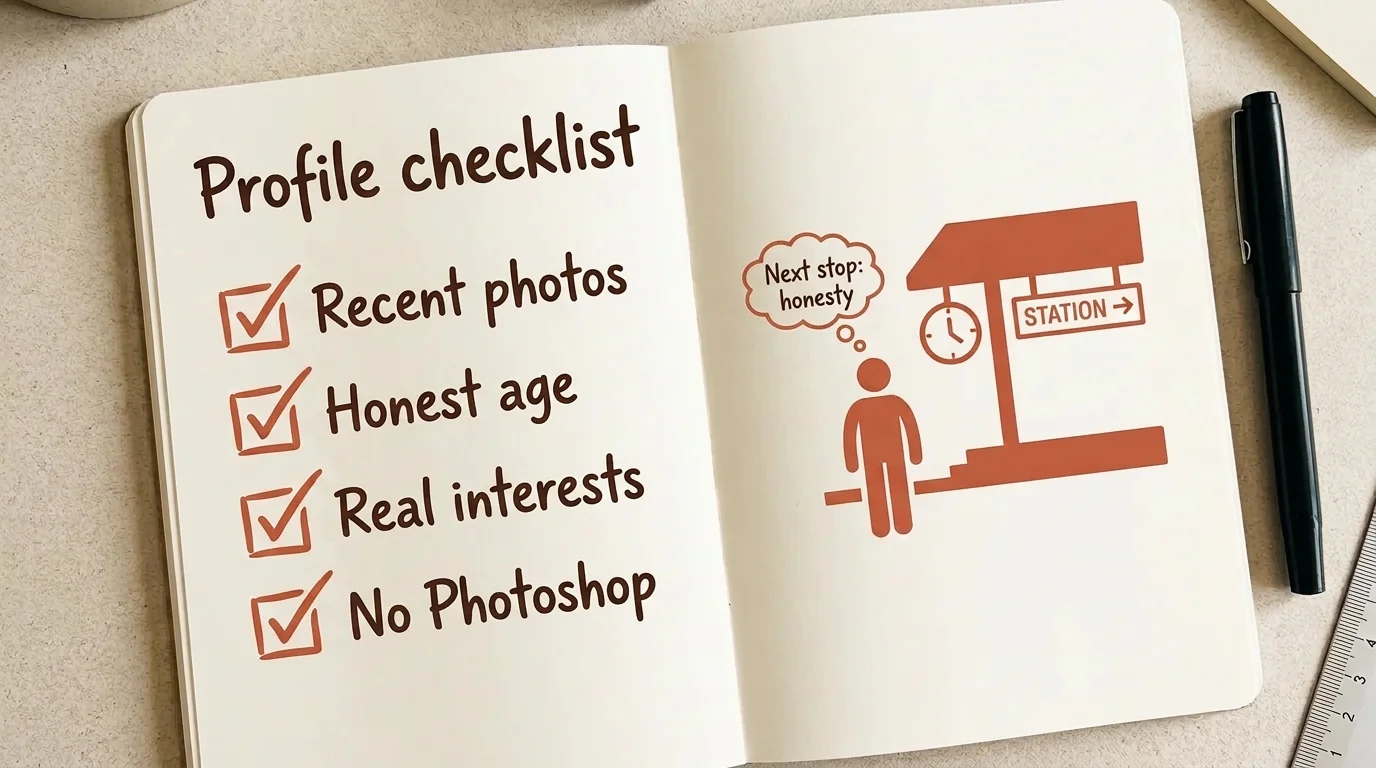
If your date is waiting at the station and takes a moment too long to recognise you, that initial flicker of trust is gone. The evening begins not with a warm smile, but with a faint, hesitant “Oh…”. And that little “Oh” becomes the elephant in the room – unspoken, but casting a shadow over the entire conversation.

A little tweak or a big fib: where do you draw the line?

There's no hard-and-fast rule, but you have a sense of what will be obvious when you meet in person. An inch taller? It might not be noticed, but it’s a lie you’ll have to keep up. Five years younger? That’s likely to be noticed quickly.

The dilemma is that these little white lies might get you more matches (quantity), but they often scupper your chances of a second date (quality). You end up investing time in people who are disappointed when you meet – not because of who you are, but because of the gap between your profile and reality.

Singles who are honest in their profile find that first dates are a lot more relaxed. Your nerves are just the usual get-to-know-you excitement, not the fear of being ‘found out’.

Presenting your best self vs. bending the truth: it's fine to show your best side

Here's the distinction: presenting yourself in the best light is fine. Deception isn't.

Presenting yourself well means choosing that photo where your smile is at its most natural. It means highlighting your strengths in your bio. And it means showing yourself enjoying a hobby you love.

Deception, on the other hand, is when your photo is three years old and shows you a stone lighter. It's inventing hobbies you've never actually tried, or hiding key details that are important in a relationship.

Here's a good rule of thumb: would a stranger be able to spot you in a crowd based on your profile pictures? If the answer is no, your profile has strayed too far from reality.

The classic profile fibs: age, height and those "flattering" photos

Fudging your age: why we get stuck on those big birthdays

Your age is one of the most common white lies in online dating. There’s a psychological pressure, especially once you’re over 50: "If I put 52, I won’t show up in anyone's search results."

The thinking goes that many singles set their age filters to "up to 50" or "up to 45". If you're 51 or 52, the algorithm screens you out before anyone even gets to see your profile.

So you put 49. Or 48. "Just to get noticed."

The problem: this little lie creates a sunk cost trap. The longer you chat, the harder it becomes to come clean, and the more the truth feels like a breach of trust that calls everything into question: "What else have you been hiding?"

Someone who filters for "up to 50" is doing it for a reason. Perhaps they are looking for someone at a particular stage in life. Your lie undermines that choice.

The photo dilemma: why old pictures can ruin a first date

Photos are your most powerful tool – and your biggest temptation. You have that wonderful picture from your holiday two years ago. Perfect lighting, a relaxed expression, maybe you were a few pounds lighter.

"It's still me," you think. And technically, you’re right.

But: two years makes a visible difference to our faces. Especially over 50. A few more grey hairs, some finer lines, a different look about you. There's nothing wrong with that – it's life. But it is noticeable.

When your date expects to meet the person in the photo and sees the current version of you instead, it creates a moment of shock. Even if you're just as attractive now, that initial moment of disappointment is hard to recover from.

A good guide: your photos should ideally be from the last year or so and show you as you are today. One of them should show you in everyday clothes, not just in holiday mode or at a special occasion.

Kittenfishing explained: the subtle art of bending the truth

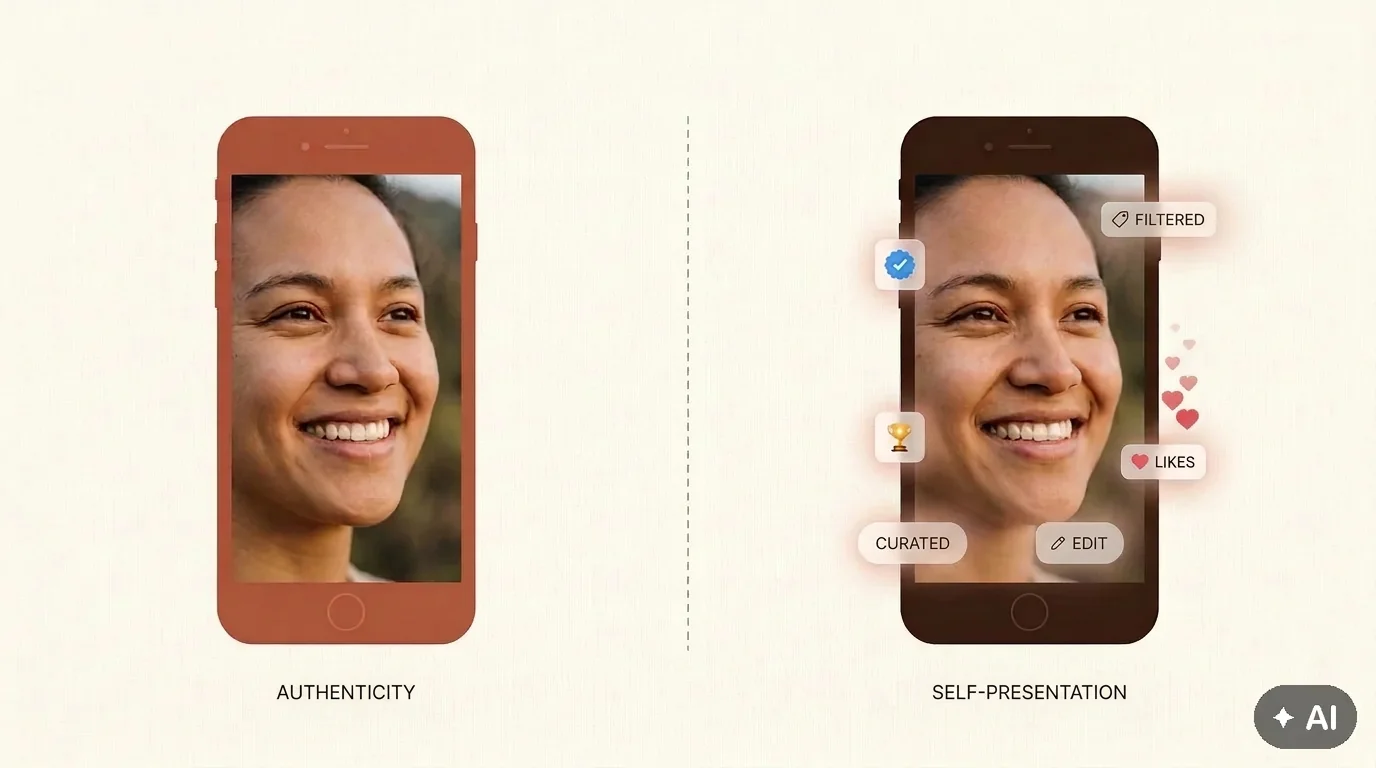
Kittenfishing is catfishing's little cousin. It's not a completely fake identity, but a heavily polished version of reality: filters that smooth out wrinkles, angles that make you look slimmer, photos of just your face and never your whole body.

The insidious part is that it doesn't feel like lying. It's just ‘showing your best side’.

But here's the uncomfortable truth: every filter you feel you need to use is another hurdle your date has to get past to see the real you.

Singles who have been dating for a while often develop a sharp eye for profiles that feel too polished. They can often tell when someone is hiding out of insecurity. And insecurity is not an attractive foundation for a relationship.

Why we fib about height, age and income

People commonly bend the truth about things like height, income, age and weight (often disguised with out-of-date photos).

But why do it? Dating sites are a competitive market. Everyone assumes everyone else is bending the truth, so they feel they have to keep up.

The result is an arms race of little lies. Everyone is an inch taller, five years younger, a stone lighter. And on the first date, two people are sitting opposite each other, both knowing the other has probably fibbed – and wondering what else isn't true.

Anyone who opts out of this arms race and stays honest has a good chance of more genuine conversations on their dates. You get less quantity, but more substance.
Myth: Being totally honest will put potential matches off

The worry: If I’m honest about myself (divorced, have kids, out of work, have a chronic illness), I won’t get any matches.

The reality: You might get fewer matches, yes. But the ones you do get will often be a much better fit for you.

Your imperfections are a filter: why having a past makes you more relatable

Perfection is boring. And frankly, unbelievable.

If you write, ‘Divorced after 25 years and just learning who I am on my own,’ you’re sharing a truth that many people will connect with. You come across as real. Vulnerable. Brave.

If you write, ‘Successful entrepreneur, financially independent, looking for the missing piece of the puzzle,’ you sound like a job advert.

What you see as your flaws are what make you unique. They filter out people who can’t handle your reality – and attract those who are looking for exactly that kind of honesty.

There’s no telling how many messages you’ll get. But one thing’s for sure: anyone who replies to an honest profile knows what they’re signing up for.

Be specific, not perfect: how to turn ‘flaws’ into conversation starters

Instead of writing, ‘I’m sporty,’ try: ‘On Saturdays, you’ll usually find me out on the local hiking trails. I’ve recently taken up birdwatching – I can recognise three so far.’

Instead of, ‘I enjoy cooking,’ try: ‘My lasagne is legendary – for all the wrong reasons. But I haven’t given up hope yet.’

Specificity beats perfection. Every single time.

Why? Because specifics give people a hook for a conversation. Someone can reply with, ‘Which three birds?’ or ‘So what went wrong with the lasagne?’

Perfection offers nothing. ‘I’m sporty’ just leads to ‘Cool, me too’ – and that’s where the conversation grinds to a halt.

The psychology behind it: Insecurity is often at the root of those little white lies

Insecurity is often the reason for telling a white lie: if you fudge the details on your age or appearance, it’s often because you don’t have enough faith in the real you.

And that’s the real problem. Not the lie itself, but what it says about how you see yourself.

If you believe you only stand a chance with some enhanced version of yourself, that lack of confidence will come across. In your messages. On the first date. In the way you hold yourself.

People tend to sense that, and it can put them off far more than your real age or height ever would.

Confidence is more attractive than any photo filter. And confidence starts with being happy in your own skin.

Damage control: How to put a white lie right

So, you’ve told a bit of a fib. About your age, your photos, or your relationship status. You’ve been chatting for weeks, a date is on the cards, and now things are getting serious.

What should you do?

The ‘come clean’ message: how to own up before the first date

Timing is everything. The sooner, the better: ideally over text, as soon as you feel things are getting more serious. But at the very latest, before you actually meet.

A sample message:

“Hey, before we meet, I want to be upfront about something. My profile says I'm 49, but I'm actually 52. I know that wasn't okay of me. I was worried about being filtered out of searches, but you deserve the truth. If that's a deal-breaker for you, I'll completely understand.”

Why this works:

  • You’re taking responsibility.
  • You’re showing them respect.
  • You’re giving them a choice.
  • You’re proving you can be honest, even when it’s awkward.

What their reaction tells you about them

How a person reacts will be very revealing.

If they reply, “Thanks for your honesty. Three years is no big deal, but I really appreciate you telling me,” you’ve found someone who values integrity.

If they reply, “You lied to me, that’s just not on,” then you know that for this person, lying is a deal-breaker.

Both reactions give you valuable information, and both are understandable. The first shows a generous spirit, the second shows clear boundaries. Either way, you find out if you’re a good match.

Why coming clean after the first date is usually too late

The longer you wait, the bigger the lie becomes. Before the first date, it’s a simple correction. After a few dates, however, it feels more like a breach of trust.

Why? Because after a few dates, there’s often an emotional investment. The other person has opened up and started to develop feelings. Then they suddenly find out that a fundamental fact about you (your age, your looks, your status) was a lie.

It calls everything into question: “What else isn’t true? What’s real?”

Rule of thumb: The truth needs to be out in the open before you meet in person.

The takeaway: why 100% honesty is your best strategy

The trade-off: more matches vs. a better chance of a second date

Let's break it down:

Scenario A (the embellished profile): You get more matches and more messages. But when you meet up, the reality doesn't quite match the profile, and many first dates end in disappointment.

Scenario B (the honest profile): You might get fewer matches. But because what they see is what they get, you're more likely to land a second date. There's no awkward disconnect.

This isn't a scientific formula, of course, but a general rule of thumb: Scenario B means fewer matches to begin with, but often a much better chance of a second date.

And ultimately, the second date is what counts. Not the number of matches. Not the quick ego boost. But a genuine connection.

Honesty: the bedrock of a serious relationship

Many singles on dating sites are genuinely looking for something real. No games, no flings. They're hoping to find companionship, trust, and perhaps even someone to grow old with.

If that's your goal, then honesty isn't just the right thing to do – it's also strategically smart.

Because a relationship that starts with a lie is built on that lie. Every time things get tough, your partner will wonder, "Can I really trust you?"

An open notebook with a profile checklist: recent photos, honest age, real interests, no Photoshop, next to a drawing of a person at a train station.

Remember that rule of thumb about being spotted in a crowd? Now's the time to take another honest look at your photos and see how they measure up.

Get an honest profile boost with the AskAlva Profile Check

You don't have to choose between "honest and boring" and "embellished and attractive". There's a third option: honest and well-presented.

The AskAlva Profile Check analyses your photos and bio, giving you specific, practical tips: Which of your pictures look authentic and inviting? Do any of your phrases sound clichéd? How can you showcase your best qualities more effectively?

It's not a judgement of you as a person. Just straight-talking advice on how your profile comes across – and how you can improve it without fibbing.

Your goal isn't just the match – it's being recognised when you meet

Imagine this: you're sitting in a café. Your date walks in and smiles immediately because they recognise you. They sit down and say, "You're exactly as I pictured you."

That's the moment that makes honesty worthwhile.

Not the number of matches. Not the fleeting validation of a 'like'. But the feeling that someone wanted to meet you – not an embellished version, but the real you.

And that feeling is the start of something real.

Your questions answered: Honesty on your dating profile

What should I do if my date has lied on their profile?

If you realise your date has lied on their profile, it’s best to address it directly but calmly. You could say something like: “I have to admit, your profile gave me a slightly different impression. Honesty is really important to me – can you tell me why your photos are so different?” Their reaction will show you whether they take responsibility or just get defensive. If you feel uncomfortable, it’s perfectly okay to end the date politely and not offer a second chance. After all, trust is the foundation of any relationship, and it's impossible to build when it's missing right from the start.

Is it okay to shave a few years off my age?

It’s not okay to shave a few years off your age, no matter how tempting it might be. Even a small fib creates a discrepancy that can show up when you meet and make them wonder, “What else isn’t true?” Using your real age might mean you get filtered out by people with strict age limits, but at least the singles who do find you will know who you really are. Use your photos and bio to let your energy, openness and interests shine through – that’s what will attract the right person.

When does a little white lie on a profile become a deal-breaker?

A white lie on your dating profile becomes a breach of trust the moment you deliberately misrepresent something fundamental, like your age, relationship status or appearance. Being a little vague (e.g. “I enjoy keeping active”) is one thing, but making up facts is another. As a rule of thumb: if you’re hoping they won’t notice, you need to change it.

How can I tell if a profile photo is recent?

You can usually tell if a profile photo is recent by looking at details like the picture quality, clothing and hairstyle. Check whether all the photos have a consistent look, or if one seems noticeably older than the others. The most reliable way to check is to have a quick video call before you meet. You could also politely ask for a current selfie: “Fancy swapping a quick selfie from today? It’s always nice to see who you’re chatting to!” If you suspect a profile might be fake, doing a reverse image search can also help.

Do I have to reveal things like divorce or illness on my profile?

You don’t have to share the whole story behind a divorce or the details of an illness on your profile. However, fundamental facts that are important to most singles, such as your relationship status (including “divorced” or “separated”) or whether you have children, should be clear from the start. You can bring up more sensitive details, like a chronic illness or financial issues, when you feel comfortable. As things start to get more serious, that's the time to let them know. There’s no obligation to share everything before a first date, but it's essential that you don't claim anything that isn't true.

What about flattering angles – is that being deceptive?

When it comes to using flattering angles, the key is to make sure the overall impression you give is accurate and not deceptive. A photo taken from slightly above to flatter your jawline is fine, but using extreme angles that completely change how your body looks crosses the line. As a general rule, at least one photo should show you as someone would see you on the street: face-on, full-length and in normal lighting. If all your photos rely on clever tricks, your first date is bound to be a disappointment.

What if I just don’t like how I look in recent photos?

If you don't like how you look in recent photos, it’s often more about self-esteem than the photos themselves. We all tend to be our own worst critics, and others see us much more kindly. Ask a friend to take some new pictures of you – in natural light, while you’re laughing or doing something you enjoy. You’ll probably find they turn out far better than you expect. Remember, singles aren't looking for perfection. They’re looking for warmth, authenticity and someone they can feel comfortable with. A genuine smile is more attractive than any airbrushed photo.

How much can I “polish” my bio?

You can “polish” your bio enough to show yourself in your best light – as long as that best light is still you. If you write that you love hiking, you should actually be a hiker, not someone who went for one walk five years ago. Instead of just claiming you have a great sense of humour, prove it with a witty line. Polishing your bio means highlighting the most interesting and appealing parts of your real personality, not inventing one you wish you had.

📸 Profile check by AskAlva

Want to know how your profile comes across? Upload a screenshot. AskAlva gives you honest feedback on photos and bio.

Try it free →

Screenshots are never stored.

More from “Dating profile”