FAQ: Frequently asked questions about reverse image searching
Can you find out who a person is from a picture?
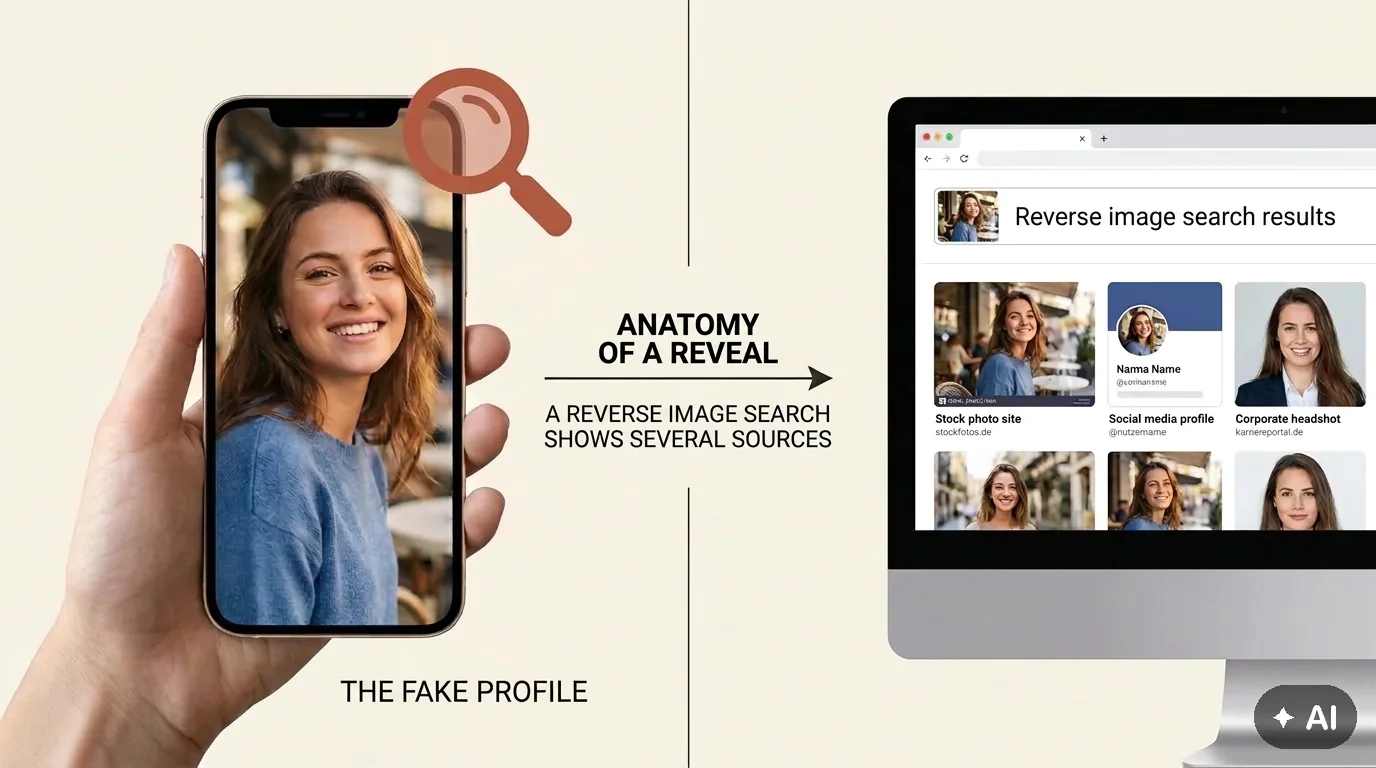
You can use a picture to find out if it's already been used online, but not necessarily who the person behind it really is. Tools like Google Lens, Yandex or PimEyes will show you if it's a stolen profile picture. A reverse image search reveals where else the photo appears: on stock photo sites, on other social media profiles or on websites. If the picture shows up under different names, that's a clear sign of identity theft. You won't find out the scammer's real identity this way – but you will know that the person isn't who they claim to be.
Which reverse image search app is free?
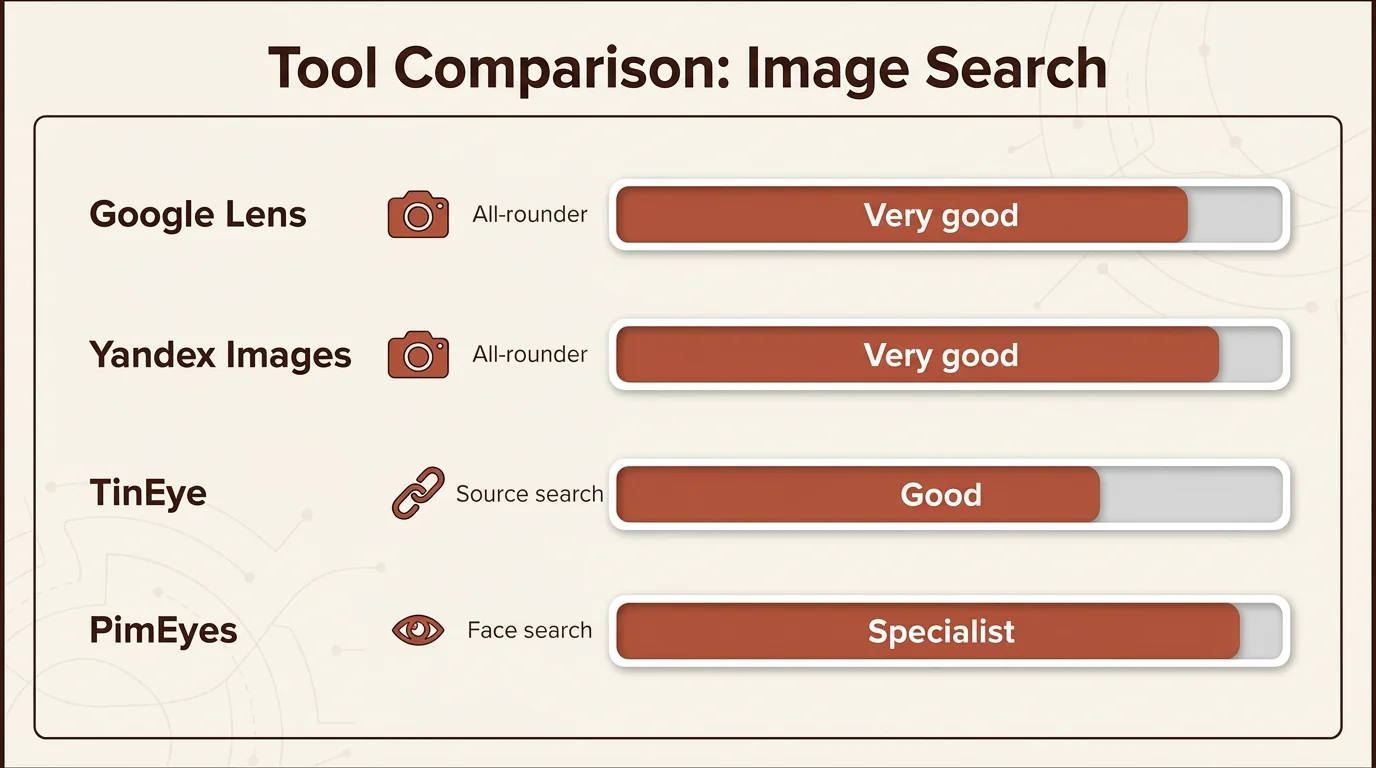
A completely free app for reverse image searching is Google Lens, which is available for iOS and Android and is a great all-rounder. Yandex and TinEye also offer free basic searches directly in your browser, which you don't even need an account for. Google Lens is often already integrated into Android devices and available as a separate app for iOS, with unlimited searches and no hidden costs or premium features.
What is the best face search engine?
The best face search engine depends on your goal, but Yandex often delivers surprisingly accurate results for facial recognition. For most profile picture searches, Google Lens is the best and easiest starting point. If you don't find any matches with it, Yandex is a good alternative, as its recognition is often more accurate, especially for images from social media. PimEyes, on the other hand, is a professional tool that only makes sense if you're willing to pay for detailed results and want to do very deep research.
How can you spot a fake Instagram profile without a search?
You can spot a fake Instagram profile without a search by looking for a combination of typical warning signs. Watch out for profiles with very few followers, only a handful of perfect photos, no stories and a vague bio. Other red flags include quick love-bombing messages and a push to move the conversation to WhatsApp immediately. Real singles also have no problem with a spontaneous video call. Additional signs include profiles that follow hundreds of accounts but have hardly any followers themselves, or a lack of comments from friends under their pictures.
Does a reverse image search work on private photos?
No, a reverse image search doesn't work on private photos, as it only searches the publicly accessible internet. So, if a picture has only been sent privately on WhatsApp and never posted on a website or a public profile, the search won't find any results. Private messages, closed groups or password-protected areas are not indexed. If a scammer uses a photo they've received from an unsuspecting victim, it won't show up anywhere either. That's why, if in doubt, you should always ask for a live photo with a note.
How do I spot AI-generated profile pictures?
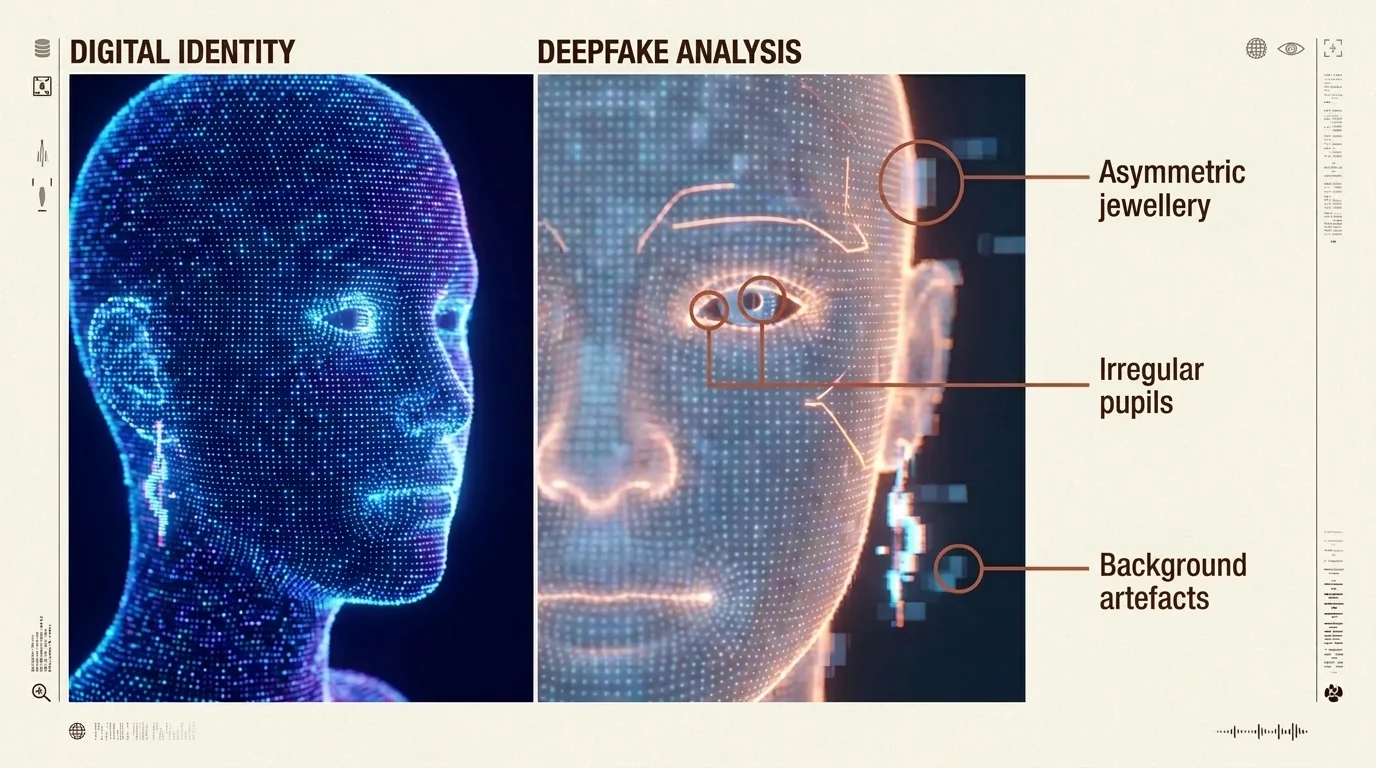
You can spot AI-generated profile pictures by looking for unnatural details like asymmetrical earrings, the wrong number of fingers or skin that's too perfect and has no pores. Also, watch out for blurry or strange-looking backgrounds. The surest test is to ask for a spontaneous photo with a word of your choice on a piece of paper, which an AI can't deliver in seconds. Also, check if all the pictures have the same perfect aesthetic; real profiles show photos from different situations and with different lighting.
What should I do if the reverse image search returns no results?
If the reverse image search returns no results, it doesn't automatically mean the profile is genuine, so you should check for other warning signs. Ask yourself if the person is avoiding video calls, pushing you to move to WhatsApp, or using love-bombing tactics. Reasons for no matches could be that the photo is AI-generated, stolen from a private profile, or too new. Therefore, never rely on the image search alone and, as a next step, ask for a live photo or use a scam check tool.
Is it legal to use PimEyes?
Using PimEyes to search is generally legal, but you should be aware that search queries are saved and strict data protection rules apply. In the EU, you are allowed to search for your own face, for example, to detect identity theft. However, searching for other singles without their permission may violate data protection law and could be misused for stalking. Therefore, use the tool exclusively to protect yourself and not to spy on others. Always trust your gut feeling when making a decision.