FAQ – Frequently Asked Questions
How long should I message before asking for a date?
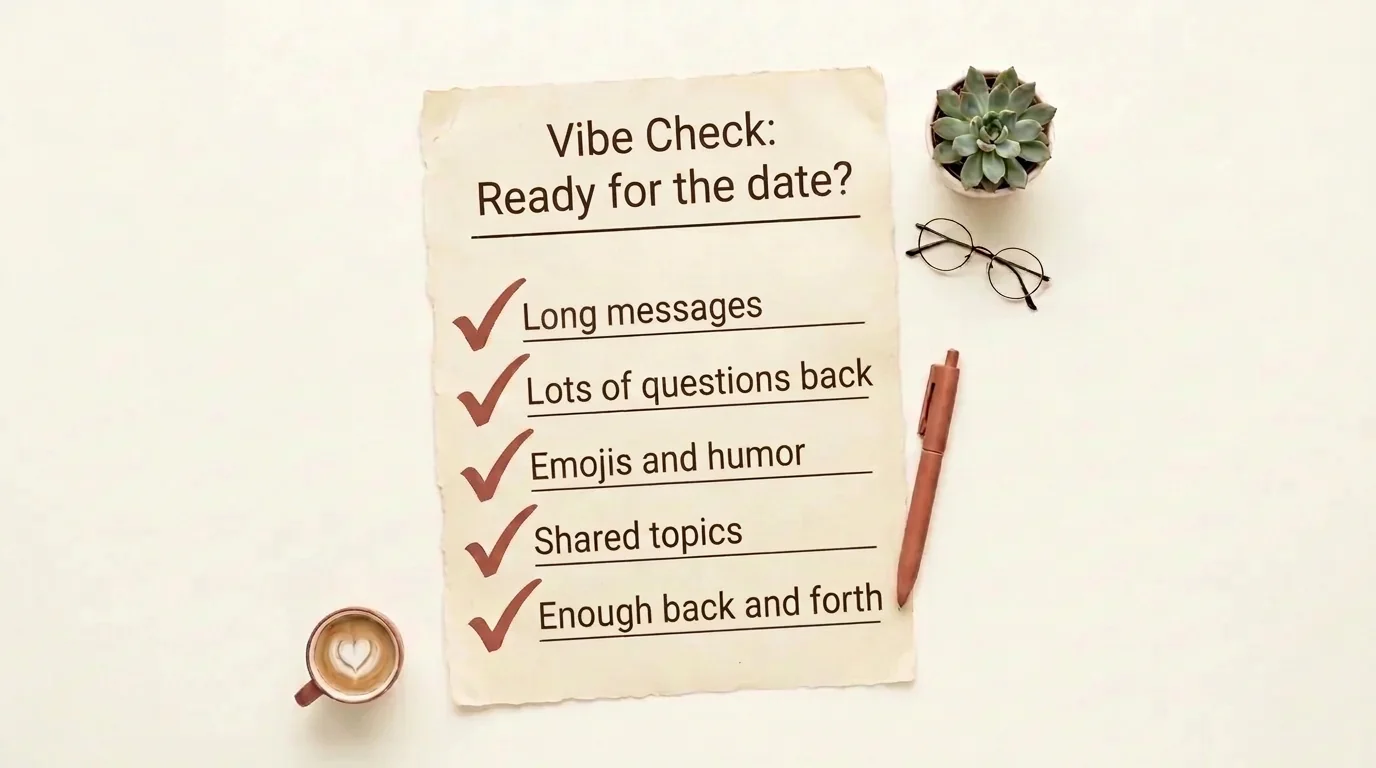
There's no set rule for how long you should message before asking someone out. If you've had a good back-and-forth for a few days, it's usually not too soon to suggest something specific. If the chat drags on for weeks with no plans in sight, it's definitely time to make a move. Many singles would rather find out in person if you click than get stuck texting endlessly. The quality of your conversation matters more than the number of messages – if you've already touched on deeper topics and you can feel a genuine interest, asking sooner can work well too.
How do I ask for a date without seeming needy?
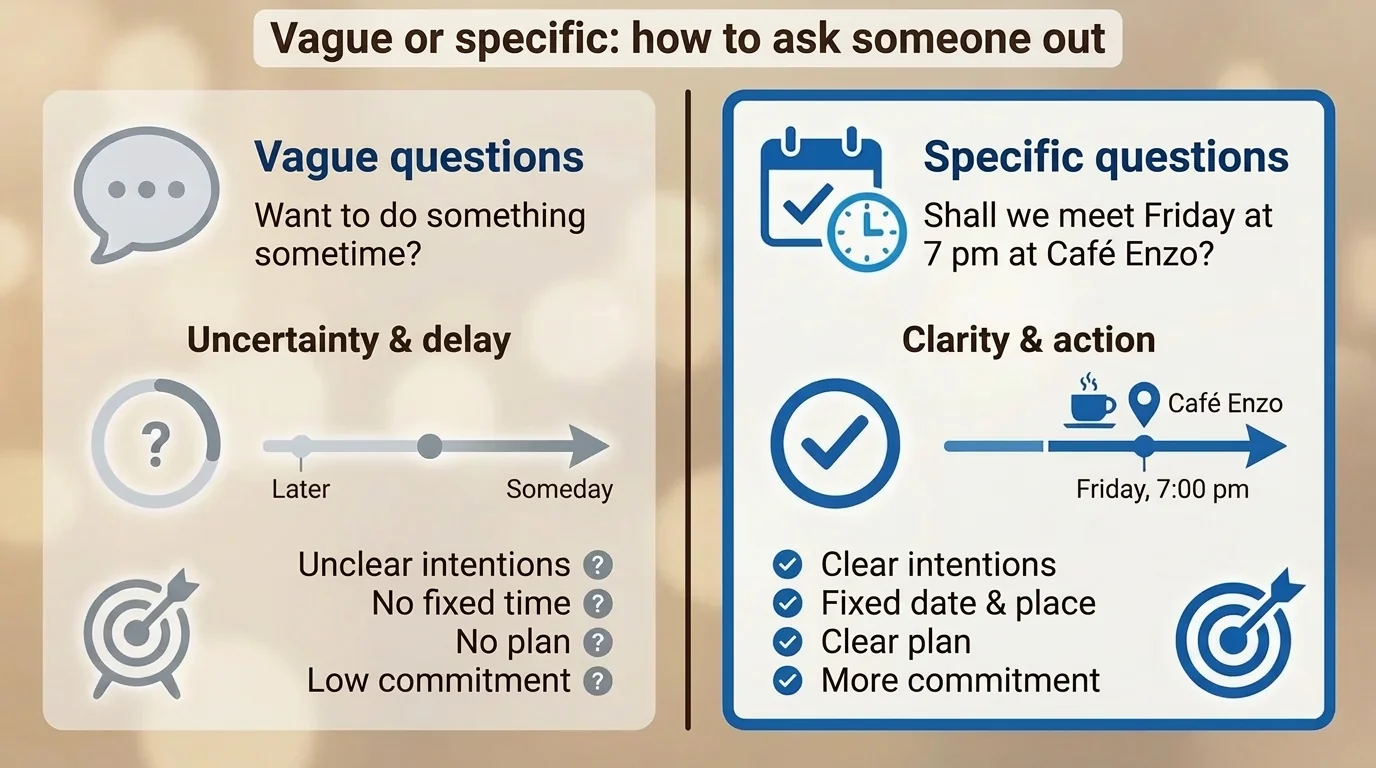
The way to ask for a date without seeming needy is to take the lead with a clear suggestion for a place, time, and activity, rather than being vague. A phrase like, 'Fancy grabbing a coffee on Saturday to see if we click in person?' comes across as confident. Avoid sending several texts in a row and give your match time to reply. Neediness stems from insecurity and pestering, not from making a clear, respectful suggestion. It simply shows you know what you want.
Should I ask for a date myself or wait?
It's almost always better to ask for a date yourself than to wait, as most singles appreciate someone taking the initiative. Many people find it refreshing when their match is proactive because it signals genuine interest and takes the pressure off. A clear suggestion shows self-confidence and saves you both any second-guessing.
What should I do if my match is evasive or says 'no'?
If your match is evasive or says 'no', the first thing is to try and work out if there's a genuine reason or if they're just not interested. A counter-suggestion like, 'This week's no good, but how about next?' is a great sign. Vague excuses with no alternative ('I'll let you know'), on the other hand, usually mean they're not keen. Accept their decision gracefully and put your energy elsewhere. An honest 'no' is better than being strung along for weeks, so respect their answer and move on. The right person will be thrilled with your invitation.
How can I tell if someone is just looking for validation instead of a real date?
You can usually tell if someone is just looking for validation instead of a real date by the one-sided nature of the conversation. If your match never asks questions, gives only superficial answers, or dodges every suggestion to meet up, they're likely just seeking attention. Other red flags include chats that constantly restart but never go any deeper, and intense messaging that suddenly stops the moment you try to make concrete plans. The AskAlva Chat Coach can help you spot these patterns so you don't waste your time.
What's the best place for a first date after matching?
The best place for a first date after matching is somewhere public and low-pressure for a short meeting of 30 to 60 minutes, like a café, a walk, or a quick drink. It's best to avoid places with too many distractions like the cinema, or anything that feels like too much of a commitment, like a full dinner. The key is to choose a location that allows for conversation, which is why loud bars or crowded events aren't ideal. A walk has the bonus that any lulls in conversation feel less awkward, and the movement can help burn off some nerves.
How do I deal with the fear of rejection?
The best way to deal with the fear of rejection is to look at it differently: a 'no' doesn't mean there's something wrong with you, it just means you weren't the right match. Seeing it this way takes the sting out of a 'no' and saves you both time. Remind yourself that you can handle it – rejection is a natural part of the dating process. Every time you put yourself out there, you'll grow in confidence, and an honest 'no' is always better than weeks of uncertainty. The right person will appreciate your directness.
Does the approach differ on various dating apps?
Yes, your approach might differ slightly on various dating apps, as each has its own vibe. On Tinder, things often move faster, while on Hinge you can respond directly to profile prompts, and on Bumble the first move has to be made within a certain timeframe. On dating sites aimed at more serious relationships, singles often expect to chat a bit more before meeting up. Despite the differences, the basic principles apply across the board: adapt your timing, but stick to the fundamentals – show genuine interest, be specific, and take the initiative.