Spotting the Signs of Sextortion: When Intimate Photos Are Used for Blackmail

By Sandra · Updated on 23 November 2026 · ✓ Reviewed by the editorial team

Spotting the Signs of Sextortion: When Intimate Photos Are Used for Blackmail

One minute you’re enjoying a friendly chat, the next you’re faced with a threat: pay up, or your private photos will be sent to your family and friends. If this is happening to you right now, take a deep breath. You are not powerless, and there are things you can do.

This guide will walk you through the situation step by step. It will help you to recognise sextortion, understand how this type of blackmail works, know how to respond, and protect yourself in future.

The essentials

Sextortion is when someone threatens to share your private photos or videos unless you pay them money or agree to further sexual acts.

  • Do not pay. Don't transfer a single penny, not even if you're tempted to do so 'just this once'.
  • Cut off all contact and block their profile, but only after you have saved all the evidence.
  • Take screenshots of the chat, their profile, the demands they've made and any payment details they've sent you.
  • Report the account on the dating site or app, and then report the incident to the police. You can usually do this online.
  • You are not to blame. This is a criminal offence, and the perpetrators rely on making you feel ashamed to control you.
  • In the UK, you can get free, confidential support from the Revenge Porn Helpline. Elsewhere, look for your country's image-abuse or cybercrime support service.

1. What is sextortion?

Sextortion is a form of blackmail where someone uses your intimate photos or videos against you. As the name suggests, it’s a combination of ‘sex’ and ‘extortion’. The blackmailer will threaten to share these private images unless you give them money, send more pictures, or meet other demands.

In the eyes of the law, this is blackmail. If you’re forced to perform sexual acts, it can also be considered a serious sexual offence. It’s crucial to remember that you are the victim of a crime here, and you are not to blame in any way.

When it comes to online dating, the scam usually follows a pattern: someone you match with builds a sense of intimacy very quickly and soon asks to move the chat over to WhatsApp or Telegram. The conversation then turns more intimate, and they might persuade you to exchange private pictures or videos. Shortly after, their entire tone will change.

This is no coincidence, and it doesn't mean you were naive. These scammers follow a well-rehearsed script and are often targeting many singles at the same time.

2. Spotting sextortion: How to tell if it's real blackmail

Sextortion usually follows one of two patterns: mass spam emails that have nothing to do with you, or targeted blackmail after you've actually chatted with someone. Knowing the difference can be a huge relief, as not every threat is as serious as it sounds.

Mass spam emails: You'll receive an email claiming someone has hacked your webcam and filmed you on an adult website. The message will demand a payment in Bitcoin but won't contain any specific details about you – apart from, perhaps, an old password that was exposed in a public data breach.

Targeted blackmail after a chat: This is different, because you've actually been in contact with the person. The scammer either has compromising material you've sent them, or at least claims to.

Here's how to tell them apart:

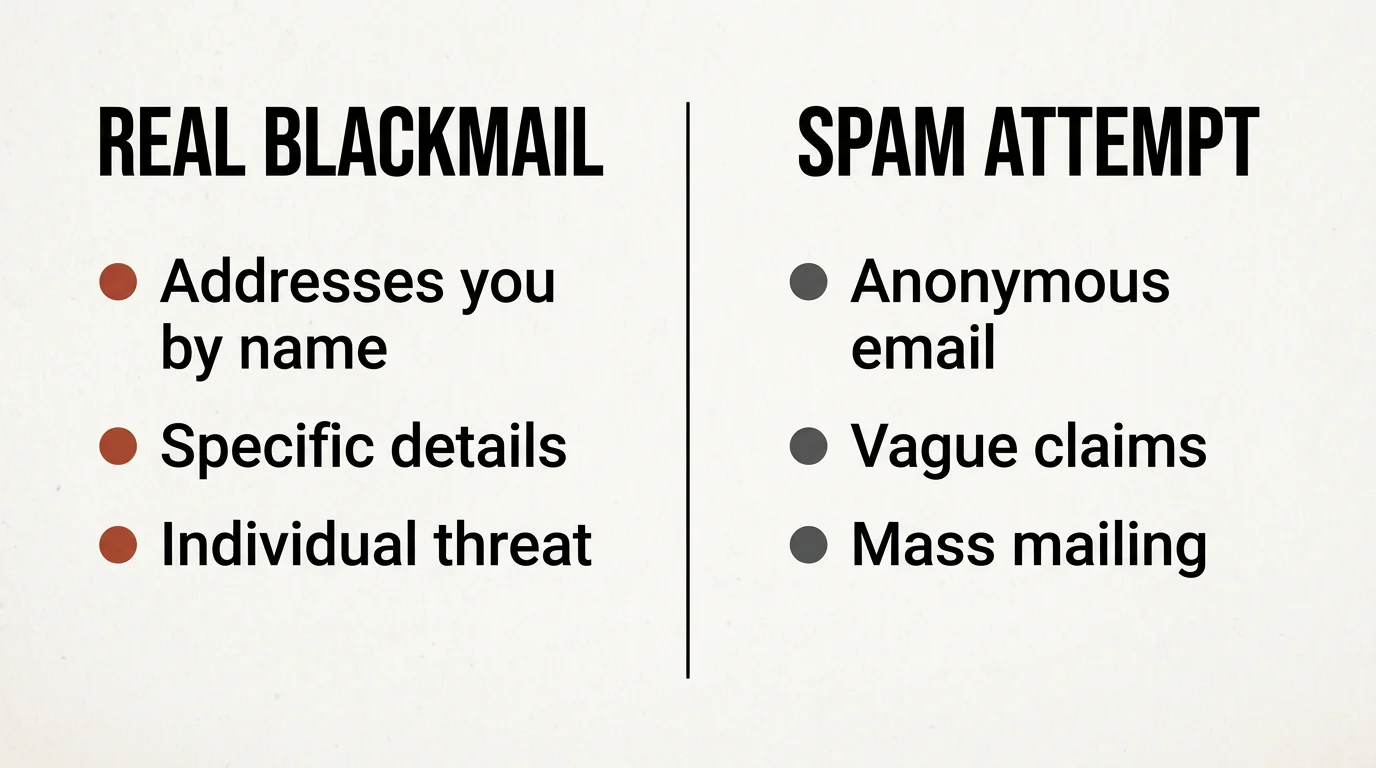
  • Spam: The email won't address you by name (or at most quotes an old password from a data breach). There's no image to prove their claim, just a Bitcoin address and a generic message that's been sent to thousands of others.
  • Targeted: The blackmailer will refer to your actual conversations. They might threaten to contact people you know, perhaps using screenshots of your social media friends or followers. They'll usually set a deadline and increase their demands over time.

What to do if you get a spam email: First, check if the password they mention is one you still use. If it is, change it immediately everywhere you use it. Next, check the login history on your main accounts for any activity you don't recognise. If you can't find anything suspicious, it's extremely unlikely your webcam has actually been hacked.

A table comparing genuine sextortion with spam emails, listing key differences like personal details versus vague, anonymous threats. The key difference: Real blackmailers use specific details they have about you, whereas spam emails are just vague threats with no proof.

If the blackmail follows contact on a dating site, think back and look for the red flags: suspiciously perfect photos, a rush to move the conversation to another platform like WhatsApp, and early declarations of love (‘love-bombing’). They'll also make excuses to avoid spontaneous video calls. Their behaviour after making the threat is also a giveaway: anyone who immediately puts you under intense pressure is simply following a script.

If you're ever unsure whether a profile is genuine, Alva's scam checker at askalva.ai/en/safety is there to help. Just upload a screenshot (never one with intimate images – be sure to black those out first) and it can point out specific warning signs.

3. Sextortion: What to do in 5 immediate steps

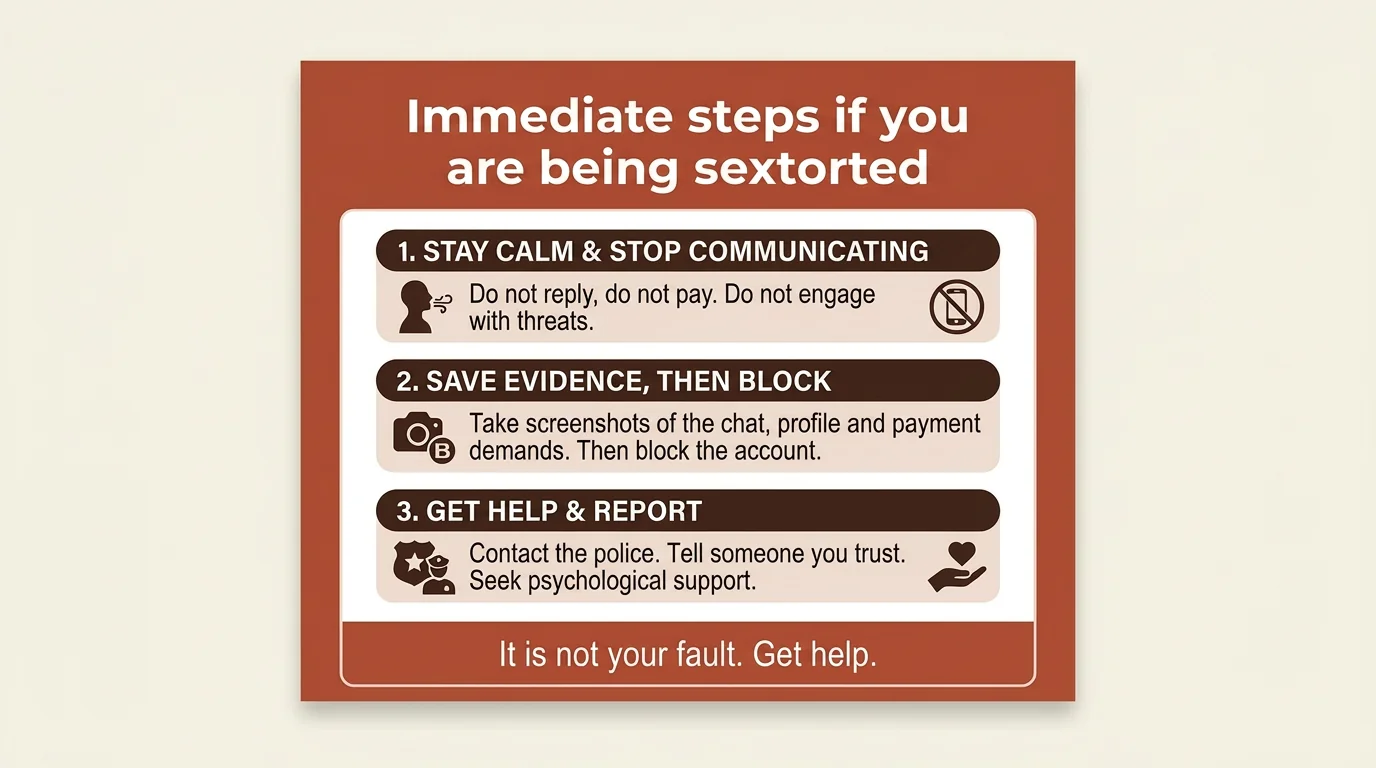
If you're a victim of sextortion, it’s vital to follow these steps in order: don’t pay, save the evidence, lock down your privacy, report the profile, and go to the police. Work through them one by one, and remember, you don’t have to do it all in an hour.

Step 1: Don't reply, don't pay

Don’t respond to any new messages, whether you’re angry or want to plead with them. Any reply just shows the blackmailer that their pressure tactics are working.

Step 2: Save the evidence, then block them

Take screenshots of:

  • the entire chat history, including any threats
  • their profile, including the name, user ID and a link to it
  • any payment demands, bank details or crypto addresses
  • any visible timestamps on the messages

Don't delete anything, no matter how ashamed you might feel. Only block their account after you’re certain you've saved everything.

Step 3: Lock down your privacy

Set your social media profiles to ‘private’ and hide your lists of friends and followers. This stops the blackmailer from finding and targeting people you know.

Change your passwords and switch on two-factor authentication.

Step 4: Report the profile on the platform

Report the profile on the dating site or app where you met them (section 5 has more details). This can get their account suspended and helps protect other singles.

Step 5: Report it to the police

Go to the police or use their online reporting service. Take your screenshots with you. If you are in immediate danger, call your local emergency number (999 or 112 in the UK and Ireland, 000 in Australia, 111 in New Zealand).

You can also get specialist support. In the UK, the Revenge Porn Helpline supports victims of image-based abuse, and a solicitor can advise you on legal options, like getting content removed or applying for an injunction.

Summary of the immediate steps to take: stop all communication, save the evidence and then block the person, get help and report the crime.

In a nutshell: Don’t reply, save the evidence, then block, get support and report it.

4. Should I pay them?

No, you should not pay if you're a victim of sextortion. This is the firm advice from the police and support services, and for very good reason.

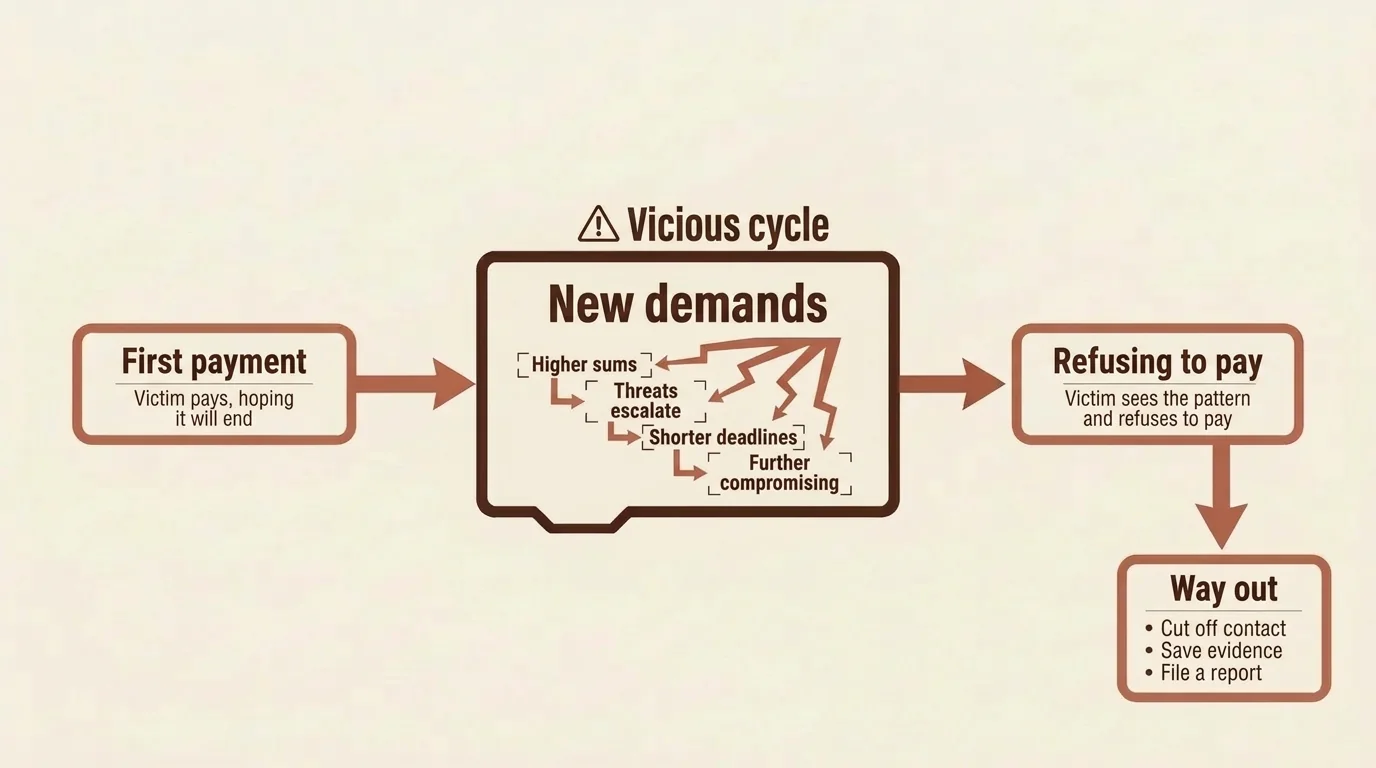
The spiral: Once you pay, the blackmailer will assume you're willing to pay again. One demand will quickly be followed by another, and then another.

No guarantee: Paying is no guarantee that the images won’t be published. You’ve only bought yourself some time, not peace of mind.

The leverage: A blackmailer loses their power over you the moment they publish the images. After that, there’s nothing left for you to pay for. Some will only ever make threats, while others will carry them out. It’s impossible to predict what they'll do.

Paying won't stop the blackmail.

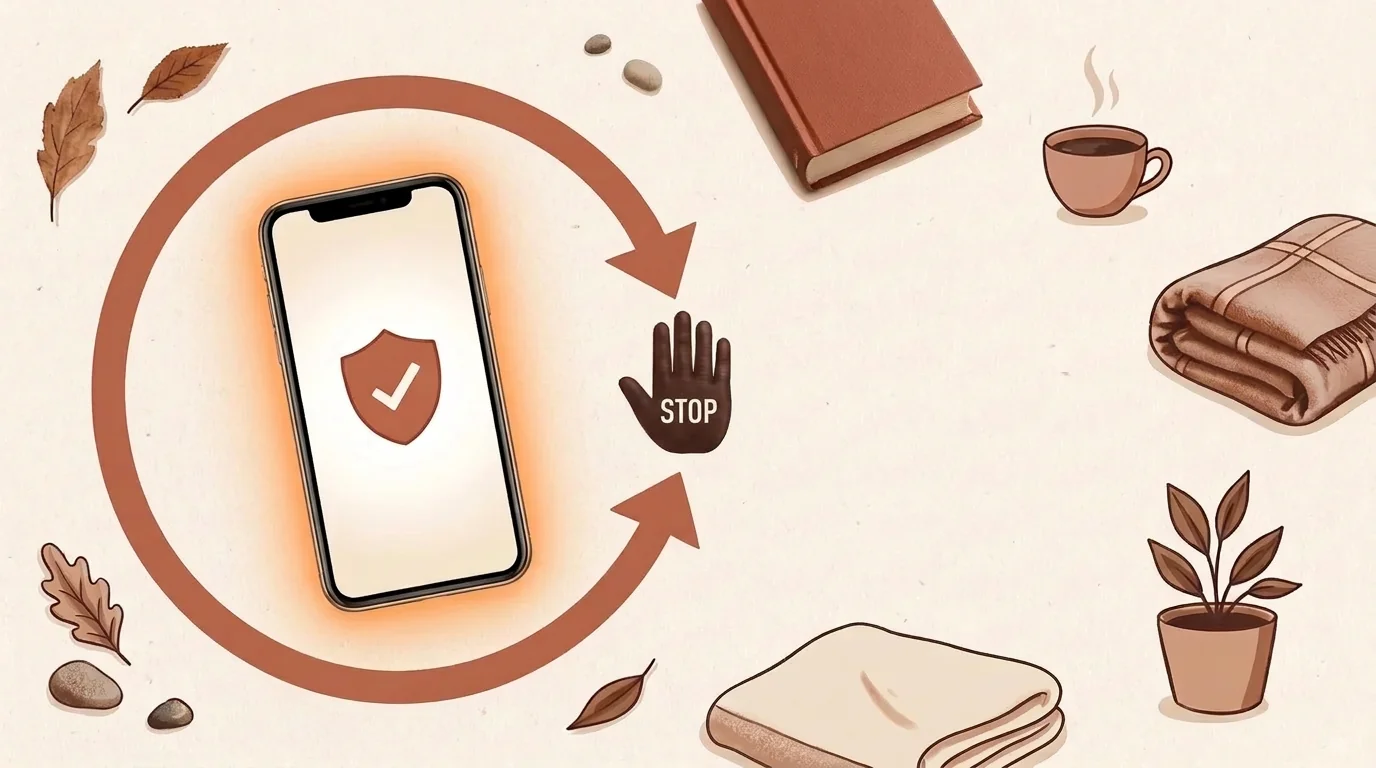
A diagram of the blackmail cycle, showing how paying leads to more and more demands and why blocking the person is the way out. Why paying isn't the answer: Blackmailers rarely stop after the first payment. The only way to break the cycle is to cut off all contact, save any evidence and report the crime.

Have you already paid? That’s a very human reaction and there's nothing to be ashamed of. Don't pay again. Keep any proof of payment and mention it when you report the crime. If you paid by bank transfer, your bank may be able to help, so call them straight away.

5. Getting help on social media and dating apps

You can report sextortion on any platform through the user’s profile menu or directly in your chat. Every platform has its own reporting process, but here’s what you generally need to do.

Instagram

Go to the person’s profile, tap the three dots and select ‘Report’. Explain that it involves blackmail or threats with intimate pictures. You should also report the individual messages directly from the chat.

Snapchat

Since messages on Snapchat disappear automatically, you need to screenshot them straight away. Make sure to take screenshots before you block the person, and then report the account using their profile menu. The other person might be notified that you’ve taken a screenshot. This can feel awkward, but in an emergency like this, your safety is the priority.

Dating apps

Dating apps like Tinder, Bumble and Hinge, as well as sites like eHarmony and Match.com, all have reporting and support features. Let their support team know what’s happened. This allows them to suspend the profile and helps protect other singles.

It’s also very important to get some emotional support for yourself. Talking things over with someone can be a huge relief, and in the UK the Revenge Porn Helpline is there to provide advice and support. If you feel overwhelmed or unsafe, contact a crisis service such as Samaritans (116 123 in the UK and Ireland) or your local equivalent.

6. The police, overseas offenders, image removal and deepfakes

The police can investigate offenders even if they are based abroad, although success can’t be guaranteed. Here are the answers to the questions most frequently asked by people affected.

Can the police find the person responsible?

Finding the person responsible can be difficult, as they’re often based abroad, which makes investigations harder. It’s still worth reporting it, though. This creates an official record of the crime, and any payment details or accounts you have can provide investigators with important clues. Just be aware that there’s no guarantee of a successful outcome.

Can I report the crime anonymously?

To make a formal police report, you’ll generally need to provide your personal details, so it isn't usually anonymous. However, you can get anonymous advice from support organisations first. This gives you space to talk things through and decide what to do in your own time.

How can I get my images removed from the internet?

To get your images removed from the internet, you should report them to the platform where they’ve been published as ‘non-consensual intimate content’. Search engines also have forms you can use to request the removal of links. A tool called StopNCII.org can help block intimate images on participating sites by creating a secure digital fingerprint of the image on your own device – meaning you don’t have to upload the image itself. A specialist advisor or a solicitor who deals with privacy law can also help you apply for an injunction.

What about deepfakes?

When it comes to deepfakes, the advice is exactly the same. Some blackmailers use AI-generated images that look like you but are entirely fake. The threat can still feel very powerful because it’s designed to cause shame. You should handle it in the same way: don’t pay, save the evidence and report the crime. Distributing fake images like these is also a serious violation of your rights.

7. Staying safe: How to protect yourself when you're dating

To protect yourself from sextortion when you’re dating, take things slow, don’t send any photos that could identify you, and check the person is real with an early video call. Crucially, never perform intimate acts on camera. You are never responsible for what these criminals do, but adopting a few good habits can lower your risk.

  • Take it slow: If someone is asking for intimate pictures within just a few days, they probably have something else in mind. A genuine connection can wait.
  • Don’t send anything identifiable: In any intimate photos, don't show your face, distinctive tattoos or a recognisable background. The safest option, of course, is not to send any at all.
  • Stay on the dating app: Moving the conversation to WhatsApp or Telegram too early is a red flag.
  • Suggest a spontaneous video call: An unexpected video call is a great way to weed out fake profiles. If someone’s constantly making excuses, there’s usually a reason why.
  • Cover your webcam: Stick a cover over it when you’re not using it, and never click on unfamiliar links.
  • Choose reputable dating sites: If you're looking for something serious, you're often better off on dating sites that verify profiles and have a clear process for reporting concerns. It’s not a cast-iron guarantee, but it helps.

Your own profile can also make you vulnerable if you share too many personal details. Double-check what's publicly visible: information like your employer, where you live, or the names of your children and friends doesn't belong on your dating profile.

8. Your emergency action plan

This seven-point plan breaks down the immediate steps to take if this happens to you.

A smartphone with a shield icon and a notebook on a wooden table with the words 'You are not to blame'. Sextortion is a crime, and it's never the victim's fault. Having a clear plan helps you take back control.

Print this list out or save it on your phone so you have it to hand:

  • No reply, no payment
  • Take screenshots of the chat, their profile, any demands and payment details
  • Block and report the account
  • Set your social media profiles to private, change your passwords and enable two-factor authentication
  • Report it to the police, either online or in person
  • Get support from an image-abuse helpline (in the UK, the Revenge Porn Helpline)
  • Talk to someone you trust

You don't have to face this alone. Talking it through with someone you trust can take a huge amount of the pressure off.

What next? It’s natural to feel cautious, but try not to let this experience hold you back forever. Knowing what to look out for is the best way to feel in control. When you feel ready to start chatting to people again, you can paste a conversation into askalva.ai/en/chat. Alva can point out typical red flags that scammers use.

9. Frequently Asked Questions

What happens if I don't pay?

If you don't pay, the blackmailers will often pile on the pressure at first, but some will give up and move on if you don't respond. For them, it's usually just about the money. While there's no guarantee they'll stop, paying up will almost always just prolong the ordeal.

Do they really have a video of me?

Whether the blackmailers really have a video of you depends on the situation. This usually isn't the case with mass emails, which often lack any real proof or personal details about you. However, if you've sent images or a video yourself during a chat, then it's possible they do have it. Either way, the most important thing is this: whatever you do, don't pay.

Can the police find the scammers if they're abroad?

The police can sometimes find scammers who are based abroad, though it's more difficult and not always successful. It's still really important to report the crime, as this helps secure evidence and may help investigators. However, no one can promise you a particular outcome.

Can I report this to the police anonymously?

It's generally not possible to report a crime anonymously, as the police will need your personal details to investigate. What you can do, though, is get confidential advice from a support organisation first. That way, you can take your time and decide if you feel ready to go to the police.

How can I get my images removed from the internet?

To get your images removed from the internet, you should report the content directly to the website or platform it's on, and also ask search engines to remove it from their results. For help with these steps, or with legal action like getting an injunction, you can turn to specialist support organisations or a solicitor who deals with privacy law.

Do I have to go to the police?

You don't have to go to the police, as there's no legal requirement to, but we strongly advise it. Reporting the crime can help protect you, and it could also stop the same people from targeting other singles. Ultimately, though, the decision about when you feel ready to take that step is yours and yours alone.

What if the images are fake?

If the images are fake, for example 'deepfakes', you should react in exactly the same way as you would for real ones: don't pay, save all the evidence you can, report the incident to the site or platform, and go to the police. Fake images don't prove anything about you, so don't let yourself be intimidated.

Where can I find emotional support?

You can find emotional support from specialist organisations like the Revenge Porn Helpline, which helps people dealing with digital and image-based abuse. Local support services and simply talking to people you trust can also make a huge difference. The most important thing to remember is that you are not alone in this.
🛡️ Scam check by AskAlva

Not sure about a contact? Upload a screenshot. AskAlva checks it for fraud patterns in under a minute.

Try it free →

Screenshots are never stored.

More from “Safety & scam protection”